


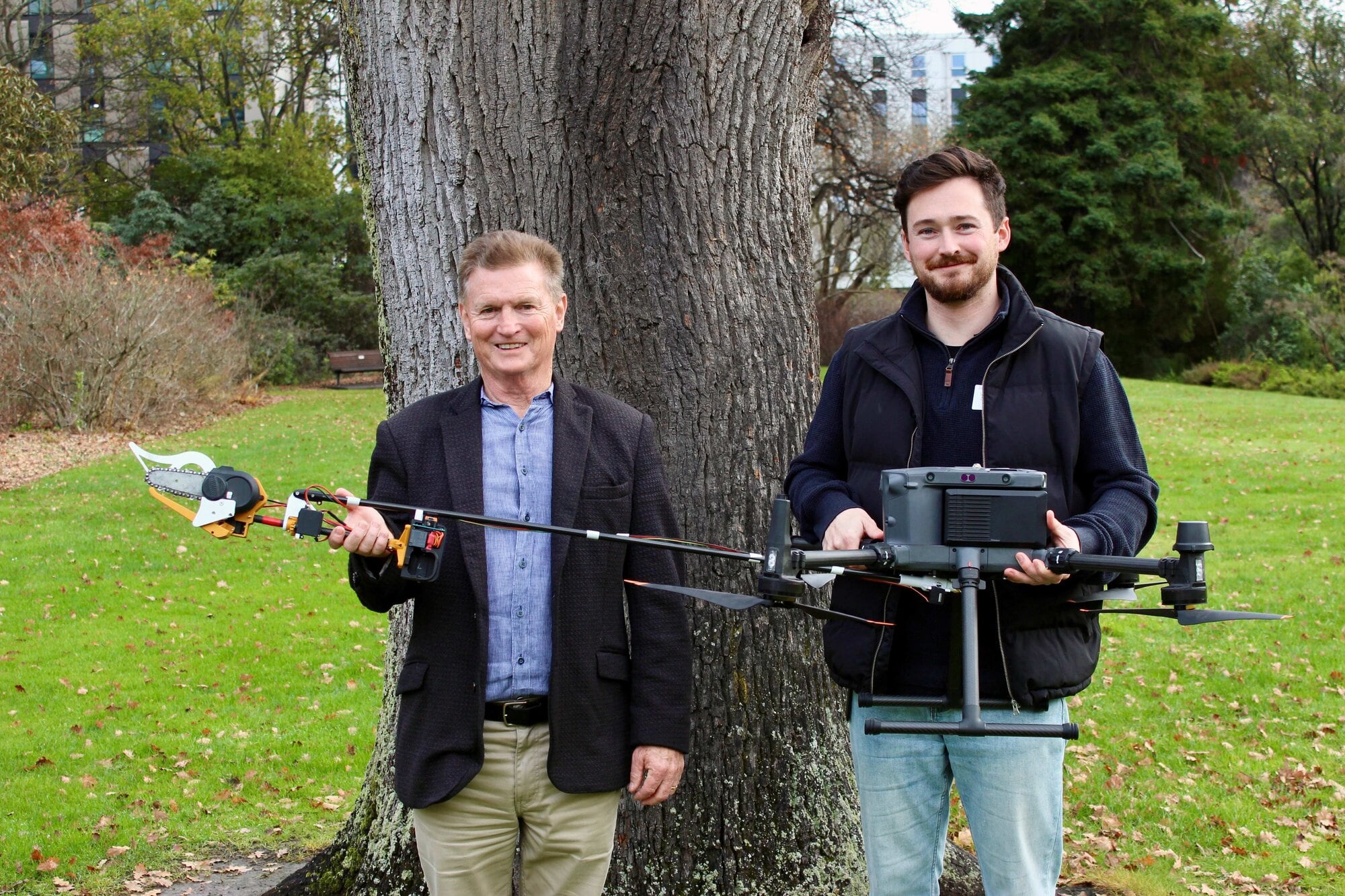
The words chainsaw, drone, automation and safety don’t immediately conjure up a vision of safety, but a group of researchers at the University of Canterbury have developed an AI-driven chainsaw drone that offers a safer alternative for humans needing to work in high-risk arborist situations such as near powerlines.
Leader of the project, computer science professor Richard Green, says using automation has progressed extensively over the years but it has got to a point where we need computers that understand the 3D environment they are moving in and can actually interact with it.
“Over the last eight years, we’ve been developing unmanned aerial vehicles [UAV] like drones. Before submitting our proposal, we met with lots of different industries to see what could be useful to explore. We didn’t want to be a group of academics coming up with solutions that may not actually be needed.”
The project has received a $10 million grant over five years from the Ministry of Business, Innovation and Employment. The team includes Richard, UC mechanical engineering professor Dan Zhao, UAV expert Dr Sam Schofield and University of Auckland mechanical engineering professor Karl Stol.
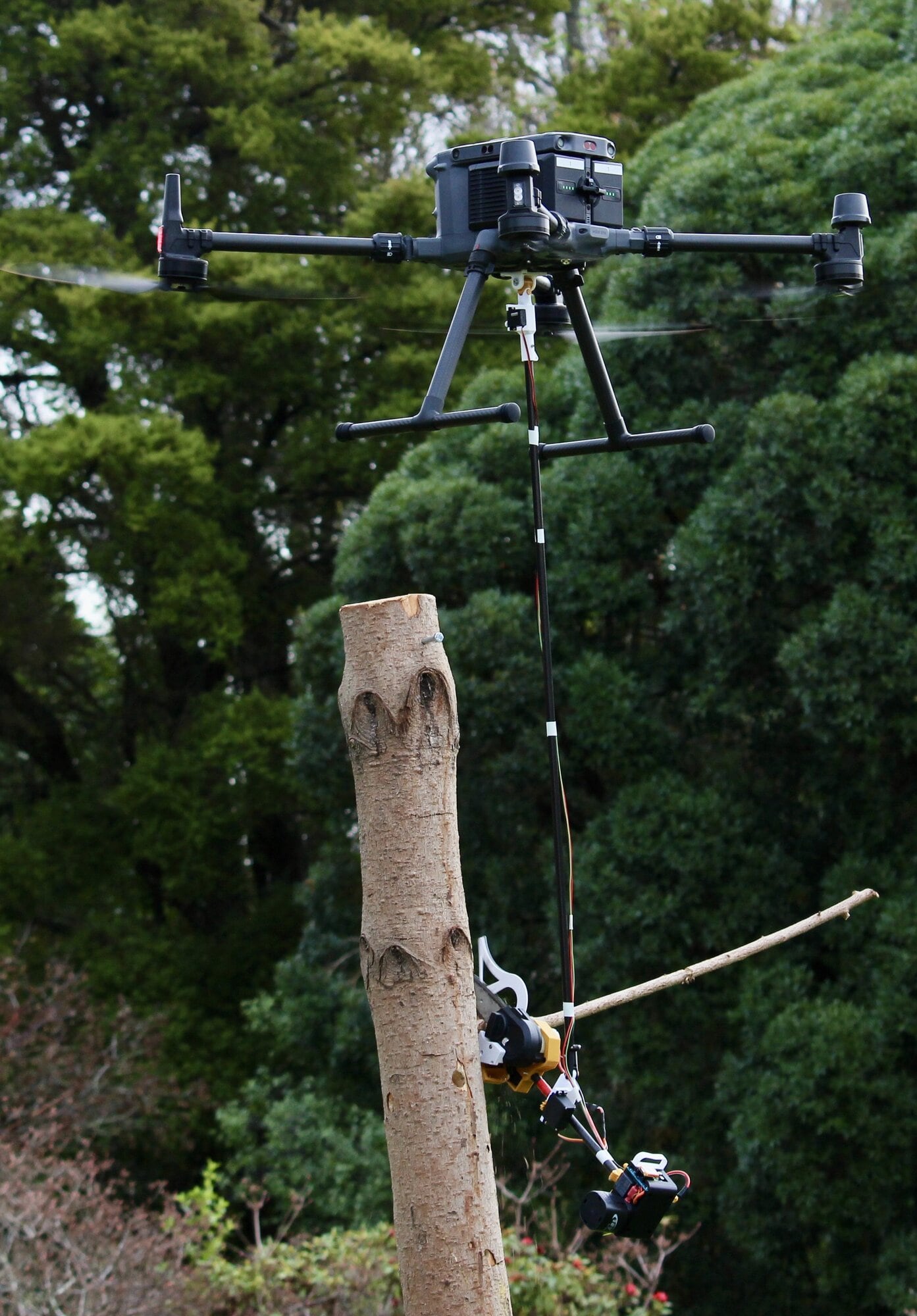
A chainsaw drone at work using AI software to cut small branches off trees. Photo / Sacha Skinner, University of Canterbury
One topic was the safety of trimming trees around powerlines that remain live while nearby arborist work is carried out.
“Initially, we developed a drone to carry an electric pruning tool that trimmed smaller branches, offering really good precision.”
For branches larger than 30mm in diameter, a chainsaw drone was developed.
“We’re using a small battery-driven chainsaw that can prune branches and twigs larger than 30 millimetres in diameter. We use a DJI Matrice drone which has a USB-C socket interface for our processor.
“When we plug the processor in we can see all the sensors and fly it using the controller. We fly near to a branch, tap the branch on the screen and the drone takes over, using AI technology.”
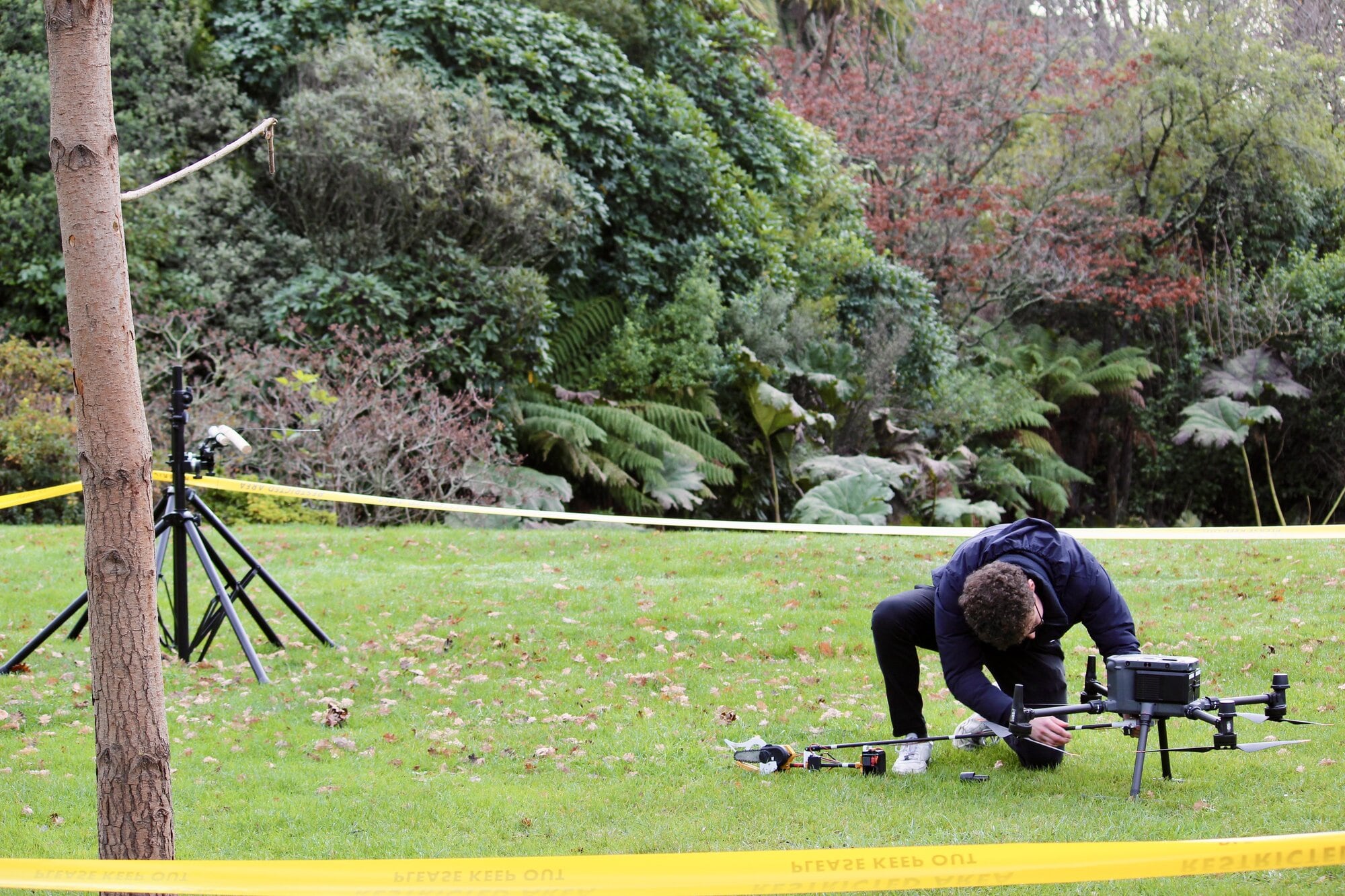
Adjusting the chainsaw drone during trials. Photo / Sacha Skinner, University of Canterbury
The drone operators have been working with drones for 10 years and are very experienced flyers. The AI in the computer processor is “trained” using thousands of examples of branches, negotiating leaves, twigs and wind and learning how to auto-navigate once a branch has been identified.
Richard says the team, along with Kiwi and international UAV experts, researchers and manufacturers, hopes to produce AI-driven chainsaw drones commercially next year for use across a range of different industries where jobs are inaccessible and hazardous for humans.

1 comment
Value for money?
Posted on 18-09-2025 16:52 | By Thoughtful
It will be interesting to see the final outcome from this project and whether the $10M invested by the taxpayer provides suitable rewards!
Leave a Comment
You must be logged in to make a comment.