


In just three years, Te Puke’s Steve Fawcett has learned more about edible plants than most of us will know in a lifetime.
He admits he might have become a little obsessed. His love of plants, especially tropical plants, comes from his early life in Papua New Guinea.
But he only started growing them seriously relatively recently.
He and wife Tracey previously lived in Pāpāmoa and were introduced to Owen Takuira-Ngaropo, founder of The Rock community garden in Pāpāmoa.
“What I saw was a great idea and the community coming together and using land that wasn’t being used, council waste area, and that food was going back into the community – so that really inspired us,” Fawcett said.
Moving to Te Puke and forming the Vector Group Charitable Trust, the couple became involved in a variety of mostly youth-focused projects, although getting support felt like a constant battle.
The trust also offered soil-filled kiwifruit bins, provided by Eastpack, to families.
“We were helping with kai resilience, food resilience, turning up and creating a little vege gardens so families could grow their own veges and that sort of stuff. When Covid, hit we kind of did that even more and we were mowing lawns, doing property maintenance, helping people who were in need.”
A couple of significant life events, including separation and the loss of a friend to cancer, had made Fawcett realised he needed a focus.
“So, I thought I’ll just start doing some tropicals.”
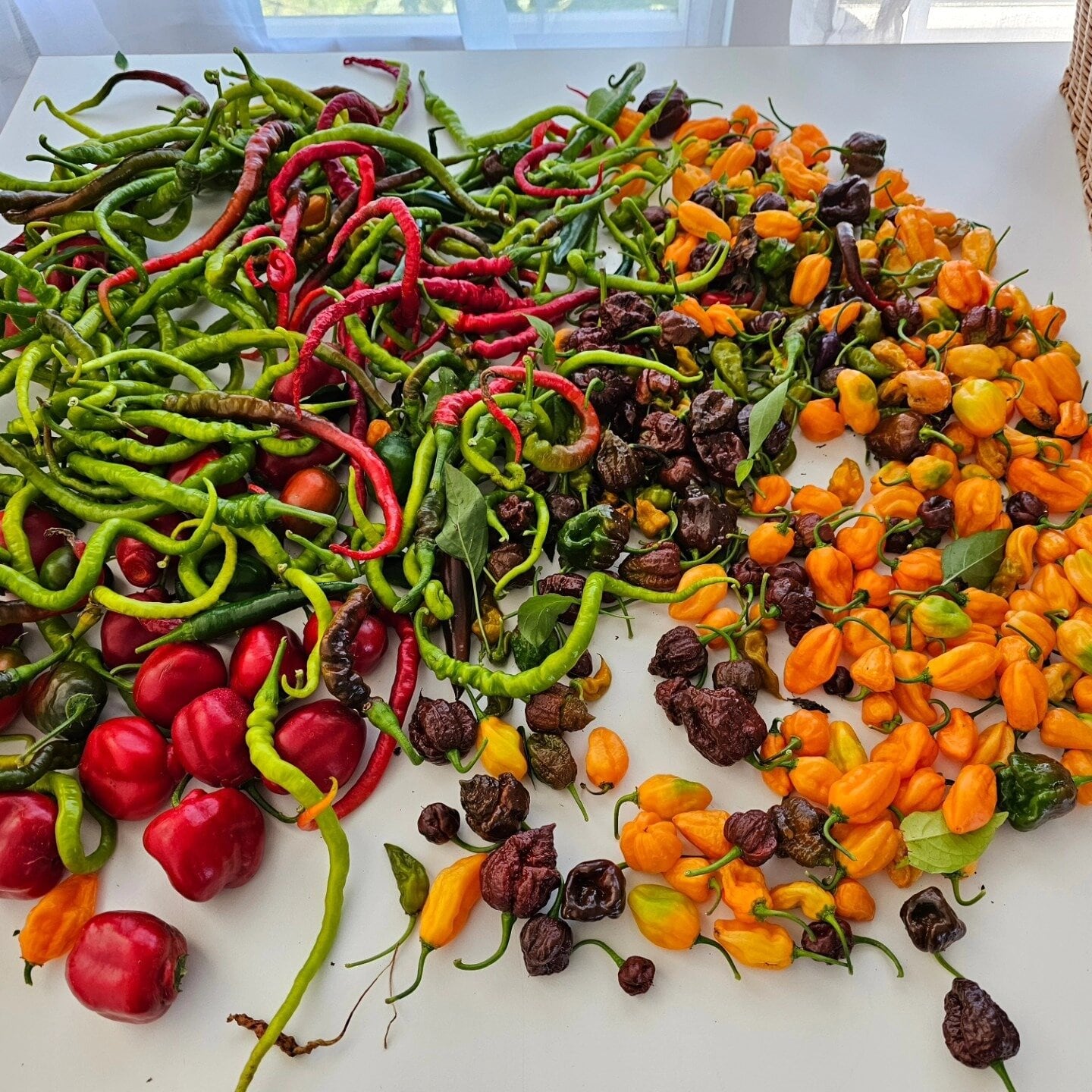
Some of the produce from the food forest. Photo / Supplied
That grew into a new initiative, The Happy Scion Project, which was quickly renamed Troppo, a source of a wide variety of plants, information and encouragement that also supports food forest creation.
“We thought it was quite catchy - but the name was too long and people kept asking what Scion was and by the time we’d explained it … people had kind of lost what we were focusing on.”
Troppo is now a significant source of funding for the charitable trust.
“We’ve set Troppo up under the Vector Group so any income that comes in [goes to the trust]. Also it’s more integrated with the community and we’ve got a little nursery here and have helped set up different food forest in the area – we’ve been quite generous in that department.”
Now the focus of Vector has expanded into rooms offering short-term emergency accommodation and making self-contained vans available at low cost and on a low repayment schedule, “things like that, community based things and events”.
As well as Troppo’s online sales, Fawcett takes plants to sell at events such as Plant Fest, other big plants and local events including Pukehina Surf ‘n’ Sand Autorama.
“We go along and we are a little bit different. We sell a few things like frangipani and things like that which generates income for our trust, Vector Group, so about 85% [of income] is generated by ourselves with about 15-20% coming from funding.
“So, we are a little bit different to other organisation in that we are sustainable and we don’t rely on funding so much.”
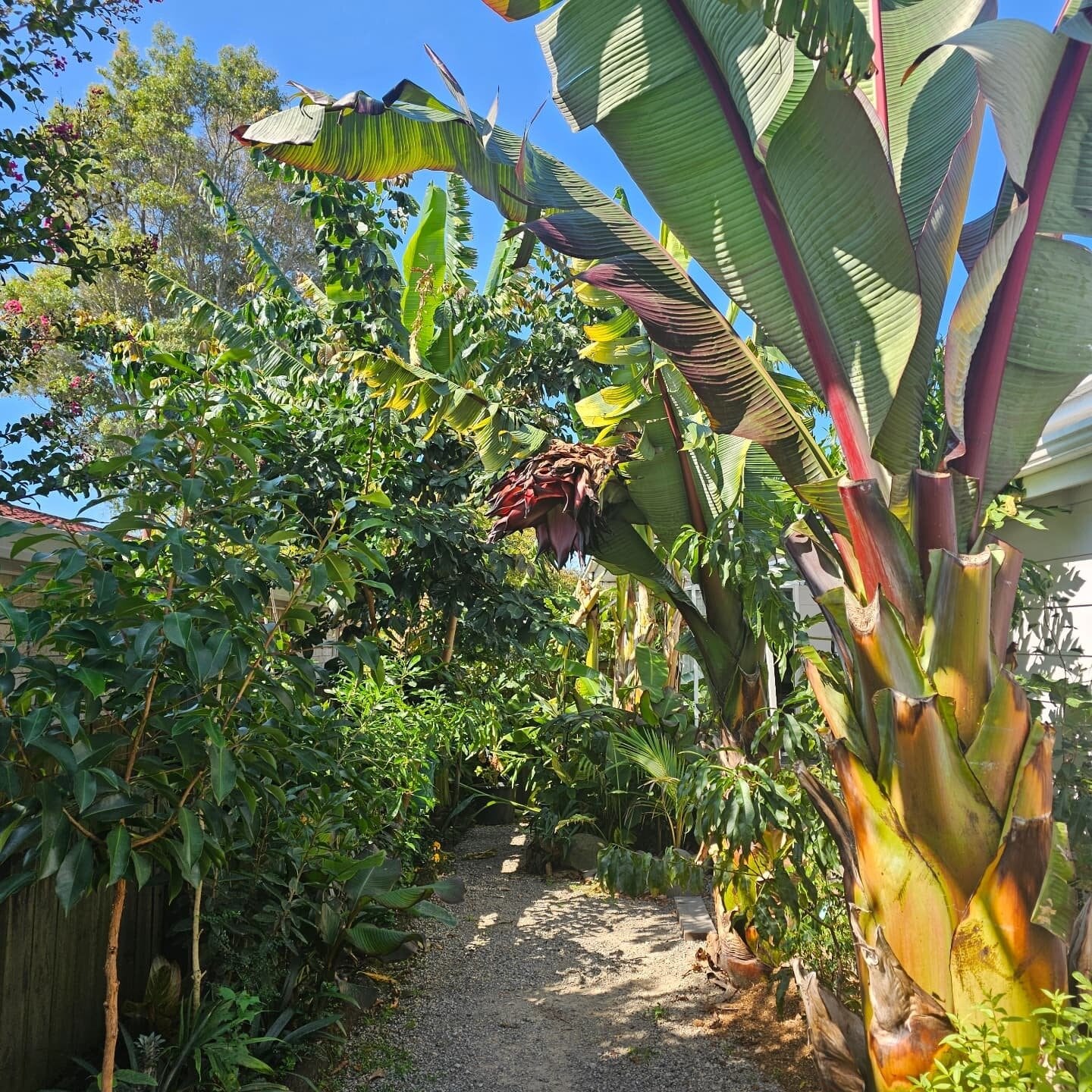
The Troppo food forest. Photo / Supplied
Fawcett is also part of a local food forest group.
“There’s a Facebook group and a bunch of us who have food forests who basically have tours at each other’s places. You get to see what they’ve done, what you like and what you don’t like and everybody comes together to share. Being located at a house in town, available outdoor space is limited, and Fawcett is searching for extra land.
“I’ve run out of land here and there’s way too many plants.”
Among those plants are more than 35 banana varieties, some edible, some ornamental.
“One of my biggest issues is the bananas, they multiply. They grow well in the area but you need space when you divide them.”
The fruiting variety produce multiple crops and Steve took some along to a Flavours of Plenty event in Te Puke earlier this year where they were given away and used to make sorbets.
Other food goes to pataka kai, rather than being sold, but many plants are sold.
While the rare bananas are Fawcett’s favourites, the range is vast and includes pineapple, paw paw, mangoes, star fruit, cassava, frangipani, bird of paradise, ginger, turmeric and fig.
He also propagates and sells indoor plants.
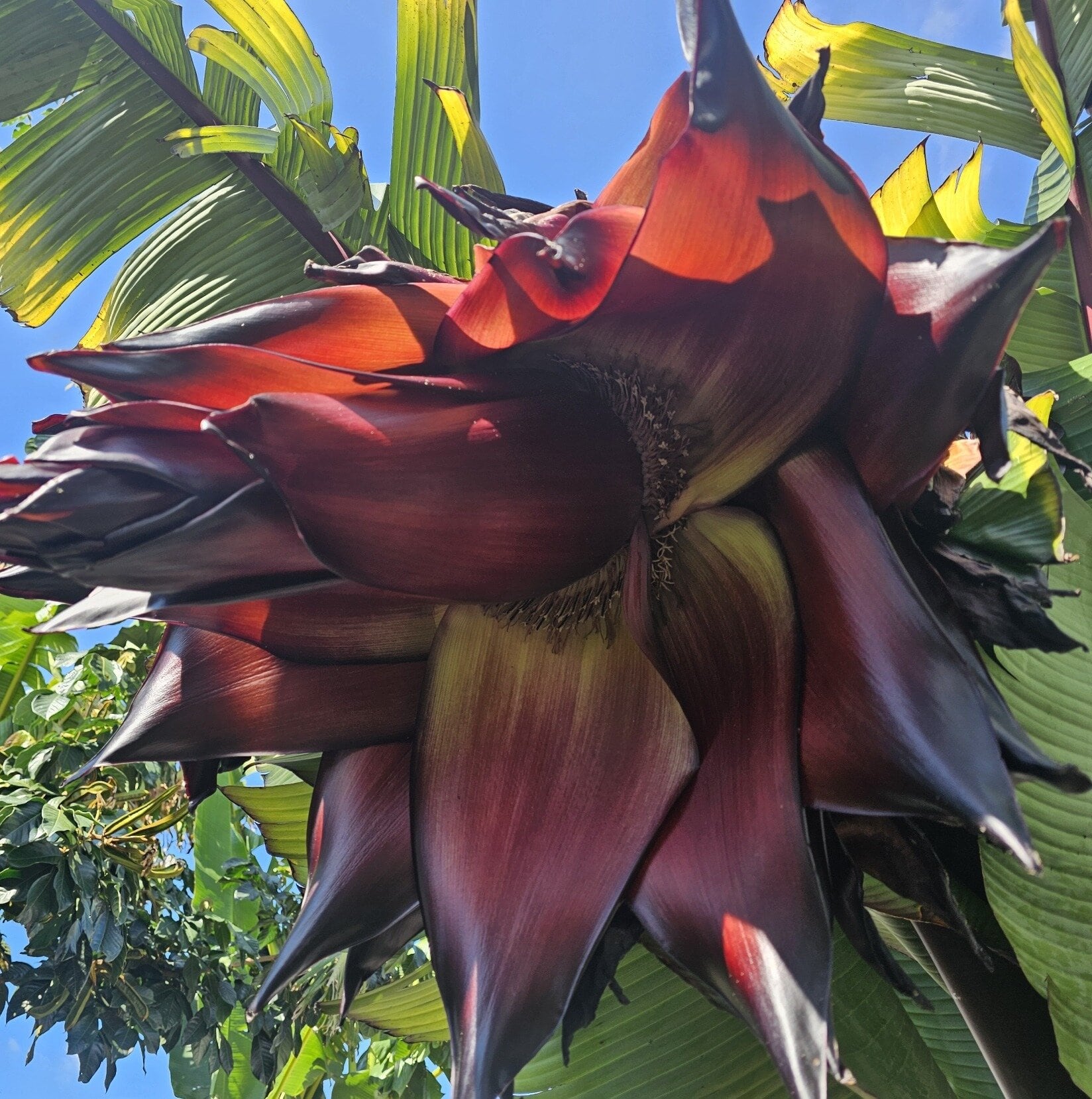
Red Abyssinnian Banana. An ornamental plant, but one that has an edible root and stem. Fawcett has supplied leaves to use in festivals such as Diwali. Photo / Supplied
“That’s something I can fit in in winter when, in the food forest, there’s now much to do in wintertime.
“It also gives you experience – I knew nothing about plants three year ago and how you clone and propagate.”
When he moved into the house there wasn’t a single plant in the garden.
“The whole place had been bulldozed and turned into gravel driveway and I didin’t have much room to grow in the ground and that’s why I started with kiwifruit bins.”
Both Vector Group Charitable Trust and Troppo have their own websites.

0 comments
Leave a Comment
You must be logged in to make a comment.