


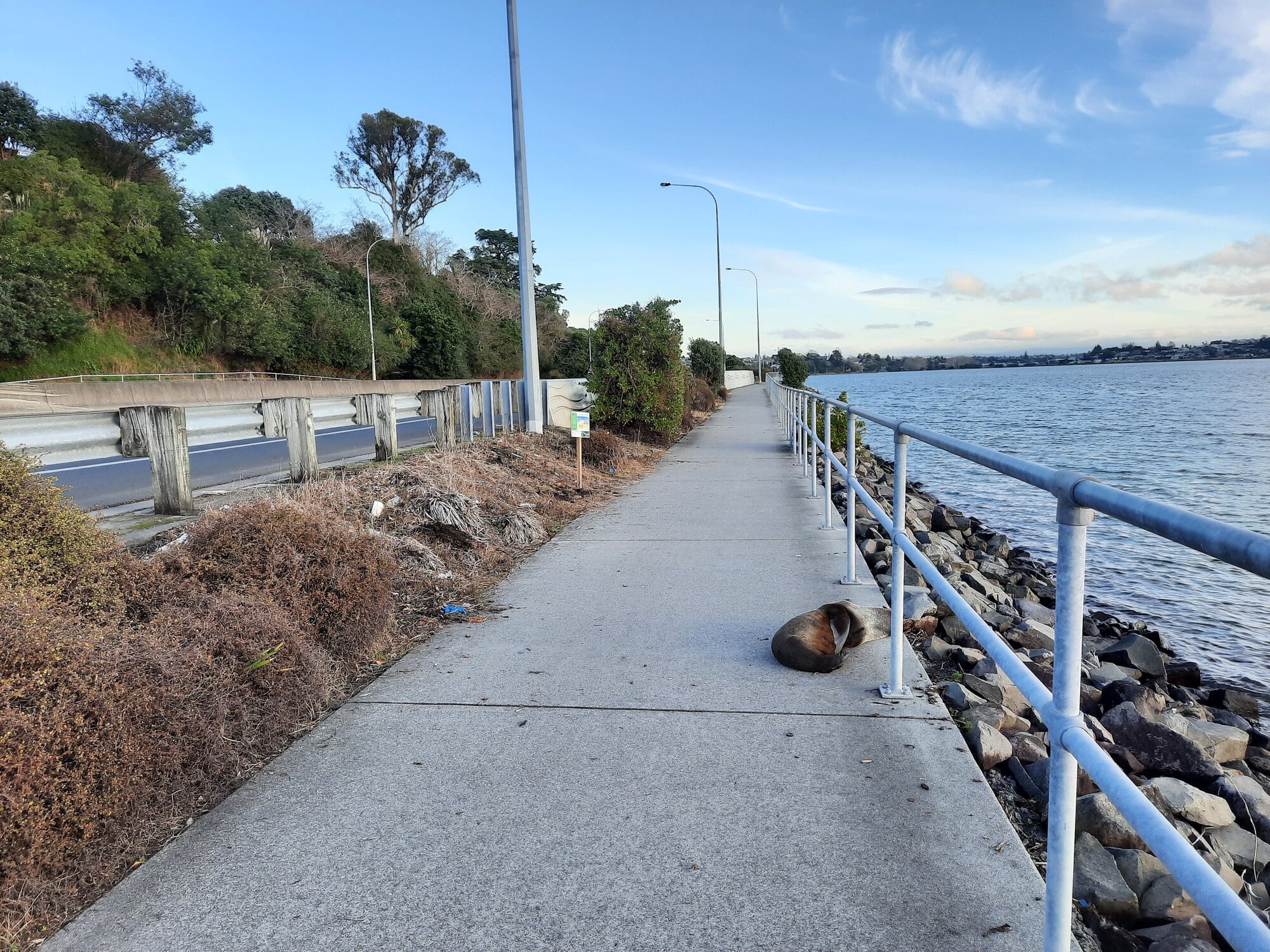
It’s that time of year again, when young fur seals start turning up in all sorts of odd places, from footpaths and paddocks to busy roads.
With fur seal (kekeno) and sea lion populations bouncing back around the mainland, the Department of Conservation (DoC) and Waka Kotahi NZ Transport Agency have launched a nationwide project to track where marine mammals are appearing near roads, and why.
This work builds on the success of recent guardrail installations in Kaikōura, which have already made a difference by delivering conservation gains, helping to keep curious young fur seals safely off the tarmac, and reducing the risk of seal-related road accidents.
The public is being asked to report sightings to help protect both people and wildlife as Aotearoa adapts to the return of these ocean wanderers and navigates the challenges of “seal silly season”.
Tauranga biodiversity ranger Sarah-Lyn Wilson said DoC received numerous reports of fur seals around Bay of Plenty each year, often in expected places but sometimes in more unusual locations.
“We’ve had seals on picnic tables, blocking pathways and driveways, and they can even travel inland via streams and drainage systems.
“Hot spots for seal sightings include many of our popular beaches and public places, including built-up Mount Maunganui, so please keep an eye out and give them space.”
If you see a seal that’s badly injured, being harassed, or in danger, call 0800 DOC HOT (0800 362 468).
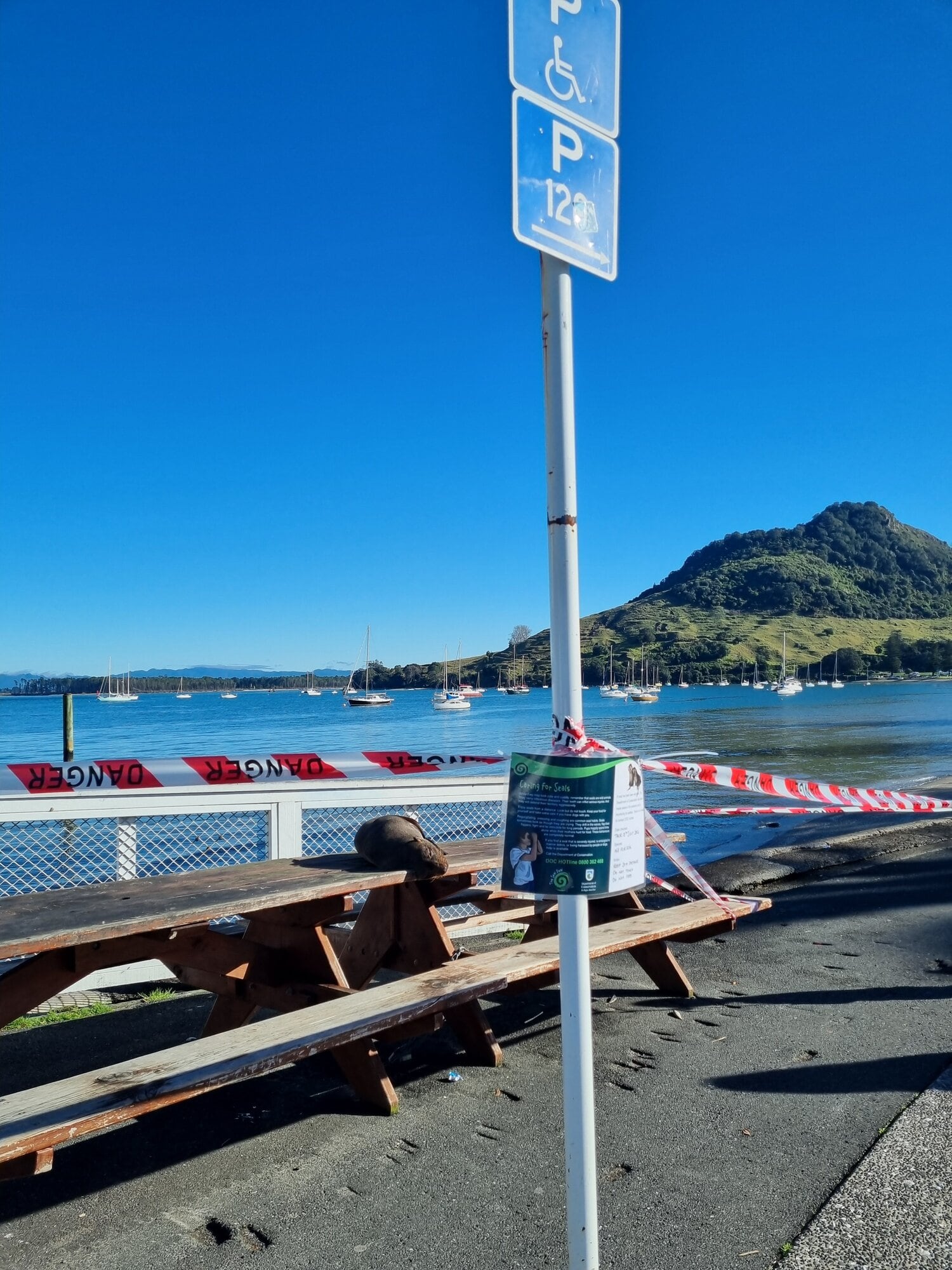
A fur seal on a picnic table at Salisbury Wharf, Mount Maunganui, in 2024. Photo / Sarah-Lyn Wilson / DoC
DoC is also asking people to report sightings of seals, fur seals or sea lions on or near roads.
“Your sightings - date, location, even a photo if it’s safe - will help us map hotspots and understand the risks,” said Jody Weir, senior marine technical adviser.
“It’s a great example of how citizen science could make a real difference.”
This national study used existing DoC and NZTA road data and would be strengthened by public reports.
The results would help inform future road planning, identify high-risk zones, and guide where further road improvements, such as the motorcycle guard rail used in Kaikōura, might be needed.
The initiative was part of a growing field known as “road ecology”, an area of science focused on understanding how roads affect wildlife movement and behaviour.
To report a seal or sea lion on or near a road, email: [email protected]. Include the date of your sighting, a description of the location and animal(s), including how many, specific GPS co-ordinates if possible (or drop a pin), and a photo (if safe).
Similarly, report any dead marine mammals on or near roads.
Reports on sections of road where you’ve previously seen marine mammals, and when, are also helpful.
Reports submitted by June 22 will help shape the initial national road risk model, though ongoing sightings will be welcomed. Your input could directly influence how safer systems are designed.
Seal tips
- Never touch, handle or feed a seal, because they can be aggressive if they feel threatened. It’s also a breach of the Marine Mammals Protection Act.
- Maintain a distance of at least 20 metres from kekeno if possible and avoid getting between the seal and the sea.
- Give seals space if encountered on or near a beach.
- Always keep dogs on a leash and away from seals.
- Ensure small children are at a safe distance and under control when watching seals.
- If you see a seal that’s badly injured, being harassed or in danger, call 0800 DOC HOT (0800 362 468).
Additional information: Keeping Sea Lions Safe | New Zealand Sea Lion Trust

0 comments
Leave a Comment
You must be logged in to make a comment.