


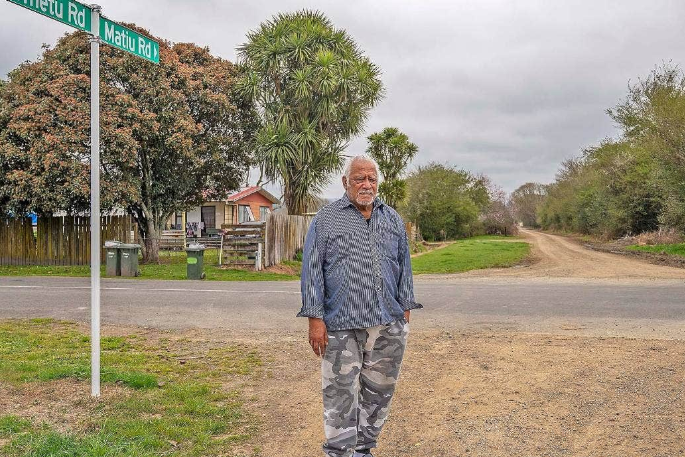
Some of Bay of Plenty's dusty rural roads will be sealed this summer, reversing a decision to put the road sealing programme on hold to keep rates rises below 10%.
Whakatāne District Council recently unanimously decided to put the sealing of rural roads back on the table, but due to escalating costs, only two Rūātoki roads and one in Matatā are likely to be sealed.
For Rūātoki residents, the decision means a 138m-stretch of Paekoa Rd and 957m of Kawekawe Rd will be sealed early next year. The two stretches of road have 11 houses on them.
Former Māori TV sports presenter Hemana Waaka, whose father is buried at the Ngāti Tawhaki urupā at the end of Kawekawe Rd, is pleased the roads will be sealed.
“When there is a funeral at Tuhua Urupā, the cars are bumper to bumper all the way along that road,” he said.
However, he said, the council needed to step up its road-sealing plans.
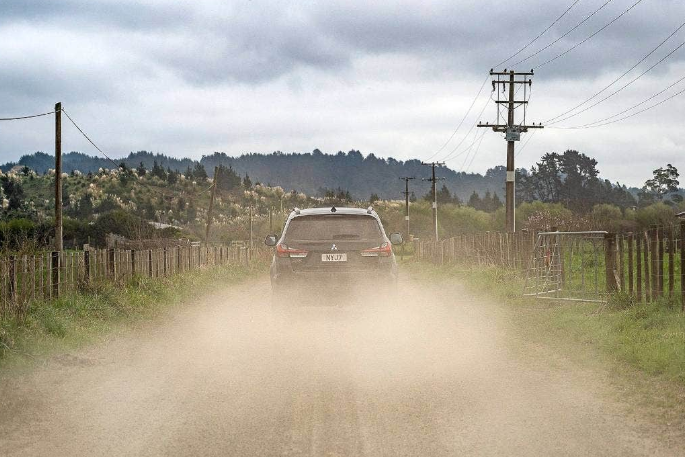
A car on Kawekawe Rd in Rūātoki throws up dust at the five homes and urupā located next to the road. Photo: Troy Baker/Supplied/Local Democracy Reporting.
He retired to his ancestral lands in Tawera in 2011, and said roads were becoming more heavily used as more Tūhoe people moved home.
Matiu Rd, No 1 Rd, Opurana and Rangi roads were due to be sealed this financial year, before the programme was put on hold.
His own land, where he has planted an orchard of 400 macadamia trees, is on Te Whetu Rd, which is number 18 on the council’s priority list.
He expects three new papakāinga homes will be built on the road by the end of the year, which will be affected by dust from cars and trucks.
The dust from unsealed roads caused health concerns, particularly for people with existing respiratory conditions. The roads were also inadequate for the battering they took during wet months, especially from farm trucks and large vehicles, he said.
In a meeting on August 10, Te Urewera general ward councillor Andrew Iles requested that the Seal Extension Programme be reinstated and funded through an internal loan.
It was voted on at a full council meeting on August 31 and agreed to by all elected members.
“Health and safety issues confronting residents and ratepayers, whose homes, marae, kōhanga reo and preschools are situated on these dusty and muddy, predominantly rural metal roads, has been well documented,” Iles said at the meeting.
Iles said the sealing of roads had been hotly debated by Whakatāne councils over the years – even more so since it ceased in 2008.
In its 2021-30 Long Term Plan, the council allocated $750,000 a year for the sealing of metalled and dirt roads in mainly rural local areas.
However, costs of the seal extension programme grew from $2.25 million to more than $2.3m over the first three years of the long-term plan. The programme was put on hold earlier this year due to the pressure of rates increases in its 2023-24 Annual Plan.
Five stretches of road around Edgecumbe and Te Teko, equating to just over 1.6km, had been sealed in the first two years of the programme, while the council engaged with Tūhoe iwi over higher priority roads in the Rūātoki area.
Planning and design had already been completed on the Rūātoki roads when the remaining budget of just under $800,000 was removed from the programme earlier this year.
Iles cited the 181 submitters who supported the reinstatement of funding for road sealing during the 2021 planning process.
“These homes and public amenities situated on these metal roads across the Whakatāne district are already disadvantaged against those of our urban residents," he said.
"In many cases, they neither have reticulated sewerage, potable drinking water, formed footpaths or street lighting, nor the availability of services such as weekly rubbish collection.”
A report from staff warned that the decision would show a lack of commitment to due process and opened the door for other annual plan funding decisions to be reconsidered.
The report also said that the requirement to deliver the work at short notice would put additional pressure on the transport team already facing unplanned work due to storm-damaged roads.
Strategy and asset management team leader Ann-Elise Reynolds said the budget was only sufficient to seal the top two priority roads in Rūātoki this summer, Paekoa and Kawakawa roads, which was likely to happen early next year.
"The remaining four sites will remain in their prioritised order and be delivered within future funding programmes, pending the long-term plan resolution."
Public Interest Journalism funded through NZ On Air.


0 comments
Leave a Comment
You must be logged in to make a comment.