


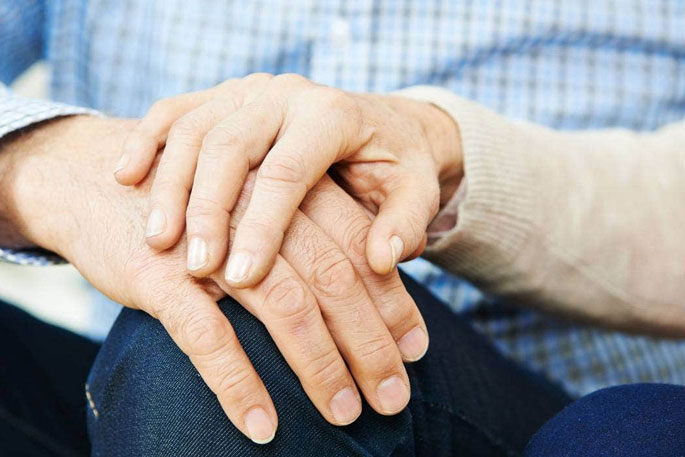
For the last few minutes of the man’s life, Wendy Leong held his hand, spoke to him, and stroked his forehead. A person who was a complete stranger to her.
Once he died, she started again the song they’d been listening to, which played at the funerals of her own mother and grandmother. She sat cradling his shoulder for 20 more minutes or so, before walking to Rotorua’s lakefront and having a big cry.
“He shouldn’t have had to do that by himself.”
Leong is a volunteer for No One Dies Alone (NODA), a service aimed at providing a caring and compassionate presence for patients who, for many reasons, may not have any other support at the ends of their lives.
No One Dies Alone is in some aged-care residential facilities, but Rotorua Hospital is the country’s first public hospital to offer the service.
When the concept was first mentioned to Wendy, “every part of me lit up”.
The former school principal says she has sat as a volunteer with two people as they died, but isn’t scared, anxious or frightened in any way.
Instead, they are “beautiful... touching, really moving experiences”.
That first man was an elderly bachelor. His family were gone, and his friends in aged care.
On another occasion, Wendy’s son dropped her to the hospital to sit with a man after an “intense” day managing new-entrants.
She shook out her hands and focused her breathing, so she could “be my best self going in, not shocked, affronted or scared”.
“This person needed me, and let me be there. They needed an open heart.”
Wendy, who is training to be an end-of-life doula, wants “people to understand loss, death and dying, as we do with birth – that bringing someone into life [is treated] as the same way at the end of life”.
Lakes’ No One Dies Alone service has 16 volunteers: some retired healthcare professionals, others work in the hospital chaplaincy, and a number are members of Te Atawhai Aroha Compassionate Communities Rotorua Trust.
The idea originated from an American nurse, Sandra Clarke.
It was 1986, and Sandra was working a night shift, so fewer staff were around.
One patient wasn’t doing well, and would likely die during her shift, she was told.
Sandra says he could barely speak, but asked if she would stay with him.
She advised she couldn’t right then, as she had to see other patients first, but told him that she’d come back as soon as she was done.
Once she’d finished her other tasks, about an hour later, she returned to his room to find his arm outstretched – he had died.
“He had a simple wish that was easily granted, and I couldn’t do it. From that moment on, it became important to me to find a way to be with patients at the end of life,” she said in a 2013 interview with the Mayo Clinic.
So, NODA began in 2001. It has since been established in hospital and aged-care facilities throughout the world.
Retired psychotherapist Kay Ryan, who helped establish NODA in an aged residential care facility in Auckland, “knew the value of it” and supported its introduction at Lakes.
The volunteers undergo training relating to what happens when we die, including physical, emotional, social and spiritual aspects of dying. They learn about being compassionately present, supporting cultural and religious diversity, and what they can say and do to support a patient and/or whānau.
They sit with patients for up to four hours at a time, and rotate shifts using an app – often staying through the night.
In the seven months it has been running, the volunteers have supported seven people as they've died, says Kay.
She says it takes a special person to leave their home on a cold winter night when their phone pings, to go and sit with a stranger.
While there are tough times, there is also “magic”.
“They get as much out of it as they give.”.
Rotorua physician Dr Denise Aitken knows firsthand how busy hospital wards can be, and how it’s not always possible for nurses to stop and spend time with patients at the end of their life.
Denise says it can be “morally distressing” for nurses to not be able to respond to that perceived need, particularly given they work in caring professions. Often staff want to be there, but can’t always be.
In that regard, NODA – run in partnership by Te Whatu Ora Lakes and Te Atawhai Aroha – has been “huge” for hospital staff too, she says.
Volunteer Sarah Dewes connected with NODA through Te Atawhai Aroha, whose vision is that every whānau and community has the capacity and knowledge to uphold the mana of people who are losing their independence, dying, or grieving.
They educate about end-of-life practicalities, such as affordable funeral hui and financial planning; making wills, advanced care plans, succession planning for Māori land, and appointing power of attorney; and increasing community confidence in speaking about and planning for death.

0 comments
Leave a Comment
You must be logged in to make a comment.