


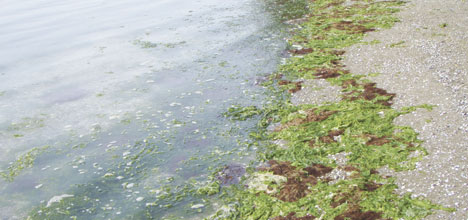
New uses for sea lettuce including bio-fuel, mulch and stock feed are being investigated by a programme coordinator at the Bay of Plenty Regional Council
The sea lettuce that washes up on Bay of Plenty shores costs the Bay of Plenty Regional Council and Tauranga City Council $67,000 a year in disposal costs.
The regional council is developing projects under its $30,000 Bright Ideas Innovation Fund to improve the value of the council's work in the community.
Staff can apply for funding for their innovative ideas, presenting a business case to a selection panel.
This year's winning project is an investigation into sustainable ways of disposing of sea lettuce - a continuing summer problem on Bay of Plenty beaches.
Regional Council Tauranga Harbour programme co-ordinator Bruce Gardner is looking into the viability of using sea lettuce for stock food, dewatering and turning it into pellets for fertiliser or using it for useful products such as bio-gas, bio-diesel or ethanol.
Most sea lettuce collected in the last two years has gone to Tauranga's Te Maunga compost facility, but now that Psa disease has resulted in a significant drop-off in demand from kiwifruit orchards the facility is unable to take the lettuce any more.
Bruce says unless new uses are found, unsustainable disposal to landfill would cost the Regional Council and Tauranga City Council up to $67,000 in a bad sea lettuce year.
Regional Council Corporate general manager Brian Trott says the projects staff have come up under the Bright Ideas scheme with have been exciting and innovative.
'Our staff are working out in the field every day around our region and can come up with better ways of doing things using their experience and expertise.
'The Bright Ideas Innovation Fund provides a bit of a boost to give them the time and some funding to get their ideas off the ground, and benefit the region's communities.”
Another project by rivers and drainage manager Bruce Crabbe has investigated using dairy farm effluent to feed fish species for commercial production, or replenish native fish stocks.
Brian says they've been excited to see the variety of projects staff have thought of - they're often the kind of things academic researchers might never come up with, and they have practical application in their everyday work.

0 comments
Leave a Comment
You must be logged in to make a comment.