


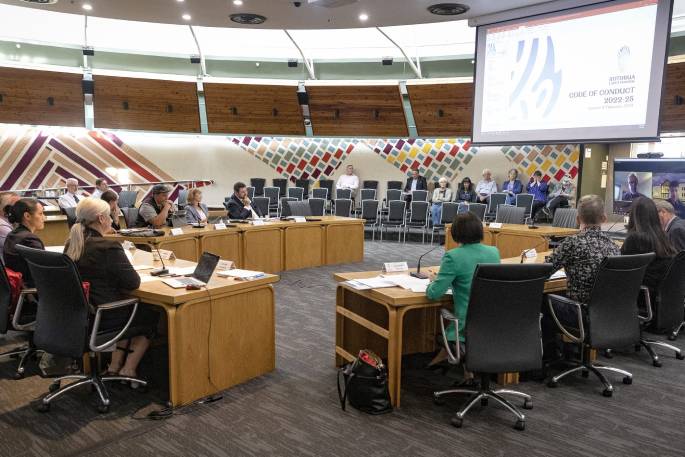
A mayor's request to council staff to notify Rotorua residents of public-excluded workshops has taken months to be acted on.
But after enquiries from Local Democracy Reporting, notification of the workshops will now be made public following the council's 'oversight”.
Rotorua mayor Tania Tapsell says she asked council staff at the beginning of the new term to include in its information on meetings the date and time of workshops in a move for greater transparency on council processes.
This had not been done to date however, and council says it's down to an oversight.
Chief Ombudsman Peter Boshier last year launched an investigation into concerns that councils were undermining local democracy by using workshops to discuss issues and make decisions behind closed doors.
Rotorua Lakes Council is among the eight councils he is investigating and the findings are expected later this year.
Councils around the country varied in how transparent workshops are for the general public.
Earlier this year, Ōpōtiki District Council decided to publish key notes from workshops.
Local Government New Zealand president Stuart Crosby believes unless there is a good reason, all workshops should be held publicly.
He says councils are becoming more transparent and Ōpōtiki's move is a good one.
There are benefits to workshops but suspicions rise and assumptions can be made when people don't know what is happening in them.
Rotorua resident Justin Adams previously opposed public excluded workshops.
In response to Ōpōtiki's change, he says Rotorua can adopt something similar, 'as a step towards greater public transparency”.
He has previously complained to the Ombudsman about the council not providing detailed information on discussions in public-excluded workshops.
He encourages the new mayor and councillors to end what he feels is excessive public exclusion.
Rotorua Lakes Council district leadership and democracy deputy chief executive Oonagh Hopkins says any change to the forums process needs to be at the request of elected members.
She says forums are a way to support informed decision-making and are to brief elected members on emerging issues or get an indication of councillor preference before initiating a policy or project and to provide an opportunity for elected members to develop ideas.
Rotorua forums are not open to the public or media and no minutes are recorded from these because, Oonagh says, no decisions are made during forums.
There has been 18 forums this term, 14 of which were induction workshops following the 2022 election.
Local Democracy Reporting asked Rotorua councillors whether workshops should be made public, to what degree and why, in what circumstances they should be closed to the public and what role they believed workshops had in decision-making.
Responses were provided by Tapsell and councillors Robert Lee, Sandra Kai Fong, Conan O'Brien and Lani Kereopa.
Tapsell says she supports including key notes from workshops as information available to the public.
'At times [the] council will be discussing information that is commercially sensitive, such as how much we expect a project to cost.
'It's in ratepayers' best interests that we're able to lay out the scope of these before we take on quotes from contractors so that we can ensure we get the best price back.”
Tapsell says workshops mean councillors can do their jobs well and be well informed.
She says at the beginning of this term she made a number of changes, including that meeting agendas be uploaded a week before committee and council meetings, and that the date and topic of workshops be notified.
This was to improve transparency on council processes.
The latter, however, was not happening.
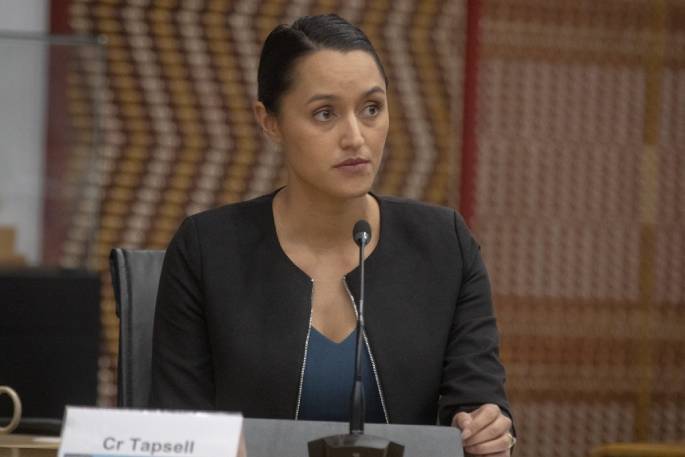 Rotorua mayor Tania Tapsell. Photo / Andrew Warner.
Tapsell says it's her expectation all workshops be notified and, having found out yesterday that was not the case, was told they will be in future.
A council spokesperson says this is an oversight and will be rectified.
Kereopa believes public and media scrutiny of workshops is unhelpful, and they are the 'only opportunity councillors have to gather, share and question information collectively, with council operations staff on hand to provide answers”.
She thinks that scrutiny belongs at council meetings and the council should keep its workshops closed to the public but provide key notes, like Ōpōtiki.
She says workshops need to be a safe space for councillors to talk.
Lee also supports the release of key notes but says he's more for closed or mostly closed workshops.
He says he previously, prior to being elected, objected to public-excluded workshops because, in his view, it seemed decision-making was happening in them.
He feels there has been a shift from the previous council.
Lee believes the role of workshops is to help ensure elected members can ask sensible questions, have an insightful debate and make informed decisions when they are on the public stage in front of the media and public.
Kai Fong says there is a need for councillors to have some time in forum sessions closed to the public to test ideas, ask as many questions as needed and do 'blue sky thinking”.
'No decisions should be made in forums. All decisions should be made in formal council meetings.”
O'Brien feels workshops should work the same as council and committee meetings and be open to the public except for where commercial, privacy or legal sensitivities applied.
'The public have the right to know the substance of information and advice to elected members from council officers, and how their elected representatives respond.
'Like justice, democracy must not only be done, but also be seen to be done.”
- Public Interest Journalism funded through NZ on Air.

0 comments
Leave a Comment
You must be logged in to make a comment.