


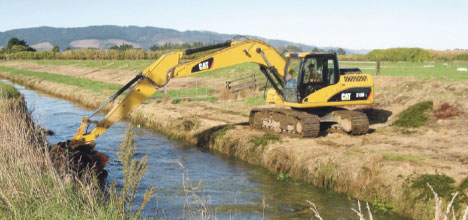
Alleviating the effects of high water tables through effective drainage systems can be essential for maximizing farm production.
Careful planning is required when it comes to drain cleaning.
Therefore drain management is an integral part of farm management. However, many farm drains are actually modified streams, which are protected in law from many types of disturbances. Waikato Regional Council can provide more specific advice about what drainage work can just be done, and what work needs a permit.
Important habitats
Drains act as important habitats to significant native plants and fish, such as eels, mudfish, giant kokopu and inanga (whitebait). However, they can also be channels for transporting material to waterways. So it's important that their management helps protect desirable species and reduces the transportation of sediments, nutrients and faecal bacteria to waterways.
Care should be taken to ensure that any nutrient-enriched sludge removed from a drain is disposed of appropriately as, like effluent, it can pose a risk to sensitive habitats.
To help maintain biodiversity in drainage ditches and to keep undesirable material out of them in the first place, there are a number of tried and true methods.
Fencing to prevent stock access to drains can help reduce bank erosion and reduce maintenance costs.
It is a good idea to only spray weeds with herbicides in the bed of the ditch to maintain cover on the bank sides. Use only herbicides approved for aquatic use in New Zealand and ensure application is according to manufacturer's guidelines.
Planting of banks will help create a filter for nutrients and sediment. Using shorter species such as Carex, will still allow for mechanical access.
Creating ditches with more gradual sides (less than a 1:1.5 batter) will help maintain a faster centre flow, thereby reducing sediment build up which promotes weed growth.
These drain management techniques should reduce the frequency of mechanical cleaning of drains.
Biodiversity bolstered
Their combined impact will help lower farm costs overall, improve water quality generally and bolster biodiversity in our region.
Meanwhile, it's worth going into a bit more detail about how weeds can have a positive effect on bank stabilisation, even though they can block water channels and cause water tables to rise.
For example, it is important to assess whether clearing weeds from the drain is strictly necessary or whether it will cause bank slumping or an excess release of sediments and nutrients to more sensitive streams.
Also, the shade provided by ditch weeds can help regulate water temperature and weeds can filter out dissolved nutrients which cause algal blooms.
On timings, a factor to bear in mind is that it's best to avoid doing any required clearing between mid-October and April so as not to disrupt spawning and nesting times.
Ideal timing
By contrast, it is recommended that tidal zone drains should only be cleaned between October and January to account for the different spawning and migration times. As a general rule of thumb, only a fifth of farm drains should be cleaned annually to help minimise the impact on the habitat.
Ideally, spraying should be carried out only between November and April (or October to January for tidal areas). Spraying when ephemeral (seasonally dry) drains don't have water in them is another option. Also, spraying before the weeds are too large will reduce the dead material in the ditch which can lead to nutrient enrichment of waterways and blockages. Consents may also be required for spraying.
Contact the Waikato Regional Council on 0800 800401 to establish if any work associated with the drain requires a consent.
Kate Ody is a sustainable agriculture advisor at Waikato Regional Council.

0 comments
Leave a Comment
You must be logged in to make a comment.