


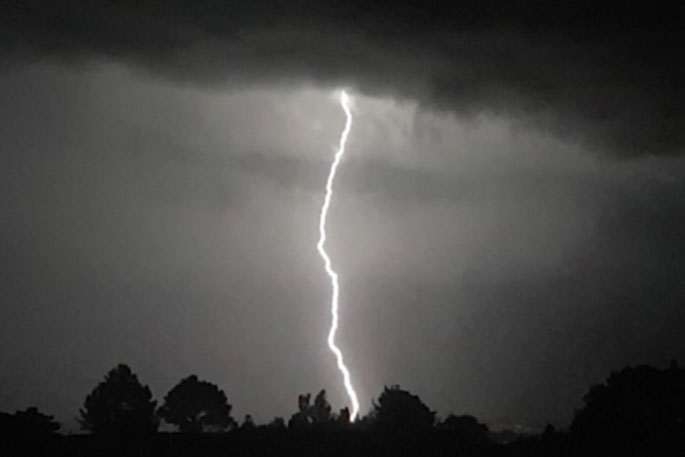
Thunderstorms are possible this afternoon and evening over many North Island areas according to MetService.
The areas listed are Coromandel Peninsula, Waikato, Waitomo, Taumarunui, Bay of Plenty, Rotorua, Taupo, Gisborne, Hawkes Bay, Taranaki, Taihape, Wanganui, Manawatu, and Tararua.
The severe thunderstorm watch is valid from 12 noon to 10pm today.
"There a moderate risk of severe thunderstorms with downpours bringing 25 to 40 mm per hour from Waikato, the far south of Coromandel, Bay of Plenty and inland Gisborne south to the Tararua District and Manawatu," says a MetService spokesperson.
Rainfall of this intensity can cause surface and/or flash flooding, especially about low-lying areas such as streams, rivers or narrow valleys, and may also lead to slips.
A Severe Thunderstorm Watch means conditions are favourable for severe thunderstorms in and close to the watch area. People in these areas should be on the lookout for threatening weather conditions and monitor for possible Severe Thunderstorm Warnings.
For information on preparing for and keeping safe during a storm, see the Civil Defence Get Ready website.
What to do during a storm
When a storm is forecast
Bring inside or tie down anything that strong winds could break or pick up. If you have a trampoline, turn it upside down to minimise the surface area exposed to wind.
Remove any debris or loose items from around your property. Branches and firewood can become missiles in strong winds.
Bring pets indoors. They can get unsettled by storms and it is more comforting and safer for them to be with you.
Check on your neighbours and anyone who might need your help.
During a storm
Stay inside. Don't walk around outside. Don't drive unless absolutely necessary.
Close exterior and interior doors and windows. Pull curtains and blinds over windows. This could prevent injury from flying glass if the window breaks.
Stay informed during an emergency. Listen to the radio or follow your Civil Defence Emergency Management Group online. Follow the instructions of civil defence and emergency services.
Avoid bathtubs, water taps, and sinks. Metal pipes and plumbing can conduct electricity if struck by lightning. Use your water from your emergency supplies.
Unplug small appliances that may be affected by electrical power surges. If you lose power, unplug major appliances. This will reduce the power surge and possible damage when power is restored.

0 comments
Leave a Comment
You must be logged in to make a comment.