


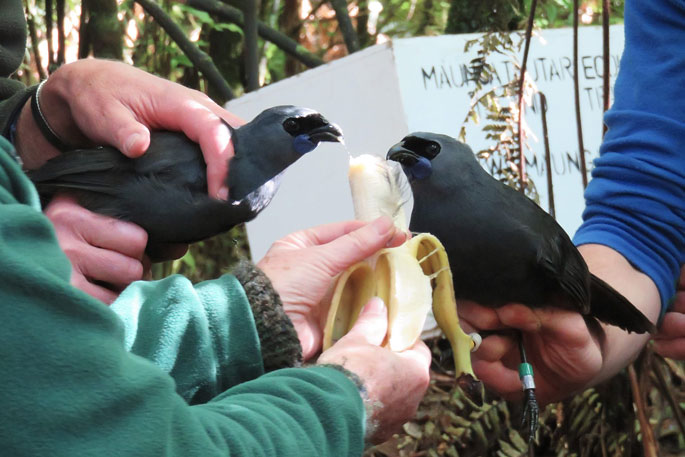
Creating forest corridors to expand native kōkako's habitat, is one of the key ways to protect these stunning native birds of the Kaharoa Forest.
For five years, a group called the Kōkako Ecosystem Expansion Programme have been collaborating to save the Kaharoa Forest kōkako by growing the bird's habitat which they desperately need more of.
The collaborative conversation efforts are a major feat too -Tapuika iwi, Ngāti Rangiwewehi, BOPRC, DOC, Bay Conservation Alliance, Kaharoa Kōkako Trust, Forest & Bird, Ōtanewainuku Kiwi Trust, Kōkako Recovery Group, Paraiti Catchment Care Group, Port Blakely Ltd, QEII National Trust have all teamed up for this project!
'This conservation project wouldn't happen without collaboration between people who have a passion for nature,” says Kaharoa Kōkako Trust chairperson Graeme Young.
Secure to save
Kōkako are recognisable by their blue wattles and the Kaharoa kōkako are a particularly special group of this endangered species.
'Our population is the original one so its genes are intact and always were,” says Graeme.
The KEEP project developed after genetic research uncovered the amount of habitat space kōkako require to survive.
'Some time ago, a geneticist worked out for kōkako to survive as a genetically secure population, you need 250 pairs and each pair needs roughly eight hectares of territory.
'That means you need 2000 hectares of forest and Kaharoa doesn't have that – Kaharoa only has about 1000 hectares.”
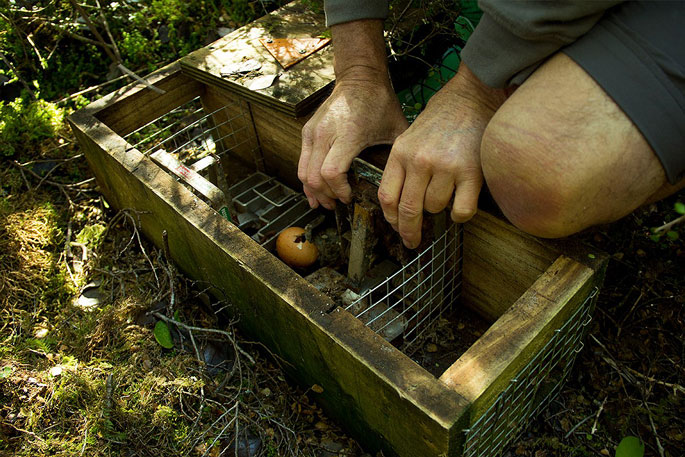 Setting traps is part of the Kōkako Ecosystem Expansion Programme mahi (work). Photo: Kim Collins.
Therefore the KEEP programme is encouraging Kaharoa's neighbours to protect forested areas so that kōkako can spread from Kaharoa and successfully breed.
'Our hope is to extend these long corridors all the way to Otanewainuku and then potentially to other areas like Mangorewa.
We're probably, up to about 1300-1400 hectares, so already the projects working really well.”
Using corridors
Creating corridors and networking forested areas to expand their habitat is particularly unique and necessary to the kōkako.
'They're terrible flyers,” says Graeme.
'In a patch of bush that's surrounded by farm land, they can't escape and are stuck in that bush forever.”
He says that kōkako can glide up to 100 metres but need to gain height if they're to go further.
However, the forest corridor work is going successfully.
'With the patchwork of native forest and a few pine plantations, we actually almost have corridors now existing all the way to Otanewainuku and we're trying to encourage birds to use them.”
Keeping the kōkako corridors and Kaharoa forest free of predators is key to their protection too. Like many native birds, kōkako main predators are rats, stoats and possums which KKT continue to control.
'Without pest control, there's no chance for them- the birds will die, whether its kiwi, kōkako, robin…without pest control they're doomed.”
Overall, he says this project working to save this part of our environment is bigger than people realise.
'It's enhancing people's feeling about the world and life and the way things should be.”

0 comments
Leave a Comment
You must be logged in to make a comment.