


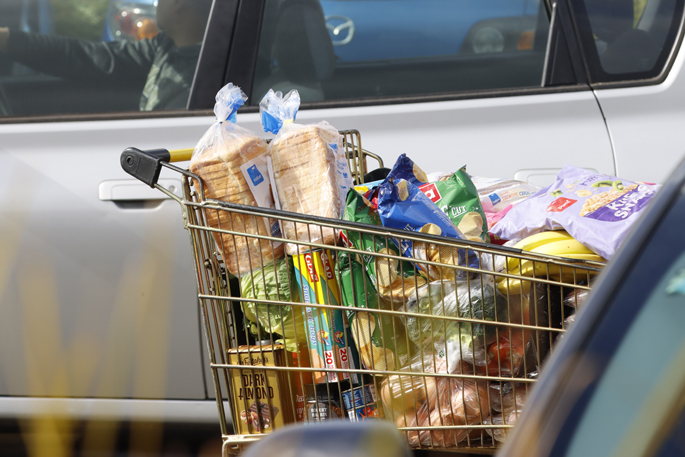
The annual food price increase remains at a 13 year high, according to the latest numbers from Stats NZ.
Food prices were 8.3 per cent higher in September 2022 compared with September 2021.
The annual increase was also 8.3 per cent in August 2022, the highest since July 2009.
In September 2022, the annual increase was due to rises across all the broad food categories we measure. Compared with September 2021:
- grocery food prices increased by 7.7 per cent
- fruit and vegetable prices increased by 16 per cent
- restaurant meals and ready-to-eat food prices increased by 6.9 per cent
- meat, poultry, and fish prices increased by 6.7 per cent
- non-alcoholic beverage prices increased by 4.8 per cent.
Grocery food was the largest contributor to this movement.
'Increasing prices for yoghurt, two-minute noodles, and tomato-based pasta sauce were the largest drivers within grocery food,” says consumer prices manager Katrina Dewbery.
The second-largest contributor to the annual movement was fruit and vegetables. The items within this group that influenced this movement the most were capsicums, tomatoes, and broccoli.
Monthly food prices rise 0.4 per cent
Monthly food prices were 0.4 per cent higher in September 2022 compared with August 2022. After adjusting for seasonal effects, they were up 0.9 per cent. Fruit and vegetables fell 0.1 per cent, but after seasonal adjustment rose 3.9 per cent.
'This seasonal movement for fruit and vegetables indicates that based off previous patterns a larger fall in fruit and vegetables for the September month is more typical.
"This helps explain why the overall seasonally adjusted movement is higher than the unadjusted increase."
Non-alcoholic beverages had the largest impact on the 0.4 percent monthly rise. This was led by increases in the cost of large bottled soft drinks (up 3.4 percent), instant coffee (up 5.2 percent), and poured soft drinks for example, at cinemas or fast-food outlets (up 2.2 percent).
The second largest contributor to the overall monthly movement was restaurant meals and ready-to-eat food, which rose by 0.6 per cent. This was driven by rises in the price for hamburgers (1.7 per cent) and takeaway pizzas (2.0 per cent).
National Party spokesperson for finance Nicola Willis says rising food prices are continuing to
slam Kiwi budgets".
Data released by Statistics New Zealand today show that food prices have increased by an average of 8.3 per cent in the last 12 months, which included a 16 per cent increase in the price of fruit and vegetables.
"It's impossible to get ahead under Labour. Food is up, rent is up, and petrol is up. With wage growth lagging inflation so significantly, it's no surprise that Kiwis are getting pummelled.
"Basic produce has soared in the last year. Broccoli up 44 per cent. Cauliflower up 53 per cent. Kiwifruit up 42 per cent. Onions up 40 per cent."
The Green Party is calling for urgent support to "help people eat".
"The Green Party will keep saying it: the Government needs to immediately increase support so people can afford nutritious food for them and their families," says Ricardo Menéndez March, spokesperson for commerce and consumer affairs.
"Kids across Aotearoa are going hungry. Right now, there will be 10s of thousands of kids on their school holidays who will not know if they are going to get lunch or not.
"Only last week the Government put out a report showing that more than one in ten kids are living in material hardship. For kids in single parent households, the number growing up in material hardship shoots up to nearly one in three.
"And earlier this week we saw a report from Oxfam International showing that the tax system in New Zealand designed by previous governments ranks 136th in the world for its effectiveness at reducing inequality.
"Lower-income families who spend the majority of their income covering the essentials like food and rent, are hit the hardest. Coupled with record high food prices, the pressure on families is immense and it's forcing people to go hungry.
"Peel back the layers of the cost of living crisis and what we actually have is an inequality crisis.
"Only yesterday, the Human Rights Commission released a report showing that Pacific people, Māori, and Asian people are not being paid equally for the work they do. Tens of thousands of women, Māori and Pasifika right across Aotearoa have less money for food, less money to pay the bills, and less money for their families.
"There is no reason why we cannot fix these problems and ensure every family can afford the food they need now and in the future. The solutions exist to fix this - and not using them is a political choice," says Ricardo Menéndez March.
The Green Party is calling on the Government to:
- Immediately boost people's incomes, including those who rely on benefits to make ends meet
- Implement a high trust model to access food grants from Work and Income
- Develop a long-term food strategy including plans to adequately invest in mahinga kai, farmers markets, urban food gardens, and publicly owned venues for growers to sell their produce to communities

3 comments
Inequality.
Posted on 13-10-2022 13:30 | By morepork
As long as we have Government approval of Race based politics, with ANY minority being favoured over everybody else, we will have injustice and inequality. People who need help must get it; without qualification by race or any other criteria, simply the fact that help is needed. It's all very well for the Green Party to turn on their ally, but they SHOULD be able to INFLUENCE the government better; that's the whole idea of coalition. A broad brush stroke based on you being on benefit or the colour of your skin, is NOT a solution. However, I do agree with Mr. March that solutions exist and it is only political will that prevents them being used.
Taxes on food
Posted on 13-10-2022 13:51 | By Kancho
The lower income people suffer the most . Other countries don't tax food or education etc and also at lesser rates . The government just crowed about a bigger than expected tax take , no wonder as prices rise so does the GST take. How galling to watch .
Good point, Kancho!
Posted on 14-10-2022 15:48 | By morepork
There is NO reason at all, why "food" (an essential service) should be taxed, and GST on it should be abolished at once. It is simply two-faced for the government to be pontificating on monopolies and profiteering, and then to adopt 2 recommendations from an independent report that identified over 20, and simultaneously slip a very nice wodge of GST on groceries into their back pockets... It is simply immoral to tax Goods and Services that are ESSENTIAL, and that was never the goal of GST. Food, clothing, and shelter should be amongst the first exemptions for GST. "Nice-to-haves" and luxuries CAN be subject to GST and the degree to which they are taxed is a matter for the Government.
Leave a Comment
You must be logged in to make a comment.