


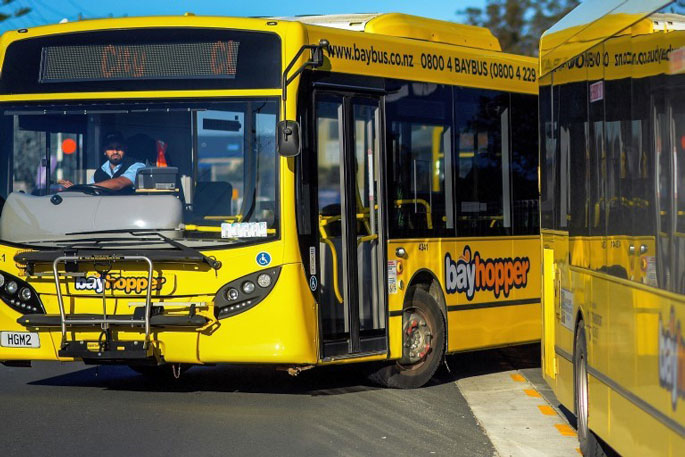
A Bay of Plenty regional councillor has questioned whether the council's $38m spend on public transport is a good investment. As the council considers upping this by $19m over the next decade.
The comments come on the back of the council unanimously adopting the Draft Bay of Plenty Regional Public Transport Plan 2022-2032 at the final meeting of the triennium.
The plan has an 'ambitious” target of achieving a 20 per cent mode-shift to get Tauranga and Rotorua commuters out of cars and using alternative modes of transport by 2032.
It also suggests incrementally increasing the public transport spend up to $57m a year over that time. The spend for the 2022-23 financial year is $38m.
The draft plan was signed off by the council's Public Transport Committee last week before being brought to council for final adoption today.
Chairman of the committee Andrew von Dadelszen told the meeting the process for developing the 'enabling document” was 'robust” and had been done with 'the best of intentions”.
He said they had 'very substantive” feedback that the initial plan, presented to the committee earlier this month, was 'not ambitious enough”.
'To get to 20 per cent is going to be an incredibly hard target to achieve” but the committee thought it needed to put 'some stretch in there,” said von Dadelszen.
'Whether that stretch is realistic time will tell.”
According to the 2018 census just 1.3 per cent of people use public transport for their journeys to work.
The committee made recommendations and the council had the 'ultimate responsibility” for the spend on public transport, he said.
'If we adopt all of the actions of the plan the cost to our council is substantive.”
According to the draft plan $2.7m of the $38m public transport budget for 2022-23 is collected from the fare payer, $15m (40 per cent) is targeted rates and another $15m comes from government funding.
von Dadelszen said the targeted rates came from 'predominately” Tauranga but also 'substantially” Rotorua ratepayers.
'Half of the rate for the Bay of Plenty Regional Council in Tauranga goes to public transport and there's quite a bit of disquiet about that.”
He said the council had 'really pulled the lever” on subsidising fares but needed to look for 'better ways or other ways to get some substantive mode shift change.”
The regional council subsidises bus fares and they are free for gold card users, and school students during peak travel times.
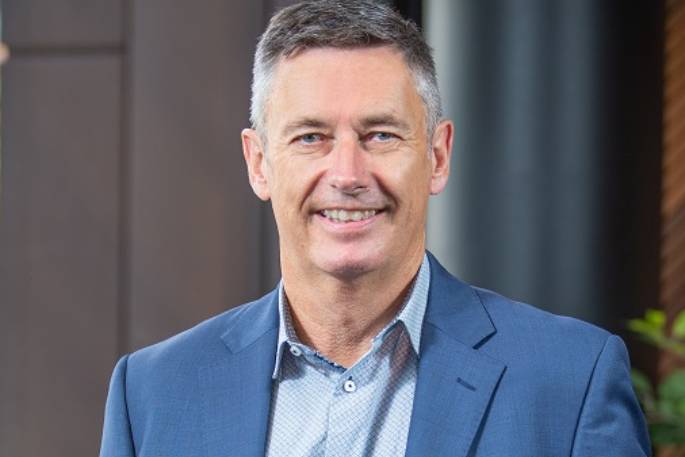 Councillor Stuart Crosby. Photo: Supplied.
Tauranga Constituency councillor Stuart Crosby said the council 'needed to be honest” and there had been 'systemic failures” in getting more people on buses.
He said this wasn't a criticism of the public transport committee but a "New Zealand wide issue” in his view and it had been 'challenging” coming out of Covid.
'I don't wish to be critical; I wish to be honest,” he said.
'You have to sit down and honestly ask yourself: is $38M [spent on public transport] been a good investment over the last three years or in the current year at least? I would say no, it's not.”
He said part of the issue was two different authorities managed different parts of the public transport network and they had 'different priorities”.
'It's a fundamental flaw in this system, where we have two authorities trying to deliver one service.”
City and district councils manage the infrastructure, which is bus stops and local roads, and regional councils manage the delivery of services.
The BOPRC contracts its bus services to independent operator NZ Bus as part of a nine-year contract.
Tauranga's bus service has also been plagued with issues including low user numbers, violence at bus stops, vandalism on buses and threats to drivers.
Security guards have been employed at the Tauranga CBD interchange and Mount Maunganui's Farm Street stop since 2020.
Crosby, said council was 'operating with the tools in the toolbox” but 'not delivering value for money” and he did not see how council would achieve the 20 per cent goal.
'Is it ambitious or fanciful to get to 20 per cent mode shift when we're at 1.3 per cent?”
Councillor and public transport committee member Stacey Rose agreed the goal was 'extremely ambitious” considering the current usage.
Rose said the question needed to be asked of how much longer the council 'keeps feeding the carrot” and whether it 'starts using the stick in the future”.
Meaning, how much longer would the council continue to incentivise public transport use, rather than start enforcing it through disincentives for using cars.
The outgoing councillor said this was something the next council needed to take into consideration.
'I feel like we've been giving too many incentives and there hasn't been enough pushing to actually try and get people on there,” said Rose.
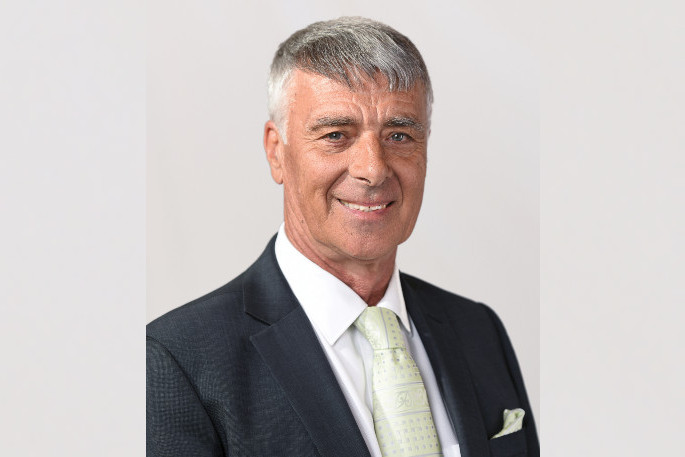 Chairman Doug Leeder. Photo: Supplied.
Chairman Doug Leeder responded: 'The ability for this organisation to use the stick, the tools in the toolbox aren't there.”
'But you're right, in terms of meeting that aspirational goal, if you were to meet it, the outcomes for the community are rather unpalatable because you will need the stick.”
Councillor David Love expressed his concern about how to pay for the plan and how Tauranga ratepayers would react.
He said over the last couple of weeks many people in Tauranga had been 'exposed to how much public transport is actually costing them”, because they were now receiving a separate regional council rates invoice.
'There is outrage with quite a few in the electorate about a service which they don't want and never use, and what they are being required to pay for it.
'The problem we face for the future is the ability to pay for what we see as an ambitious goal,” said the Tauranga Constituency councillor.
Ōkurei Constituency councillor Te Taru White said he heard 'all the issues around the very ambitious 20 per growth.”
He said that 'level of ambition was important” to meet the Government imperatives around climate change.
'Climate change is going to be a big ticket item and this transport scenario is part of that.
'Let's go for it.”
As well as the mode shift goal, other actions in the plan included exploring on demand public transport, resolving the public transport safety and security issues and looking at other modes of transport including passenger rail and ferries.
In May, the Government announced four transport targets to reduce carbon emissions by 2035.
This included reducing the total kilometres travelled by light vehicles by 20 per cent, particularly in the country's largest cities.
As well as increasing zero-emissions vehicles to 30 per cent of the light fleet, reducing freight transport emissions by 35 per cent and reducing fuel emissions intensity by 10 per cent.
Public Interest Journalism funded through NZ On Air.


12 comments
Zero emissions?
Posted on 29-09-2022 19:49 | By First Responder
All these zero emission vehicles still need to be charged. How do you think NZ produces the extra electricity. By cranking up big coal burning turbines. New Zealand has significantly increased the amount of coal it uses over the last 7 years. And you call these buses emission free. Just wait for a dry summer when the hydro lakes drop. Then more and more coal will need to be burned. Sorry you greenies. I'm not swimming in your effluent.
Arrogance or stupidity
Posted on 29-09-2022 21:46 | By Let's get real
The FIFTH largest city in the country spending millions in an attempt to reduce our 0.18% contribution to what is thought to be man-made climate change...? If they can't encourage us and they employ the "stick" approach, what happens when that doesn't work either...? $38 Million annually to clog our roads with largely empty vehicles that are emitting diesel fumes all day is lunacy and yet there is nobody who will admit that we're actually going backwards and end a futile waste of other peoples money. These are supposed to be educated and intelligent leaders.
Mr Crosby states the problem
Posted on 29-09-2022 22:29 | By Womby
Nobody in our family uses the bus Two females tried but were hassled by losers so gave it up. The thugs at stops and on board are an unnecessary worry, but obviously affect the usage. Clean up this problem and you should see an improvement in numbers using the service. What is the real usage numbers after taking out the gold card tourists and students. If it wasn’t subsidised would it be a viable business that could shop a profit, I don’t think it would. The road from bay fair to Tauranga over the bridge is nose to tail at peak times, and should be a no brainer to use a bus for workers but something is wrong and has been right from the start.
Bus v Car
Posted on 30-09-2022 09:20 | By Equality
You can take a horse to water but you cannot make it drink. Similarly - you can put as many buses on the road as you like but you will NEVER get people to leave their cars at home! Wake up and digest the fact! You may say that passenger numbers have doubled. From 2 passengers to four?? Open your eyes and watch the empty buses patroling the streets - It is embarrassing that voted council members can be so stupid!
How about stats Crosby
Posted on 30-09-2022 09:48 | By an_alias
You guys advocate spending more but the service is not used and not needed. We are paying through the roof for something that is all about your agenda's. How about you tell us what the cost is per ride you are achieving ?
Good luck with that
Posted on 30-09-2022 11:14 | By Kancho
As achievable as road to zero. Aspiration just another trendy word nonsense. Buses have actually been worse since the contractor and route changes, well certainly for me. Travel times and bus changes to go where I need are worse and over doubled the time, being stranded waiting for the next bus . It will never change for shopping, work , school runs etc . unless buses run regularly and connect properly. However I've given up and really have to use the car.
Shocked
Posted on 30-09-2022 13:08 | By Yadick
I was shocked to receive my BOPRC rates to find that literally half of it ($227.16) is public transport. When I rang them to question it I was told that it's for the buses. I laughed and asked if she was kidding and was then told that when I finally get a Gold Card I can ride for free. Why in the world would I want to sit on a bus and risk getting the snot beaten out of me, travel at inconvenient times to places I don't need to go and sit in the freezing cold waiting for a late bus so I can enjoy a lonely ride. $227.16 WOW.
Electric buses
Posted on 30-09-2022 13:15 | By Kancho
My understanding is the Chinese electric buses are crap and batteries already needing attention/ replacement, so maybe a bit cheaper but a poor buy.
@kancho
Posted on 30-09-2022 20:15 | By Let's get real
There is a story circulating about a hybrid bus that was put into service in Tauranga by one of the companies. The battery system failed and replacement batteries were to cost many times the value of the bus (tens of thousands). So the operator is going to repower the bus with a standard diesel engine just to get it back into service. So, how good for the environment is an electric fleet if maintenance costs force the scraping of a vehicle after only a few years and well before the body is redundant.
Electric
Posted on 01-10-2022 07:54 | By Kancho
Also the electric buses are speed restricted and therefore limited in where they can go
ANY representative...
Posted on 01-10-2022 14:16 | By morepork
... who advocates use of "the stick" should not be in office. Mr. Leeder knows where to stick his stick.... Electric buses are certainly debatable and it needs closer study. The single fundamental factor that is wrong with our buses is that they are too big for the existing roads and there is no likelihood of major road expansion for the foreseeable future. We should be running smaller buses in a more agile way, with smart load levelling and flexible services. As long as the "Buffalo buses" keep running, there is NO CHANCE of people being encouraged to use them beyond existing levels.
@Yadick
Posted on 01-10-2022 14:30 | By morepork
I have a Gold Card but I have NEVER travelled on a Tauranga Bus (since I was a kid at school). Travelling free makes little difference; it is the inadequacy of the service, the inconvenience, and the unreliability of it. Your post made me check my Rates and, like you, I am horrified at the amount for "transport": $227.16, for a service I cannot use. That's a lot of paid bus rides... The bus size is the root of the problem. They schedule fewer of them because they can carry more people, and the result is a handful of people in a mostly empty bus. If they schedule more of them, they are raising congestion on already inadequate roads. (Ever watched a Buffalo bus negotiate a roundabout...?) How long will it take for them to realize that the current fleet is useless for Tauranga? Getting them was a mistake.
Leave a Comment
You must be logged in to make a comment.