


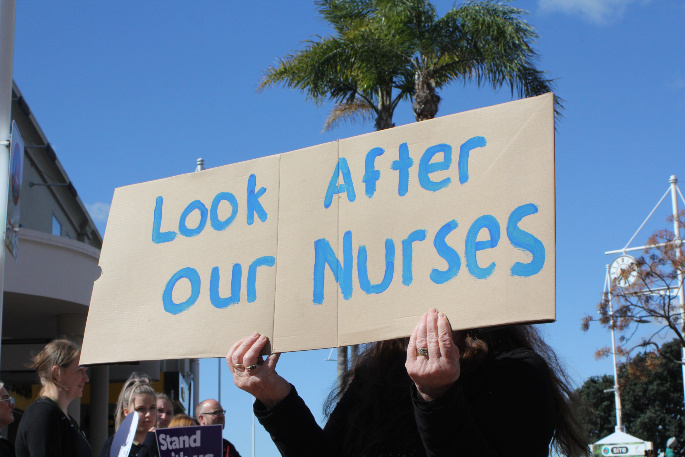
Primary health care nurses joined members of the New Zealand Nurses Organisation to hold a public rally at Tauranga's Red Square today from 12.30pm to 1.30pm.
The rally is part of a national effort to call on the Government to ensure Te Whatu Ora Health New Zealand provides the funding needed to value primary health care nurses.
The New Zealand Nurses Organisation says a nurse at a medical centre typically earns '10-20 per cent less” than Te Whatu Ora nurses.
Mia Costelloe, who attended the rally at Red Square today, has worked as a nurse for 35 years.
She says it is hard to recruit nurses from the hospital to general practice, as they often turn away after 'finding out what sort of pay cut they're getting”.
'I have lots of colleagues who are considering going overseas too, which is a massive undertaking for them,” says Mia.
'If they're willing to go through with that long process then they aren't feeling valued, and I don't blame them [for going overseas]. I am starting to consider going myself.”
Mia says she has had 'about seven” nurses turn away in the last two years due to finding out about the pay difference as a primary health care nurse.
'We have also been hamstrung by people who have been vaccinating and PCR swabbing. The workforce was brought in to do those jobs in the stadiums were paid a lot more per hour than us, so a lot of our nurses left to do that.”
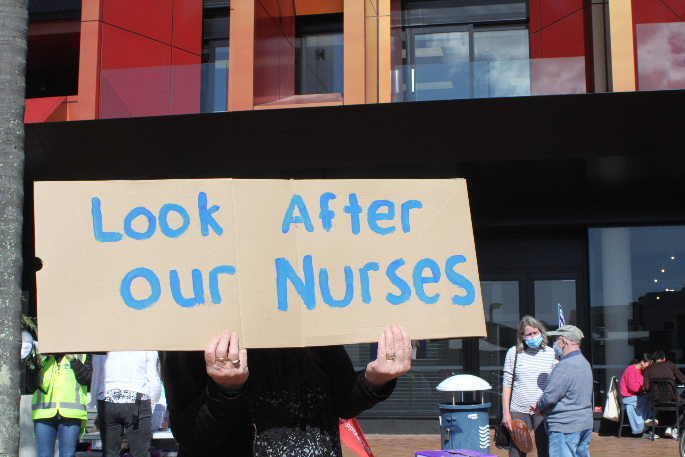
Mia adds she would like to 'be valued in equal measure” to her colleagues who work in hospitals. Photo: Taylor Rice/SunLive.
'I have no issue with what they are being paid, I would just like to be paid as a registered nurse wherever I work, and be paid equally. I am frustrated and saddened.”
'It's about prevention, we try to make sure people don't get to the stage where they need to go to hospital.”
Lydia Cruise, a nurse at Whānau Āwhina Plunket, agrees with this sentiment.
'I actually would say we are largely responsible for reducing the number of hospitalisations. We probably save the Government a lot of money.”
'We're feeling very disheartened and undervalued. I think the Government has been busy with Covid-19 and everything going on, but as that is starting to die off now I think it is about time they look at our needs.”
Sandra Shanly, a regional clinical leader at Whānau Āwhina Plunket, says nurses in her team are feeling 'undervalued and disheartened”.
'It's not just eight hours for these nurses. They have big caseloads, they go home and they are still thinking about those families. We have stopped lots of hospitalisations by our work we have done in the community.”
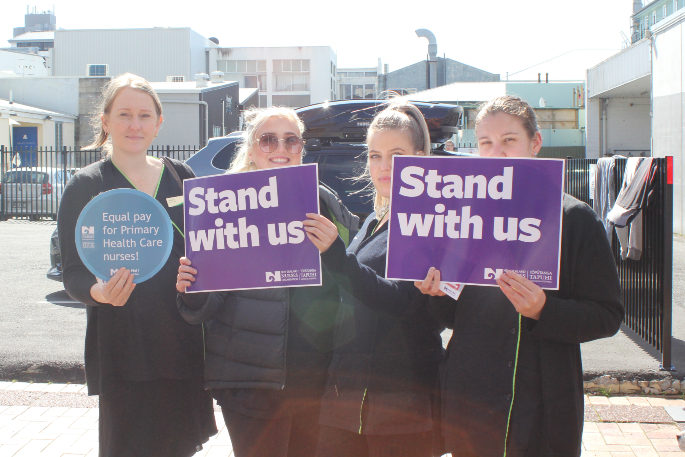
Nurses gathered at Red Square today during the rally. Photo: Taylor Rice/SunLive.
A rally attendee who has worked both in a DHB and as a practice nurse says the experience required for both jobs is the same, despite the difference in pay.
"I think you're using the same skills communication wise, and utilising the same nursing knowledge on medicine and pharmacology. It's the same number of years working and the same study, but you are paid so much less," the attendee says, who requested to remain anonymous.
"It's the same responsibility for primary health care and for Te Whatu Ora. We just use it in different ways."
Rallies were held simultaneously held across New Zealand in Auckland, Hamilton, Wellington and Christchurch at the same time.
Members of the public were invited to rate the Government's performance on fairly paying primary health care nurses by placing a sticker on their chosen location on a large Plunket chart.
They were also able cast a ballot to vote on how well they think the Government is doing at valuing primary health care nurses.

0 comments
Leave a Comment
You must be logged in to make a comment.