


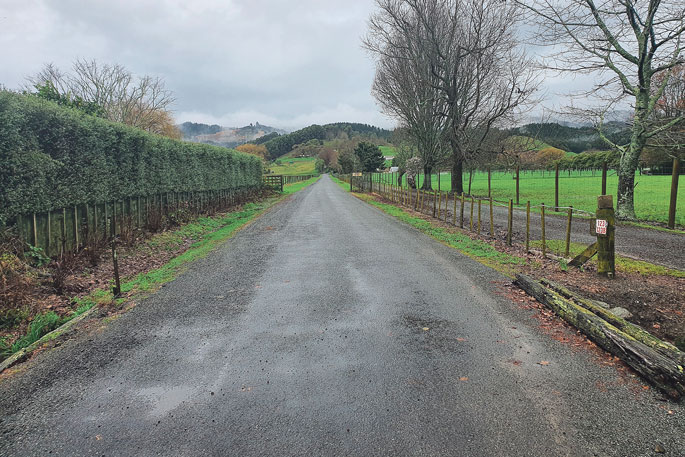
Whakatāne District Council is favouring Māori names for two new private rural roads ahead of names significant to the subdivisions' developers.
Five private roads in five new rural subdivisions need names approved by the council so titles can be issued on the sections and the developers can move forward with building consents.
The subdivisions off Paul Road at Te Teko; McCracken Road at Edgecumbe; State Highway 2 west of Matata; and two on Manawahe Road will collectively provide more than 30 new lifestyle sections for the district.
The developers have proposed names for the roads, however, in two cases council staff have approached the local iwi or hapu to also suggest a name. In both cases, staff have then recommended the name provided by iwi over the name preferred by the developer.
At a strategy and policy committee meeting last week, some councillors took issue with this, considering more respect should have been given for the names suggested by the developers.
The council's policy for naming a new road or private way, last reviewed in 2019, states that if a Māori name is recommended by the developer, then consultation with relevant iwi is required, to ensure the name is spelt and interpreted correctly and deemed appropriate.
Chief executive Steph O'Sullivan says the revised policy, which will come back to council for adoption in the new term, would require consultation with iwi and hapū on all new road names.
'Increasingly, across New Zealand, that is becoming the norm. If you look across at other councils, there have been a number over the last few years that have made concerted efforts around their road naming policies.”
The preferred name put forward by the developer for the Paul Road subdivision is Cabbage Tree Lane, which holds family significance. At the request of council staff, the local hapū of the area put forward the name Otumahi.
The preferred name by the developer of one of the roads off Manawahe Road is the family name Hindrup Ridge Road. The local iwi was consulted and suggested Iratumoana Road.
Some councillors feel the developer's preferred name should be used for all the roads.
Councillors Lesley Immink and Wilson James both asked what the rationale was for not choosing the names preferred by the developers, particularly when the developers have stated that the name has a strong significance to their families.
'I would have thought that when the developer wanted Māori involvement, they would go to them themselves,” says Wilson.
'For someone who is creating a road themselves, I would have thought their input would be of some significance as well, especially if the iwi hasn't really been involved in it.”
Steph says, across New Zealand, many place names came about because of 'individual moments in time or developments”.
'What we've done is we've lost a history and the ability to be able to tell stories, which cover much broader time frames than a specific development. There's a traditional history of great military campaigners and landowners and a whole bunch of other people and place names that have actually meant that, over time, we have eroded the ability to tell the story of that place from the mana whenua perspective.
'Most developers are very happy to talk with local iwi and understand the sense of place,” she says.
Lesley agrees with that rationale, 'but at the moment our policy doesn't say that”.
'It does seem to be at the discretion of staff when they do and when they don't seek iwi input. It seems a little inconsistent.”
Infrastructure general manager Bevan Gray says staff had attempted to get Māori names for all the roads.
He says the developers have expressed no strong objections to the names suggested by iwi or hapu.
Councillor Alison Silcock says the names the developer put forward should be accepted.
'They're the ones who have fronted up with the cost of the development. They're also providing housing that we continually say we need in our district."
She objects to Steph's explanation that land should not be named after the settlers that farmed them or the wars, they fought in.
"I wonder at the chief executive, to put down the landowners and military that they aren't important stories and history. A lot of rural land, the settlers used [their] names or the military battles they went to and that is a reminder of who was there and how they fit in.”
She wonders why council staff are consulting with iwi when that has not yet been agreed to in the policy and asks to know how much it's costing the council to consult with iwi.
Mayor Judy Turner says Māori names are put forward because they reflect the history of that land.
She says historically, while developers named roads, they later became council-managed roads.
'Asset management 101 will tell you that the cost of the build is a third of the cost of the life, so actually the district often puts a lot more money into those roads than the developer ever will. So, I do think it's appropriate that we are doing this.
'We identified some time ago, that we had disproportionately more English names for roads than we did Māori. Half the roads in this town seem to be named after publicans. I just think it's amazing that we're starting to right the wrong here and we're starting to establish something that reflects who we are as a community. With nearly 50 per cent of our population being iwi, it's about time the names reflected that.”
Councillor Gerrard van Beek says even though they haven't agreed to the new policy yet, it's an integral part of the policy that is in development.
'We are on this earth for quite a short amount of time, and there's a certain amount of arrogance if I was to go and put a lane down the middle of my farm and decide to call it Van Beek Lane. I am only a visitor on that land.”
Councillors voted to accept the staff recommended names with Lesley and Alison voting against those that are not preferred by the developer.
The McCracken Road developer had consulted with Te Runanga o Ngāti Awa and given the name provided as their preferred name. It would be called Puti Kaewai Lane, after a kuia tupuna with large landholdings in the McCracken and Hydro roads area in the early 1900s.
The other two roads did not have names provided by local hapū or iwi, so the developers' preferred names were recommended by council staff.
The remaining road off Manawahe Road would be called Tarver Lane and the road off SH2 at Pikowai would be Jefferis Lane.
Councillors are all in agreement with these names, except for Alison who voted against the name Puti Kaewai Lane, despite the developer giving it as his preferred name.
-Local Democracy Reporting is Public Interest Journalism funded through NZ On Air


2 comments
names
Posted on 15-07-2022 15:45 | By dumbkof2
if its a private road the name should be left to the developer. this is a case of other groups interfering with private property. i can just imagine the outcry if it was the other way round
Cancel culture
Posted on 15-07-2022 22:56 | By Johnney
Is there no respect left for pioneering families having names of roads anymore. They should have rights to naming roads in private subdivisions. It not as if the land was stolen. Sick of all this cancel culture BS.
Leave a Comment
You must be logged in to make a comment.