


An observation flight has confirmed that volcanic unrest continues at Whakaari/White Island, with some ash emission and vent changes also identified.
However, the overall situation remains comparable to that seen over the past few months.
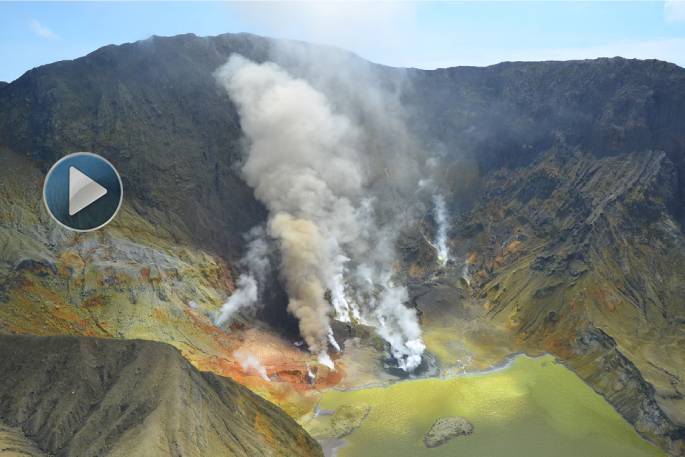
On Thursday, GNS say their volcanologists undertook an observation flight over the island which confirmed a small amount of brown ash was being entrained in the steam and gas discharging from the 2019 active vent area.
'The dilute ash plume was not extending above the Main Crater wall,” says GNS duty volcanologist Mike Rosenberg.
'This is similar to many observations this year from flights and the web cameras.”
Data obtained from the improved transmission data link also confirms the state of moderate to heightened unrest.
'As noted previously, our on-island equipment has degraded over the past two years,” says Mike.
'However, recent improvements of the transmission of data means that some of the data is more continuous and more complete than it has been recently.”
The Volcanic Alert Level remains at Level 2.
GNS say the current level of activity is consistent with moderate to heightened levels of unrest.
'The Volcanic Alert Level reflects the current level of volcanic unrest or activity and is not a forecast of future activity,” Mike explains.
'While Volcanic Alert Level 2 is mostly associated with volcanic unrest hazards, including discharge of steam and hot volcanic gases, earthquakes, landslides, and hydrothermal activity, potential for eruption hazards also exists and eruptions can still occur with little or no warning.”
The flight also confirms that the area of geyser activity recently seen on the web cameras has developed into a shallow, mud-filled pit crater.
'Features like this are not unusual and this one has formed where steam and geyser activity has been noted in the past,” says Mike.
'Small scale steam explosions were ejecting mud that is building up a small dark grey cone around the crater.”
FLIR thermal InfraRed data obtained during the flight established that high temperatures continue to be present in the gas and steam feeding the active vent.
A maximum temperature of 435 °C was measured during the flight. A temperature of 172 °C was recorded from a different vent in the 2019 area. The water level of the lake has receded slightly in the past few weeks.
'Overall, the conditions remain similar to those observed over the past few months, characterised by intermittent weak ash emissions, high steam and gas temperatures from the active vents and varying lake levels,” says Mike.
'When the lake level is high some vents can be drowned and the style of activity changes.”
GNS Science and its National Geohazards Monitoring Centre continue to monitor Whakaari/White Island for further changes in unrest.

0 comments
Leave a Comment
You must be logged in to make a comment.