


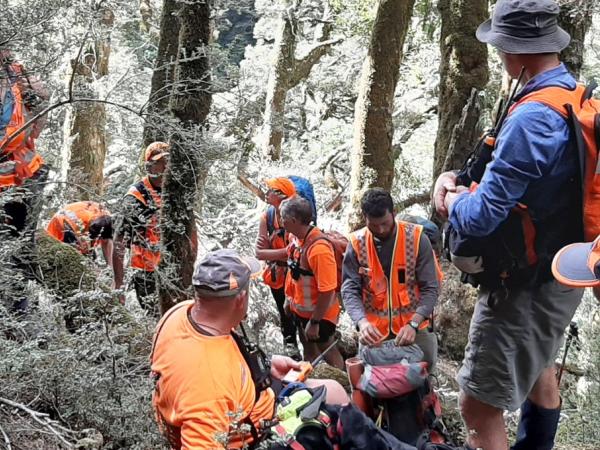
Police are urging trampers to be safe in the bush one year on from when British tramper Stephanie Simpson was reported missing down South.
When British tramper Stephanie Simpson was reported missing in February 2020, the search and rescue operation that followed used all search techniques and resources available, some for the first time.
The operation was a joint effort with assistance from throughout New Zealand, overseas and was covered extensively by media around the world.
Although the outcome was not a happy one, it brought closure for 32-year-old Stephanie's family, who were able to take their daughter and sister home to England.
The police-coordinated search took place over five days in the thick bush and alpine terrain of Otago's Mount Aspiring National Park between Haast and Makarora.
Search and rescue teams found Simpson's body on day five of the search in the Pyke Creek area.
Thirty-one local LandSAR members collectively dedicated 778 hours of their time, together with police SAR, Alpine Cliff Rescue, CanyonSAR, three LandSAR dog handlers, the Urban Search and Rescue drone team and three helicopter crews. Volunteers came from all over the South Island to assist.
Some new search techniques and equipment were used including drones, a specialist search helicopter fitted with a high-definition camera, Forward-looking Infrared and thermal, RECCO rescue system detection equipment and CanyonSAR.
Incident controller Senior Sergeant Mark Kirkwood, from the West Coast, says the rugged landscape was extremely challenging for search teams.
'The initial search boundary was huge, approximately 60 square kilometres before we managed to narrow it down to two major creek systems,” he says.
'We were looking at a minimum of three hours each way to walk in, so everyone searching needed to be helicoptered in and out.”
Going bush?
- Choose the right trip for you: It pays to learn about the route and make sure you have the skills for it.
- Understand the weather: It can change fast. Check the forecast and change your plans if needed.
- Pack a change of warm clothes and extra food: Prepare for bad weather and an unexpected extra night out.
- Share your plans and take ways to get help: Telling a trusted person your trip details and taking a distress beacon can save your life.
- Take care of yourself and each other: Eat, drink, rest, and stick with your group and make decisions together.

0 comments
Leave a Comment
You must be logged in to make a comment.