


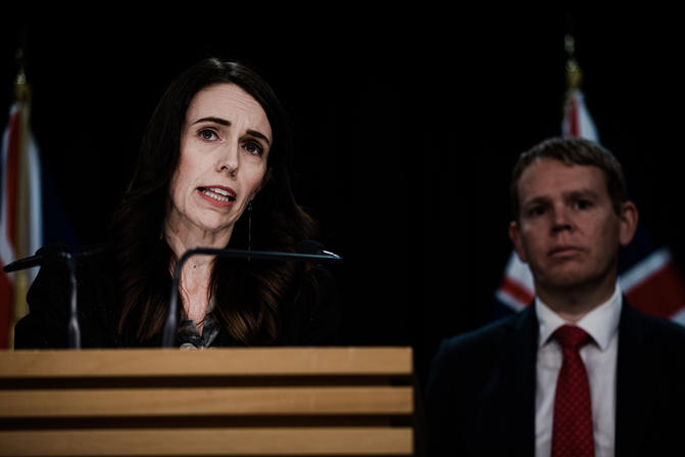
Prime Minister Jacinda Ardern and Education Minister Chris Hipkins have announced $51.6m from the COVID-19 recovery fund for the international education sector.
Ardern and Hipkins told media the funding would help "cushion the blow" and set out a path to recovery for the sector.
"International education is our fifth-largest export earner and contributed nearly $5 billion to our economy in 2018 ... that's why today the government is investing $51.6 million from the COVID recovery fund to help stabilise the sector," Ardern says.
Some $20m would be invested in state and state-integrated schools for the remainder of the year, $10m would go to private training establishments including English language schools, and $10m would be invested to develop new products and services. The latter would include allowing students to learn from their home country before coming to New Zealand to complete their studies.
The remainder of the funding would allow providers to continue to provide pastoral care for the international students still living in New Zealand, and on marketing campaigns.
"We are looking to the prospects for this sector in the future, where we can manage them as part of quarantine, but that is not something we can safely do immediately," Ardern says.
"That is going to take some time and we will need to continue working with the sector on that."
Hipkins says the funding would not help save every job in the sector but, using the same words as the Prime Minister said it would cushion the blow.
He says the government was already providing support to universities and polytechs, as they were part of the "Crown's balance sheet".
"The investment that we're announcing today builds on the work that the government has already been doing to support providers and students such as enabling PTEs to hibernate, establishing an international student hardship fund and removing the requirement for providers to pay an ... education levy both this year and next year.
"I know much of the recovery will be dependent on when New Zealand is able to reopen our borders to international students, as we've noted many times, the COVID-19 pandemic continues to rage overseas, and we'd be expecting providers to plan for no additional international students for the rest of this year," Hipkins says.
Hipkins says the government was "actively looking" at opening the borders to international students, and would be looking at how to bring in "low-risk" cohorts of international students first.
He says the government "absolutely" would not be subsidising managed isolation and quarantine costs for incoming international students however.
Ardern says whenever you start doing something at scale, there would be associated risks.
"We're just not willing to jeopardise our health response by scaling up to something that we just can't do well. We have to constantly make sure we balance all of these decisions and that our primary focus is the health and safety of New Zealanders. And that's how we guard our economy."
She says the government has been working closely with airlines to manage the flow of passengers arriving in the country.
The Cabinet was understood to be discussing plans today for the first relaxation of the borders of New Zealand and Cook Islands, but announcement of any details has again been delayed.
The Ministry of Health today says there were no new cases of COVID-19, after a weekend of no new cases.
However, testing numbers have continued to fall short of the 4000 tests per day scientists recommend for monitoring of the virus in New Zealand.

0 comments
Leave a Comment
You must be logged in to make a comment.