


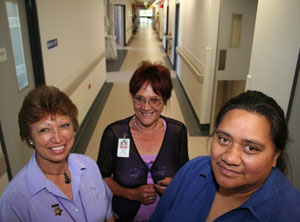
Tauranga Hospital's Kaupapa Ward is like no other in New Zealand and Patricia Cook, Eliza Benfell and Cynthia Stevens are grateful to be a part of it.
| Eliza Benfell, Cynthia Stevens and Patricia Cook are some of the Maori health workers on the Kaupapa Ward. |
Statistics have consistently shown that Maori are amongst the worst offenders when it comes to smoking, diabetes, suicide and cardiac arrest.
In the 12 years Patricia Cook has worked on this ward, she has seen entire Maori families die from renal failure and diabetes.
But these three Maori women have been given the opportunity to help curb those trends, and do it in a Maori environment.
The Kaupapa Ward is unique because it incorporates the same whanaungatanga principles that are used on a marae. These principles place an importance on whanau, hapu and iwi links by encouraging family to take an active role in the care of their loved ones.
In July this year the ward moved location in the hospital and expanded to include 22 beds, 12 of which are dedicated to the Kaupapa Ward.
Many of those who come into the ward are Maori but Patricia, nursing team leader, says it is open to all ethnicities.
'Most patients who come in don't know anything about the ward but most of them become quite interested. They all leave saying what a happy place this is.”
One simple way the ward has incorporated the whanaungatanga model is by not restricting visiting times and allowing families to stay over night.
'If family want to come at night because they work during the day, then they are allowed to. There's nothing like having your own whanau around,” says Patricia.
Eliza, the ward's clinical nurse leader, says it's the subtle differences on the ward that can have a big impact.
'Even giving a grieving family member a cup of tea when they are upset and not making them go down to the café is just basic and that applies to all ethnic groups,” says Eliza.
But for most of the Maori health workers on the ward, the biggest drive is getting the chance to help their own people.
'We can help our loved ones to get healthy. Often we are the ambulance at the bottom of the cliff when Maori reach us, but we are making progress,” says Patricia.

0 comments
Leave a Comment
You must be logged in to make a comment.