


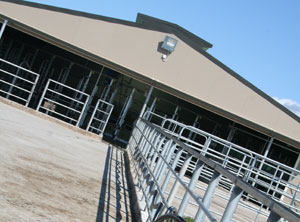
The call from farmers for new farm dairies to accommodate the continuing dairy boom has accelerated this year.
| Hi-tech sheds changing the face of dairying. |
In the south the call has mainly been from conversions to dairying from other types of farming. Here in the north this is also happening, but there are also a huge number of existing dairy farms where the need for a new shed has become a prime focus.
Farms are being amalgamated all over the place. Everyone is buying up their neighbour's land and the existing shed (or sheds) means the cows have to walk miles to reach it. Herds keep getting bigger. Labour is hard to get and often hard to keep. Farming profitably means changing systems, watching input costs, and getting as much milk as possible from cows which perform well.
Lifting standards
Many of the existing sheds were built in the 1960s and are definitely past their best. The herringbones have been lengthened, the plant has been upgraded somewhat, but they're often dark with worn and pitted concrete and inadequate yards. Expecting today's labour force to spend six or seven hours every day working in them just doesn't cut it in 2008.
In the last three or four years the advances in farm dairy technology have been incredible. Compared with the hi-tech wizardry available this year, sheds built only three years ago seem somewhat dated.
As we visited new farm dairies this year, the most significant change is that dairy farmers seem to be moving into two camps. While every single shed is different from every other, based mostly on how each farm is run, the distance between hi-tech and low-tech operations becomes ever more marked.
Changing technology
Even a low-tech shed these days contains equipment and features undreamt of even a few years ago. Automated wash systems, variable speed pump controllers, cup removers, and yards designed for all the cow handling jobs are now standard fare. The shed designs are light and airy, and for those working in them, the time spent is shorter and much more pleasant. And cows are still cows, even if they don't have names but just numbered ear tags these days.
But the latest hi-tech sheds are a whole different ball game. They've been created for large herds, which are farmed on high production principles. Everything is registered, measured and stored on the computer system. Without even going into the shed, a techno-whiz farmer can tell which cows are coming into oestrus, which are showing signs of mastitis, which ones are high producers, and which take too long to milk. And that same farmer can pre-programme cows to be drafted in up to five different directions as they come out of the shed. And all this programming can be added to by keen-eyed milkers who notice a lame foot, or an inflamed quarter.
Add to this the latest ability to weigh every cow every day, and then provide milking time snacks individually measured into the right bin in the right bail for each cow. They may still be cows, but more and more they are being seen as individual production units which have to measure up or be discarded.
Stretching limits
One feature which has stood out this year is that there are too many farmers all trying to build new farm dairies at once.
The plant manufacturers have doubled staff and even put on two shifts to try to meet demand.
The plant installers and shed builders are having to contract or employ their own plumbers, electricians and machinery experts, so they aren't left high and dry with an irate farmer and a shed not finished on time.
The downturn in the housing market may prove helpful in providing a few extra tradesmen, but those working on dairy sheds need to be trained to do the specialised tasks involved. In addition those producing steel pipe have found themselves stretched beyond capacity to create all those yards.
So if you are dreaming of a new shed, give yourself around two years to plan, order, negotiate and get it built. Remember you're in a big queue wherever you live.

0 comments
Leave a Comment
You must be logged in to make a comment.