


Following up measles cases and close contacts to contain the spread of the disease, and maintaining the national Childhood Immunisation Schedule, continue to be the priority for our local health authorities.
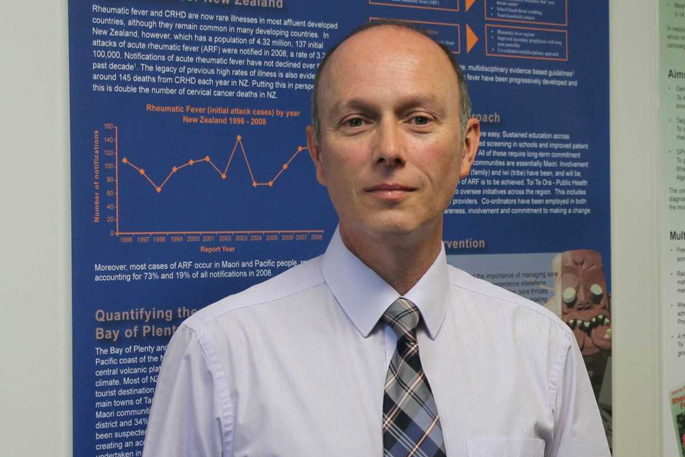
Medical Officer of Health Dr Jim Miller says while cases of measles over the past month or so have been predominantly in the Auckland region, measles has been reported in cities and towns across the whole of New Zealand, including here the Bay of Plenty and Lakes.
'We have had cases in several of our local towns and cities during the last few weeks, there is a large outbreak in Auckland, and many people in our area travel to and from Auckland and overseas. It is therefore important that everyone is aware of the current risk of measles, wherever you may live,” says Jim.
'Many people in our communities are already immune, through MMR immunisation, previous illness, or age (those over 50). However vaccine coverage in previous years has not been high enough.
'Distribution of vaccine is being carefully managed, so the Ministry of Health is working with district health boards to prioritise vaccine supply and ensure our most vulnerable groups are protected,” says Jim.
Vaccination remains important
In the Bay of Plenty and Lakes DHB areas, priority groups for MMR vaccination are:
•Children at 15 months and four years
•Infants aged between 12 and 15 months who are travelling to areas where there are serious measles outbreaks – including Auckland.
If anyone in your family falls into these current priority groups, please contact your general practice to arrange for the MMR vaccination.
If you are concerned about your infant aged 6–11 months being at high risk of exposure due to travel, you should speak to your GP.
'More vaccine has been confirmed for New Zealand but until it arrives and is distributed, practices will be operating waiting lists for those outside of the priority groups.”
What is Measles?
Measles is a highly infectious viral disease that can be serious. It is spread from person to person through the air by breathing, sneezing or coughing. Just being in the same room as someone with measles can lead to infection if you are not immune.
The early symptoms of measles are fever, runny nose, sore red eyes and cough.
After 3 to 5 days a red, blotchy rash appears on the face and head and then spreads down the body.
'Measles spreads very easily,” says Jim. 'If you think you or someone in your family may have measles, it is very important that you stay at home and phone your doctor to alert them to your symptoms and allow them to make arrangements to assess you safely.”
What happens if my doctor thinks I may have measles?
• You will be asked to have some tests for measles.
• Your doctor will advise you to stay in home isolation.
• Public health staff will be in touch to discuss contact tracing
What happens if measles occurs in early childhood education services (ECE) and schools?
• Once a notification of measles is received by the local public health service, the ECE or school the child attends will be contacted immediately by public health staff who will provide information and advice to the manager or principal.
• A student or teacher with measles must stay away from school or ECE while they are infectious. Unimmunised children/students, or those with no immunity to measles, who have been close contacts of a measles case during the infectious stages will be excluded from school or ECE for 14 days from their last contact. This exclusion also applies to students taking part in sporting events.
What happens if measles occurs in my workplace?
Once measles has been confirmed, public health will contact the workplace with information and advice for staff.
'When we are notified of a possible case of measles, the follow-up depends on the risk of the person having been in close contact with others,” says Jim. 'Within families we are likely to complete close tracing and when the case arises from a large social event the follow-up depends on an assessment of risk. In some instances we have asked the organisation to distribute a letter from us.”
For more information about measles go to:
Toi Te Ora Public Health website: www.toiteora.govt.nz/measles which we update about 4 pm each day during the week.
Immunisation Advisory Centre: 0800 IMMUNE (466 863) or www.immune.org.nz
Ministry of Health 2019 measles outbreak information: www.health.govt.nz/your-health/conditions-and-treatments/diseases-and-illnesses/measles/2019-measles-outbreak-information

2 comments
Bottom line is !!!!
Posted on 26-09-2019 21:10 | By The Caveman
In this day and age - EVERY kid should be vaccinated for measles, polo, etc, etc,etc !!! And as the Aussies have now determined - NO vaccination NO go to child care – NO go to school !!!!
We had measles beat? we
Posted on 27-09-2019 10:38 | By GreertonBoy
just had our jabs at school and no one gave measles nor Polio (and the other scary diseases) a second thought? Maybe the jabs created 'issues' for a rare few people, but we never heard? Now-a-days, ignorant parents refusing to get their child immunised is turning back the clock and allowing these diseases to return... and nearly every child is already asthmatic, allergic to everything, ADD, ADHD, BiPolar, gluten intollerant, Lactose intolerant yadda yadda yadda... so how can getting their children vaccinated put the child at any more risk? What will these parents do if their precious child DOES get measles, chicken pox or Polio because they refused to allow it immunisation? Too bad there isn't a vaccine against stupidity? We could give it to these foolish parents and they might vaccinate their kids. I bet they immunise their dog and cat against Parvo and cat flu. Fools..
Leave a Comment
You must be logged in to make a comment.