


Seaweed aquaculture is both environmentally friendly and profitable – not a common combination. New technology has the potential to open a whole new market that will make cultivating seaweed a very worthwhile business.
It's that time of year again – sea lettuce season is just around the corner.
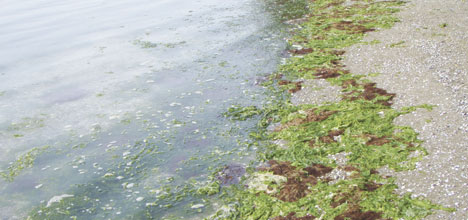
It'll grow just as prolifically this year, our harbours and estuaries will turn a lovely shade of green then, when the lettuce dies, the beaches and sand flats will be covered with a smelly rotting mess. We know this will happen again because the flow of nutrients into the waterways has not slowed, nor is it likely to slow much in the foreseeable future.
Obviously a big negative on our environmental ledger, however, there is a way to turn this particular negative into a positive. Nutrients from runoff are and, will remain, a major problem that must be addressed, but the nutrient that grows land plants grows seaweed just as efficiently when it gets into the sea (hence the sea lettuce) and sea weed can be as valuable as land plants.
Seaweeds are plants, but they are algae, which are quite different from land plants. They don't have roots, instead they absorb nutrients directly from the water around them and they're very efficient at it and can grow very fast. The more nutrient the faster they absorb it and the faster they grow.
There is not a single seaweed species that isn't edible (although their ability to soak up heavy metals and chemicals from industrial pollution means that, like kai moana, those growing near industrial sites should be avoided).
Even our problem sea lettuce has been highly valued by people around the world for millennia; it's rich in dietary fibre, protein, vitamins and trace elements. Most New Zealanders are familiar with sushi and its black paper-like wrapping, but how many know that that black wrap is seaweed? It's a product the Japanese call nori and there are huge farms producing it in northern Asia. Here in New Zealand, that same seaweed, Porphyra, grows around the coast where it is a traditional food called karengo. It is just as healthy as sea lettuce, but few people, not even Maori, know about it.
Despite considerable work being done by NIWA to develop cultivation methods that suit local conditions, New Zealand is very slow to take up seaweed farming. Apart from a few mussel farms that produce kelp on the side for condiments like kelp salt, all seaweed used here is collected from beaches after it has been washed up by storms.
The problem is twofold; seaweed is comparatively low priced unless it's processed into high value products such as condiments; and legislation is ambiguous about inshore seaweed cultivation. Legislative issues will be resolved if people show an interest, but the low price is a deterrent to interest so it becomes a circular argument.
But an increasing interest in using seaweeds in the production of cosmetics, pharmaceuticals and bio-fuels, is set to change the Kiwi attitude. Seaweeds are already used extensively in manufacturing, including a host of products that most Kiwis use – the next time you clean your teeth, eat an ice cream or drink a beer, you're consuming a little bit of a seaweed called Eucheuma cottonii, produced from aquaculture by some remote tropical fishing village.
As technology makes the isolation of more and more chemicals possible, big pharmaceutical and energy companies are increasingly turning their eyes toward valuable compounds produced by seaweeds and other marine organisms.
This has the potential to open a whole new market that's much higher in value than is presently available and one that will make cultivating seaweed a very worthwhile business; both for the pocket and the environment.

0 comments
Leave a Comment
You must be logged in to make a comment.