


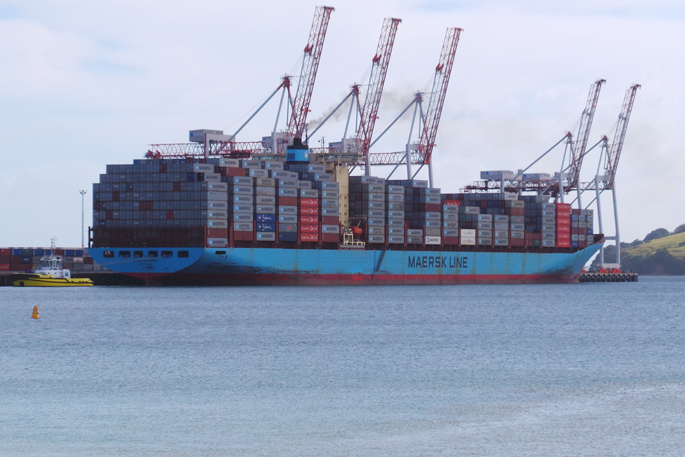
Gym bags filled with cash, submersible scooters and using container ships as unwitting drug mules all played a part in one of the largest cocaine busts in New Zealand's history.
Details of the $20 million drug bust that saw 46 kilograms of cocaine seized, after it was smuggled into the country on the exterior of container ships, have been revealed after two accused entered 11th-hour pleas ahead of trial.
Croatian, Mario Habulin, 47, and Serbian, Deni Cavallo, 47, were due to start a six-week trial on Thursday but instead entered guilty pleas at the High Court at Rotorua.
Habulin pleaded guilty to six charges including importing a class A drug, supplying a class A controlled drug, money laundering $1,498,000 and participating in an organised criminal group.
Cavallo plead guilty to importing class A drug and participating in an organised criminal group.
Two other Australian men, Matthew John Scott and Benjamin Northway, entered guilty pleas for their roles in the conspiracy on Monday.
Scott pleaded guilty to two charges of supplying class A drugs, one charge of money laundering, one charge of importing class A drug, one charge of participating in a criminal group, one charge of possession of a class A drug.
Northway pleaded guilty to three charges of possession of a class A drug for supply, one charge of participating in a criminal group, one charge of importing class A drug.
The summary of facts revealed the four men were under police surveillance since August 2017 with police using high tech surveillance equipment to eavesdrop on the men leading up to their attempt to retrieve the stashed drugs on October 2017.
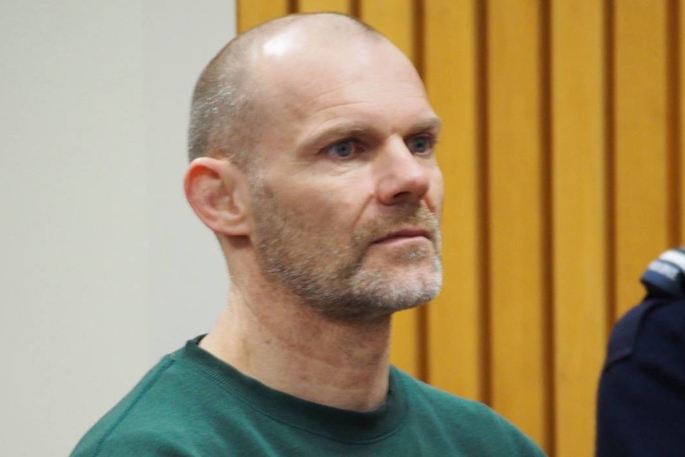
Mario Habulin. Photo: Matt Shand/Stuff.
Their operation involved using Maersk Line ships travelling the South Pacific Express service which in underwater caches would be stashed and later retrieved by divers under the cover of darkness.
The ships would travel through Mexico, Panama, Colombia, Peru, with the last stop before Tauranga being San Vicente, Chile.
Shortly after each ship left San Vicente, Habulin and Cavallo would travel to New Zealand.
They would pose as theme park owners and theme park engineers when giving their reason for visiting New Zealand to customs.
Habulin is said to have used scuba diving equipment to swim up to the container ships, climb up the rudder and into a cavity to retrieve the drugs before being picked up by Scott and Northway who were waiting on a rented boat posing as fishermen.
Police followed the group while they conducted the operation and the next morning searched a Mount Maunganui address where 46 kilograms of cocaine wrapped in green, silver and brown tape was located.
Scott's Auckland residence was also searched which uncovered 46 kilograms of cocaine and $623,627 in cash.
Police say Scott spent the month of October in negotiation with an Australian company to purchase a "Seabob", a high-end electric underwater scooter designed to explore seabeds to use in the drug collection process.
"He was insistent the colour be resprayed to be black," the summary of facts revealed.
Scott paid an additional $2000 to ensure delivery was on time and discussions were intercepted that revealed the Seabob was to collect cocaine from the Maersk Antares which was due to arrive in Tauranga on October 31.
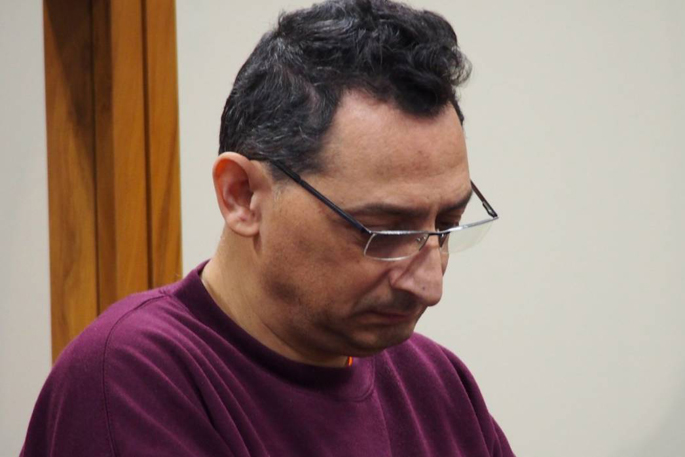
Deni Cavallo. Photo: Matt Shand/Stuff.
Money was laundered through a Vietnamese laundering syndicate using what are called 'tokens' to identify drug money.
Some defendants were charged with importing drugs using similar methods prior to the October 31 bust.
Money was being laundered through a Vietnamese money laundering service with Habulin said to be seen taking hundreds of thousands in cash stashed in a gym bag for laundering.
On one occasion he is said to have entered an Auckland gym carrying a large blue canvas bag.
He then exited the gym and gave the bag to a woman which police allege had $398,000 inside.
"Police observed the bag was very heavy and the woman struggled to carry it," the summary of facts read.
On another occasion, Habulin was said to have entered the gym with a large duffle bag containing $500,000 in cash. He then left and placed this bag into the back of a waiting car.
The money was identified using a 'token' which refers to a serial number on a banknote which is checked to make sure the drugs or cash were given to the right money launderers.
Messages were sent between the accused and the money launderers talking about exchanging tokens which would coincide with large money transfers.
The four men will reappear for sentencing on August 2, 2019.

0 comments
Leave a Comment
You must be logged in to make a comment.