


New Customs legislation to support border compliance and the country's economy will come into force on 1 October.
The Customs and Excise Act 2018 replaces the current outdated and much-amended 1996 Act and uses modern language that is easier to understand and interpret.
Customs spokesperson Terry Brown says the new Act was a collaborative effort.
'We have worked closely with the import/export sector, as well as the broader business community, in the past five years to shape the legislation and make it easier for traders to meet border requirements.
'There are new services and initiatives arising from the Act, including the ability to apply to store business records outside New Zealand or in the cloud, a new valuation rulings service, and the ability to seek reviews of Customs' assessments directly from Customs. Many of the new changes will result in time and cost savings.
'The travelling public is unlikely to notice much difference at the border, with existing provisions reconfirmed or clarified.”
Some of the excise changes in particular with the fuel industry and alcohol are of particular interest for the Bay of Plenty, says Terry.
'There's a lot of licensed alcohol manufacturers in the region, and the legislation changes mean, all custom-controlled area licensees must file an excise entry or return for an agreeable period even if it's nil return.
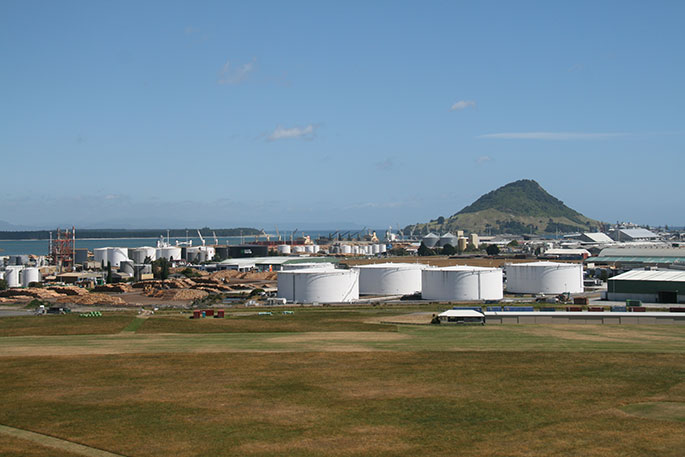
'In terms of fuel there's a new collection point at the tank farm entry to cover additional volume created from blending.
'This is a more-or-less direct consequence of the now-historic Terminals New Zealand Gull Legislation which was protracted over a length of time, where it was determined blending a butane with fuel added additional excisable volume and so in the interests of tax equity we've applied that thinking across all potential blending options.
'We've also initiated a fit-in proper person requirement within the customs-controlled area process to ensure people do declare past criminal offences. This is to ensure we are satisfied they do meet the right requirements for this environment.
'In addition there's ongoing competency requirements through the acess to a joint border-management system or a trade-single window.
'This has been fully effective from July 1 where users accessing it, make input entry to ensure that they maintain their competency to retain registration and there is the ability to suspend or revoke these.
'We've upped the ante on this because we operate in a post-entry audit environment, we actually detain very few goods at border that are imported, it's more or less about making sure they understand the data they provide us is accurate.
One other thing relevant to Tauranga as a strong-export driven port, is the changes to admin penalties, he says.
'These now apply to export entries, previously it only applied to import entries, we've extended it to input entry and excise; this means where there's material errors in an entry.
'There are some exceptions, we know there's often changes within the export vessel. So some material particulars we won't penalise but that's a matter of reasserting this requirement to ensure the correct data is provided on both our input and export entries.”
Customs processes more than 13 million passengers a year, 14.4 million trade transactions and collects $13 billion in revenue for the Crown.
More information on the Customs and Excise Act 2018 is available on the Customs website or by contacting our call centre 0800 428 786.
Full list of changes:
Valuation rulings
Customs can now make rulings on the appropriate method to determine the value of an importer's goods. This means more certainty for importers where they are unsure of how to value their goods.
Importers, or their agents/brokers, need to apply for a ruling before goods are imported into New Zealand. Costs for this service apply.
Customs has up to 150 days to make a valuation ruling. A ruling is valid for up to three years.
Provisional values
Importers who meet the criteria can declare provisional values for their goods at the time of importation, when final values are not known.
This ensures a transparent, clear, and flexible process to estimate values, which takes the realities of trade into account. A final value can be confirmed within 12 months after the end of the importer's financial year.
Compensatory interest and late payment penalties
This is a new process for charging compensatory (use of money) interest and late payment penalties when duty hasn't been paid in full on time.
It is fairer and more transparent than the previous additional duties regime, as the new process is clearer about when remission can be granted, and charges are consistent with Inland Revenue's.
Storing business records
Anybody required to keep Customs-related records can now apply to store their business records outside New Zealand, including in the cloud.
This change provides flexibility in how to store business records, is more cost effective in many cases and reflects modern business practice (in line with Inland Revenue's requirements).
Comptroller's discretion
The Comptroller of Customs (Chief Executive) now has legal guidance on how much discretion they have to make and correct assessments, and collect the duty identified.
The guidance is only applied in legal matters on revenue, collections and assessment. It ensures a fairer and more equitable system for duty payers.
Administrative review
Importers, exporters, excise manufacturers, brokers or agents can now request an administrative review of a Customs decision they are not happy with. Customs staff not involved in the original decision will complete the review.
The new process, which industry asked for, is designed to reduce barriers and delays, and help keep costs down. It's quicker and less costly than appealing to the Customs Appeal Authority.
Those seeking a review must make an application, or seek an extension to make an application, within 20 working days of a decision being made.
Joint Border Management System Changes (accessed through Trade Single Window)
Joint Border Management System (JBMS) users play a vital role in helping gain accurate information about goods coming in and out of New Zealand. Users now have to meet ongoing competency requirements, such as always acting in a professional manner and being a fit and proper person. Those users who repeatedly fail to demonstrate competency can have their registration suspended or revoked.
Administrative penalties
Administrative penalties now apply to all exporters, importers, licensees and agents who make errors or omissions on import, export or excise entries.
Excisable goods
There are changes in how Customs treats excisable goods (alcohol and fuel) to increase clarity and transparency for calculations and licence applications.
All Customs-controlled area licensees must be a ‘fit and proper person'- this includes managers and directors. Alcohol-related Customs-controlled area (CCA) licensees need to file an entry for every period, even if it is a nil return.
The definition of tobacco manufacture has been tightened and now includes curing, and the personal use allowance has reduced to 5kgs.
Infringement notice scheme
From 1 April 2019, Customs officers can issue on-the-spot infringement notices to anyone not complying with our requirements.
International arriving and departing passengers (air and sea), importers, exporters, excise manufacturers, Customs-controlled areas (CCAs) and brokers are subject to fines of $400 (for an individual) or $800 (for a body corporate) depending on the offence.
This new infringement notice scheme replaces the previous petty offences regime.

0 comments
Leave a Comment
You must be logged in to make a comment.