


 Click the image above to view slideshow
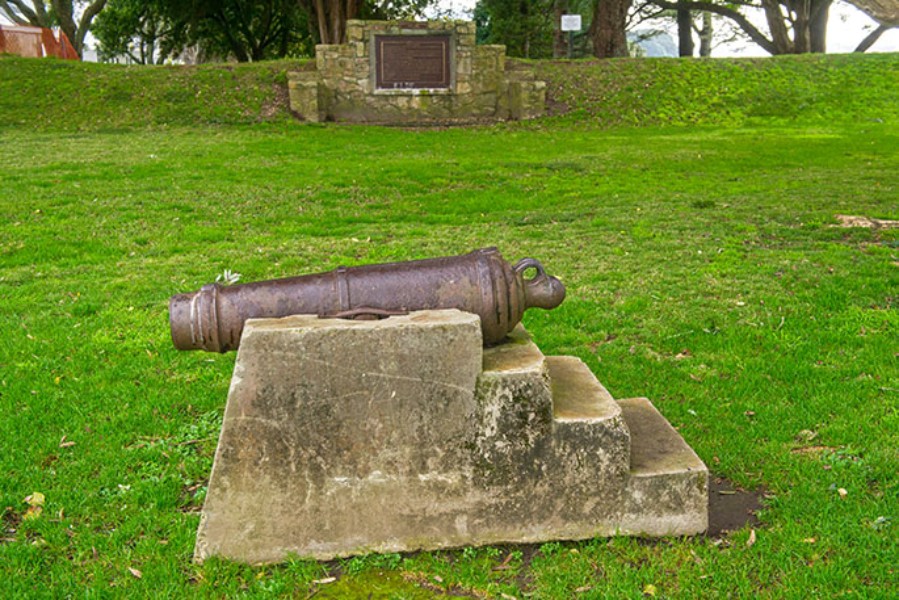
A conservation plan is being developed for the ongoing management of the Monmouth Redoubt Historic Reserve, which is located at the northern end of The Strand in Tauranga.
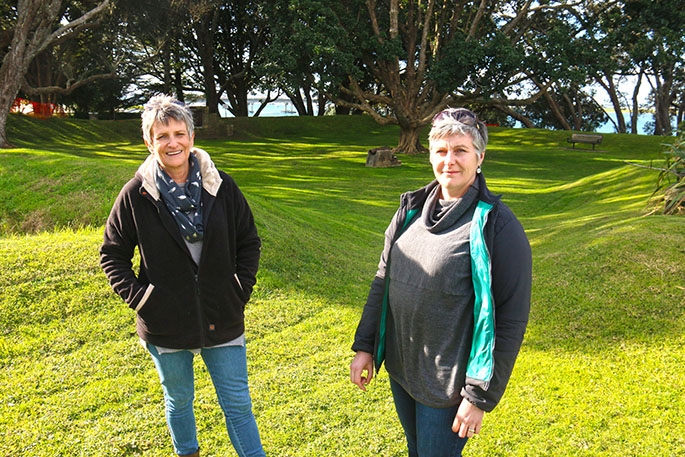
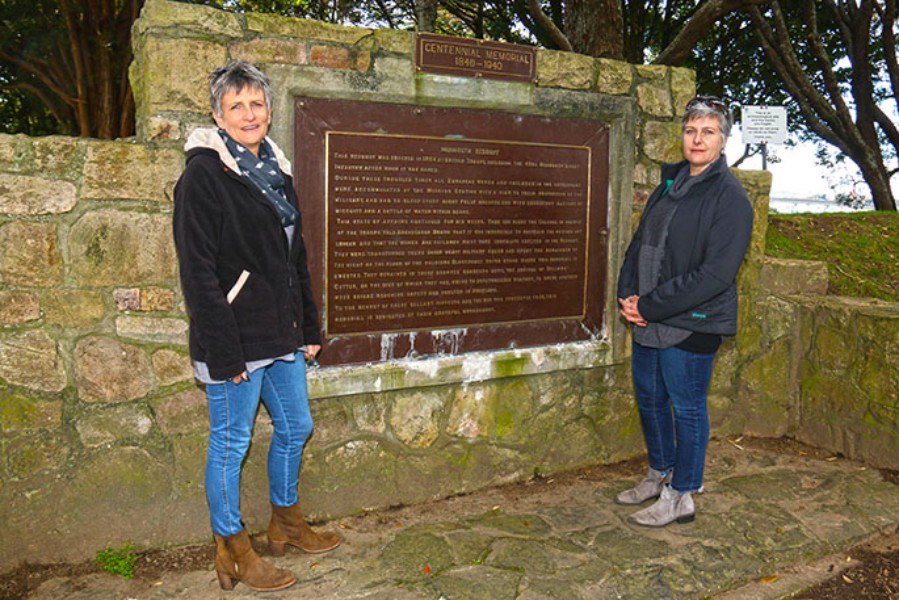
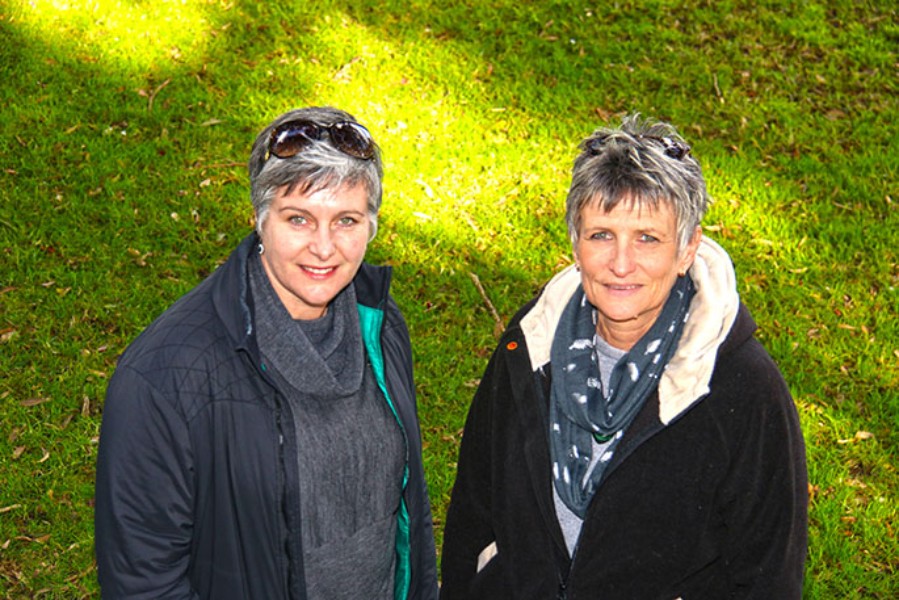
Lynda Walter and Karen Greig, both historic heritage management specialists from InSitu Heritage Ltd, have been contracted by Tauranga City Council to develop the conservation plan that will incorporate the ecological, social, historic, and heritage values of the reserve.
The area being discussed extends from the walkway that begins outside the offices of Sun Media at No.1 The Strand to the toilet block next to the Tropical Display House, a total of about 5,000 square metres.
It has Cliff Road, Robbins Park and the railway line on its boundaries and doesn't include Robbins Park or the Tropical Display House.
A workshop has been held with local stakeholders, included surrounding residents, Police, KiwiRail, The Elms, Tauranga Historic Society, Heritage NZ, and Tauranga City Council staff. The purpose of the meeting was to discuss any issues surrounding the cultural and historical significance of the reserve. A letter drop to residents and businesses has also been completed in the nearby streets, and a drop-in session was held at the BOP Vintage Car Club Hall on Cliff Road so that people who visit the redoubt could express any issues or concerns.
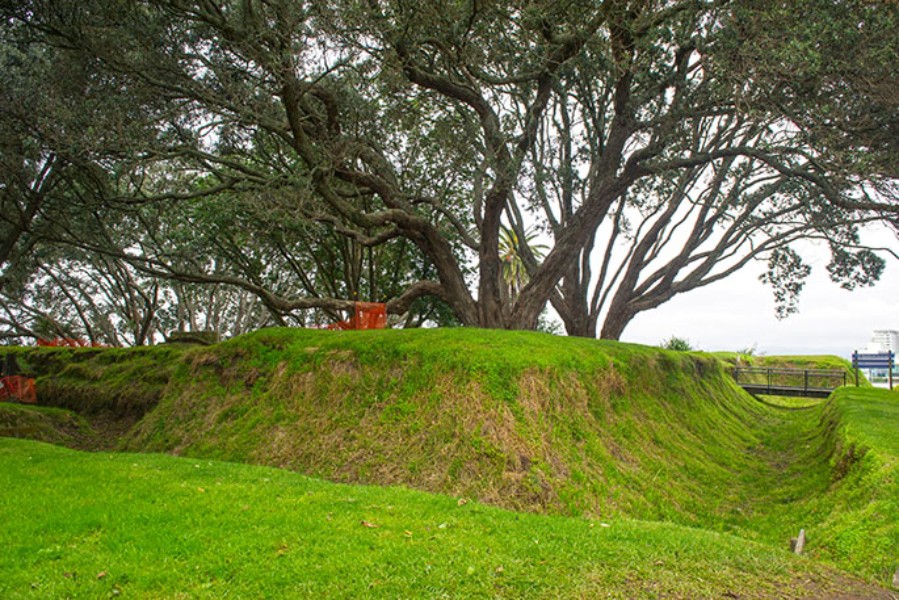
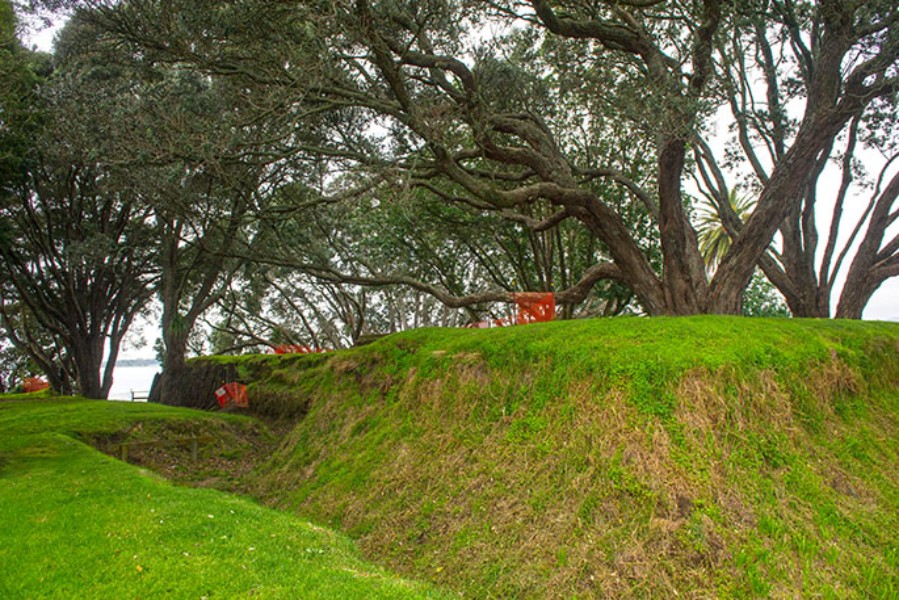
The conservation plan will guide how council manages and develops this unique heritage place, including trees, vegetation, ditches, banks and retaining walls. It will also take into account how people use and access the site.
Lynda Walter, who is based in Whakatane, has been involved with the site since the 1980's.
'There have been a lot of attempts over many years to manage the earthworks of the redoubt,” says Lynda.
'It was built in 1864 for a very specific purpose related to the military engagement and the Imperial Troops being here. Redoubts were never intended to be something that were occupied or used for a long period of time.”
The Monmouth and Durham Redoubts were built around the same time. The Monmouth redoubt was built in 1864 by the 43rd Monmouthshire Light Infantry Regiment after arriving in Tauranga as part of the military force sent to Tauranga to blockade supplies being sent from Tauranga in support of the Maori King forces in the Waikato. It was built on the Taumatakahawai site incorporating the earlier defensive ditches. Both the Durham Redoubt and Pukehinahina – Gate Pa, are closely linked with the story of the Monmouth Redoubt.
'This conservation planning process will also look at the opportunities linking better to the other elements of its story,” says Lynda.
'The history of Maori in this area, the mission's settlement, the 1864 NZ wars period and the armed constabulary history of the police. It tells all sorts of stories about the settlement and history of Tauranga, including The Elms and the Mission Cemetery.
'The earthworks were built very steeply and prominently. They were maintained through constant rebuilding and repair while being occupied. As soon as the earthworks were abandoned, they started to decay.
'Ever since then, people have added little bits to it to keep its form. Left to its own devices it would have eroded away and be quite muted now. Numerous groups including council over a long period of time have been adding material to it, to maintain its form.
'In 1990, council did a lot of work reconstructing the banks,” says Lynda.
The attempt made by District Council to repair the embankments was undertaken for the sesquicentennial of the signing of the Treaty of Waitangi in the 1990s.
'Most of the erosion we are seeing now is that material from 1990 eroding out. Unless you continuously replace and repair it, it will erode,” says Lynda.
Some of the erosion has been exacerbated by the fact that people have been using it as a through-route, possibly to reach car parking areas at Cliff Rd. Orange netting was placed as a temporary deterrent to dissuade people from climbing up the bank with the hope it would slow down the rate of erosion.
At the workshop, held in the BOP Vintage Car Club Hall on Cliff Rd, people talked about the significance of the reserve as a green space, and its landscape and view value.
'We're collecting information about how people use the reserve and what other really important values they want to see conserved into the future,” says Lynda. 'One of the things that came through clearly in the consultation yesterday was the sense of enclosure, how it's essentially a place of contemplation and quiet within the city CBD. It's quite a valuable space from that point of view, and from its heritage point of view.”
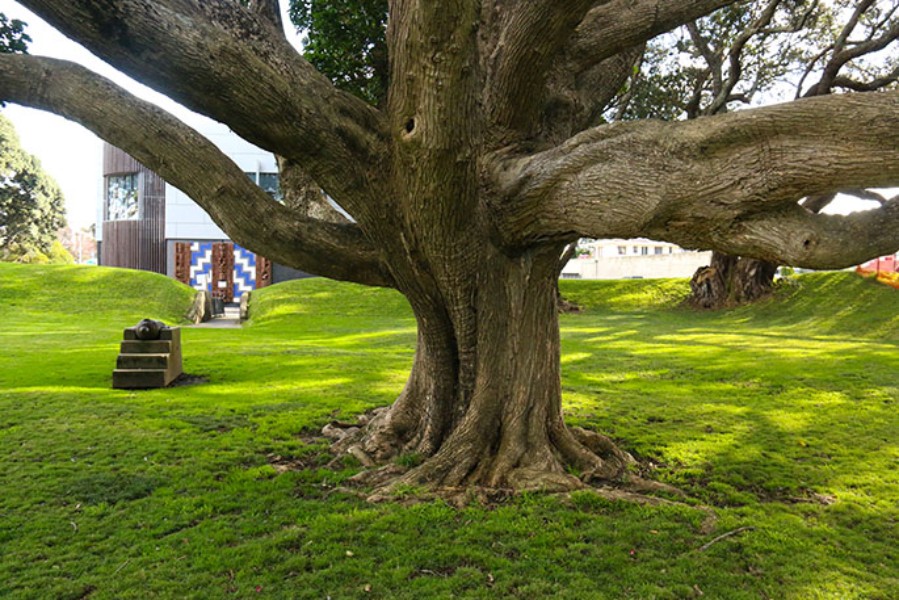
'One of our challenges is to be able to maintain the banks and ditches so that the internal space can be looked after. Balancing things like the fact that we have big trees which are beautiful in their own right but they create management challenges for us, in terms of keeping grass and vegetation cover on the ground. As soon as you have exposed ground, that erodes and it becomes vulnerable.”
The heritage consultants were quick to point out that the conservation plan for the reserve is totally independent from the recent museum discussion about the Cliff Rd location nearby.
'It's not linked with the museum at all,” says Lynda. 'We have had interim site management for the reserve from 2007, with recommendation from that that a conservation plan be developed. 'Probably what triggered it a couple of years ago was the fact that the steps came up for renewal and we couldn't attend to them without getting an archaeological authority. There was no point applying for an archaeological authority unless it covered all the works that we may need to do in a five to ten year period.”
'It just happens to be coincidental that the museum idea came up around the same time. They tie in with each other because of the access up from the Strand, and the whole green necklace area. We actually waited to have a consultation until there was a decision about the museum because we didn't want people to think they were connected.”
The future direction is for the Monmouth Redoubt to stay as a historic heritage reserve with a plan in place for how best to manage it.
'When tourists come, and want to go to The Elms they usually walk up through there,” says Lynda. 'It's part of our city's story, part of our history.”
'We're also keen to hear about any stories or connections people may have to the site,” says Tauranga City Council Parks Asset Co-ordinator Christine Wildhaber.
An online feedback and survey will be provided, after which a draft plan will be available for consultation. Anyone with queries can contact Christine Wildhaber on 07 577 7000 or email [email protected]


2 comments
Yet more.......
Posted on 30-07-2018 12:07 | By groutby
......contractors employed by the ratepayers for the project. With absolutely no disrespect nor concerns with the company employed to do this, couldn't Parks and Reserves step up and handle this?
Yip
Posted on 30-07-2018 18:04 | By overit
more big bucks to be spent here. Agree with Groutby.
Leave a Comment
You must be logged in to make a comment.