


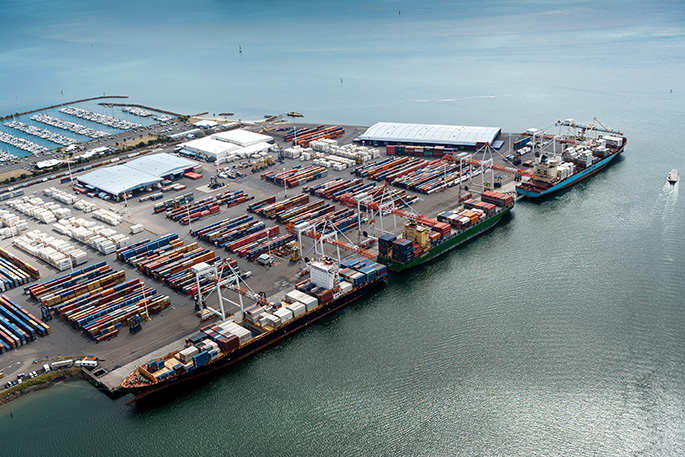
Imports rose in February 2018 to a new high for a February month, according to Stats NZ.
This rise was driven by machinery imports, despite a fall in the value of car imports.
'The delay in final unloading of four vehicle carriers at New Zealand ports had an impact on the total value of vehicle imports in February,” says international statistics manager Tehseen Islam.
'The discovery of stink bugs on these vessels meant around 8000 cars could not enter New Zealand as scheduled.
'The goods on these vehicle carriers would normally have been included in February's import statistics, but will now be included in the statistics of the month when the respective shipments are unloaded.”
MPI targets vehicles and machinery from Japan has information about measures to reduce the risk of further stink bug arrivals.
Imports of passenger motor cars fell $126 million (33 per cent) from February 2017 to $257 million – the lowest monthly value since March 2013.
Despite the fall in vehicle imports, total imports were up $187 million (4.6 per cent) from February 2017 to reach $4.2 billion, a new high for a February month, although the rise in percentage terms was lower than in recent months.
The rise in total imports was led by mechanical and electrical machinery and equipment (such as harvesting machinery and mobile phones), and palm kernel.
Sheep meat and forestry lead exports rise
Exports rose $446 million (11 per cent) to $4.5 billion, led by increases in sheep meat and forestry products.
The total value of sheep meat exports rose $77 million (21 per cent) to $447 million, as a result of higher prices for lamb and mutton compared with the same month of the previous year. The average unit price of lamb exports rose 18 per cent from a year earlier; the unit price of mutton exports rose 23 per cent in the same period.
Forestry products rose $62 million (19 per cent) to $382 million, led by a rise in untreated logs to China (up $38 million).
Milk powder, butter, and cheese, New Zealand's biggest export commodity group, rose $55 million (5.3 per cent). This rise contrasts with much stronger rises earlier in the export season, and reflects a fall in export prices for milk powder in the month.
Milk powder values were little changed in the month (up 0.3 per cent), as the quantity exported rose 10 percent. Butter export values continued to rise when compared with the same month of the previous year – up $38 million (28 per cent). The unit price of butter exports has fallen 14 per cent from the recent peak in November 2017, but was 30 per cent higher than in February 2017.
The monthly trade balance in February 2018 was a surplus of $217 million (4.9 per cent of exports).

0 comments
Leave a Comment
You must be logged in to make a comment.