


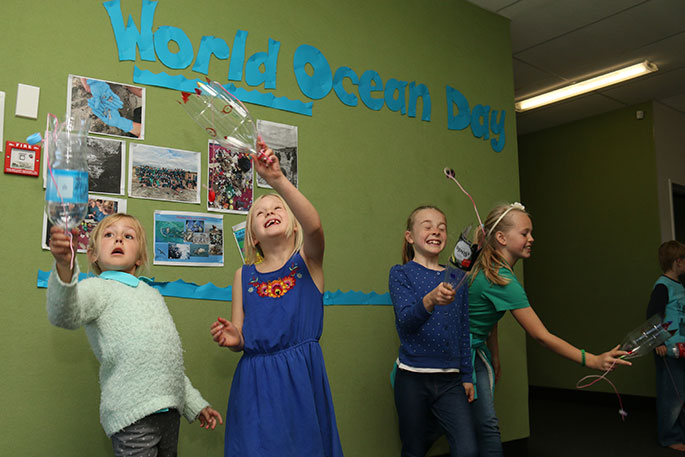
Tahatai Coast pupils didn't have far to go to find the impact plastics are having on our oceans and environment.
For World Oceans Day, Year 3 and 4 pupils picked up a large amount of plastic from the Papamoa Beach.
'They've been doing a lot of work on recycling and how plastics get to our oceans. We went to the beach and we picked up more than 2000 pieces of plastic from our own beach,” says Kea Whanau team leader Keri Hunt.
'We were away for an hour and a half, and we didn't count the 1,495 of those tiny beads that came with the Rena. We found lots of those too, as well.
'And we also went and looked at water quality as well, part of our science.”
When asked what they wanted to do about what they had discovered, the Kea Whanau pupils decided they wanted to educate people.
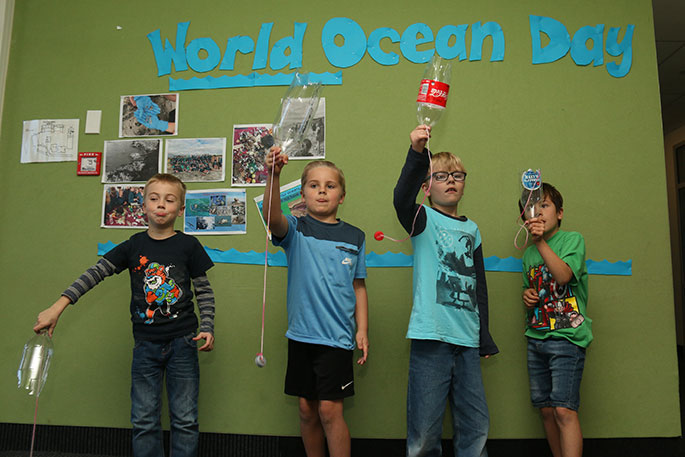
Max Jeffcoast, 7, Ashton Webster, 7, Axyl Wilson, 9, and Rico Cooper, 7.
'So we've had people visiting other classes to show the movies that they have made, to talk about recycling and we've invited the whole school to do a mufti day because it's World Ocean Day and we've each had to bring a plastic bottle and we are re-using those things into flowers and stuff,” says Shona.
Kea Whanau have been studying the impact of plastic in our waterways and oceans. This latest event is to raise awareness of the plastic in people's lives that ends up in the oceans and ultimately back in the human food chain.
World Oceans Day is a global day of ocean celebration and collaboration for a better future. The overall theme for World Oceans Day 2017 was ‘Our Oceans, Our Future' with an action focus on encouraging solutions to plastic pollution and preventing marine litter for a healthier ocean and a better future.
Plastic pollution poses a threat to human health, kills and harms marine life, damages and alters habitats, and can have substantial negative impacts on local economies.
Plastics pollution is already widely accepted as a big problem that the inhabitants of planet earth need to, and can address. The world oceans day website states more than 80 per cent of marine litter comes from land-based sources.
Businesses and government in the US, alone, spend a combined total of $11.5 billion on cleaning up litter. The primary direct threat to marine life is entanglement or ingestion. Sea turtles, birds, and fish alike accidentally mistake plastic for food and choke or get sick by ingesting it.
Ocean plastic trash has serious economic consequences for humans and it can also be dangerous to people's health. Scientists are finding that chemicals in plastic consumed by fish may eventually travel up the food chain.
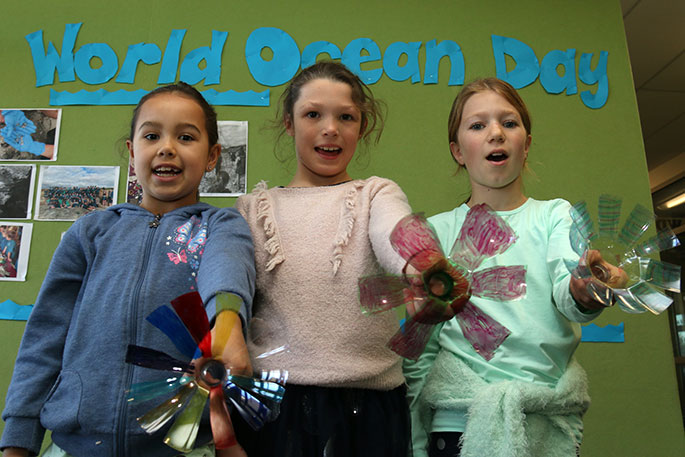 Shiloh Te Kanawa, 8, Victoria Padfield, 7, and Emily Barnes, 8.

0 comments
Leave a Comment
You must be logged in to make a comment.