


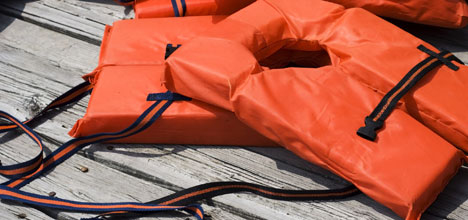
The results of an annual Waikato Regional Council survey are released and show that too many children under 12 years old are still not wearing lifejackets on boats.
'It's worrying that 19 per cent of children sighted were not wearing lifejackets when they left the boat ramp,” says the council's navigation safety manager Nicole Botherway.
'There were still 29 vessels with no lifejackets onboard at all, and another 44 not carrying enough lifejackets for all people on the craft.”
Regional council harbourmasters and volunteer honorary enforcement officers surveyed 1172 skippers at 30 of the region's boat ramps between 1 January and 25 April this year.
Most of the surveys took place on the Coromandel peninsula due to the large number of boaties using this area.
The majority of skippers were carrying enough lifejackets for all people onboard, says Nicole.
'Without question, wearing a lifejacket increases a person's chances of survival if they find themselves in the water, so I find it astounding that skippers would endanger their lives and those of the people onboard their boats, especially children,” says Nicole.
The rules require that a correctly sized lifejacket or personal floatation device must be carried for each person on board and be readily accessible.
In vessels less than six metres in length everyone on board must wear a lifejacket unless the skipper considers that it is safe not to.
Maritime New Zealand is working towards a national law change to make it compulsory for all people in boats smaller than six metres to wear a lifejacket.
'Our survey, along with the work done on the water by our harbourmasters, helps us identify gaps in education so we can deliver targeted campaigns to improve boat safety,” says Nicole.
'We've been surveying skippers of recreational vessels at various boat ramps for the past five years to measure compliance with bylaws, as well as safe boating practices.
From this year's survey they learned that most boaties carry a cell phone, but 42 per cent, nearly half of those phones will be useless in an accident because they are not kept in a dry bag on board.
'We'll be looking at a combination of education and enforcement to increase the numbers of people carrying at least one form of usable and waterproof communication,' says Nicole.
She's pleased more boats are displaying a name in accordance with new rules that came into force in the Waikato 12 months ago.
You can read the 2011 Boat Ramps Survey Report by visiting www.waikatoregion.govt.nz/Publications/Technical-Report

0 comments
Leave a Comment
You must be logged in to make a comment.