


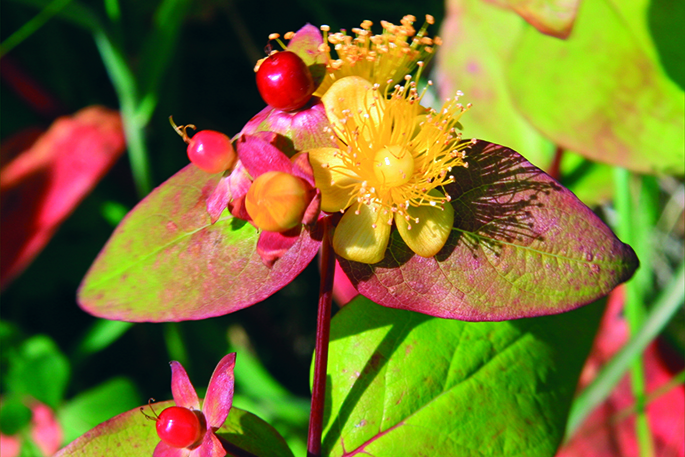
The Waikato Regional Council is urging farmers and rural landowners to do what they can to protect their properties from the invasive pest plant tutsan.
The warning comes in response to the recent rapid spread of tutsan through western Waikato, especially in hill country farming areas, as well as a change to its pest status in the region.
Under Waikato Regional Pest Management Plan rules, landowners are now required to get rid of tutsan from their properties, says biosecurity pest plants team leader Darion Embling.
'While tutsan has been around for many years it had been held in check by a leaf rust between the 1970s and 1990s.
'Worryingly it's on the increase again and it can have a massive impact on the productivity and profitability of farm businesses if its spread is left unchecked.”
Tutsan is spreading rapidly into valuable pastureland, production forestry and conservation land, where it forms monocultures and suppresses desirable plants.
It produces large amounts of fine dust-like seed which is easily spread by birds, wind, farm machinery and through mowing of road side verges. Once established it has a very large root system which makes it hard to control.
It thrives on steeper, lower fertility and less intensively farmed land, particularly on the Coromandel Peninsula and in eastern Hauraki District, as well as in the King Country, the west coast of the region, and the Ruapehu district.
Farmers, other rural property owners and roading contractors have an important role to play in preventing the spread of tutsan and other pest plants too by having sound biosecurity practices, says Darion.
'With the help of landowners and contractors, we want to get tutsan under control and stop its spread into farming areas that are currently clear of the pest.
'As part of our awareness campaign we're contacting farmers directly about the impacts of tutsan and hammering home the message that while it is their responsibility to control, we can help.
Landowners wanting advice on the best way of getting rid of tutsan can call their local biosecurity pest plant officer on 0800 BIOSEC (0800 246 732).
For more information on tutsan, including control methods, visit the Waikato Regional Council's website at: www.waikatoregion.govt.nz/tutsan
RECOMMENDATIONS TO REDUCE THE RISKS OF TUTSAN:
- Know what tutsan looks like and the likely pathways of spread to their property.
- Undertake regular and active surveillance for tutsan (and other new or unfamiliar weeds).
- Pull out isolated seedlings as they emerge and replant any bare sites with more suitable plants.
- Clean any machinery leaving your property and be prepared to turn away contaminated machinery that may be coming onto your property.

0 comments
Leave a Comment
You must be logged in to make a comment.