


While aftershocks to Fridays quake continue to rattle East Cape, back on shore, the rumblings continue about the warning system or lack of them available in the Western Bay of Plenty.
Friday morning's 7.1 earthquake centred 125km north eat of Te Araroa proved one thing, that a tsunami from an earthquake in the Kermadec Trench can reach shore before current warning systems are activated.
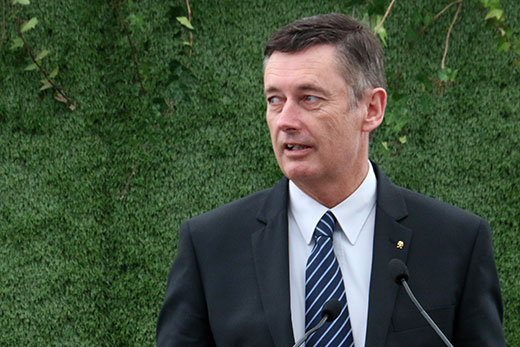
Tauranga City Mayor Stuart Crosby.
The same reasoning pursuaded Tauranga City Council in 2013 to shift its tusnami warning focus from a $2.3 million siren system to spend money instead on providing escape routes for coastal residents.
'At the moment the biggest warning is the event itself,” says Mayor Stuart Crosby. 'If you feel a big earthquake, get information and take appropriate action.
'The people down the East Coast did that and it worked well. I'm sure we had done it, it would have worked well.”
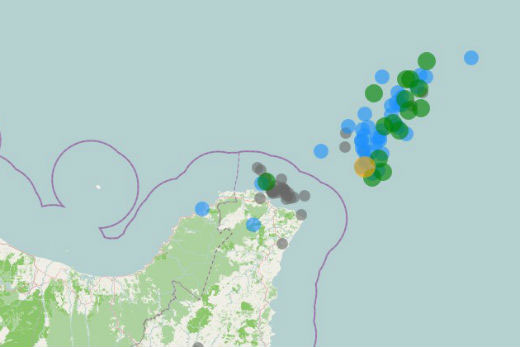
Aftershocks from Friday's earthquake are continuing.
From Tauranga's perspective, Stuart says the city has a high population on our cosatal strip, and council is investing a significant amount of money in pathways to safer ground.
'I personally have just moved back to the beach. I walked the tsunami route, it's well sign posted, and we're building higher ground further down Papamoa East, that's in our budget to be done.
'Its not all rolled out yet, but that's our curent policy and we are investing in it. But the biggest investment peoiple must make is a personal investment in being prepared and understanding what to do.”
He agrees the need for public warning devices like sirens may have been bypassed by technological developments.
'There will still be a debate around alternative and new sources of warning and I support that,” says Stuart.
'Ultimately there may be alternative personal deivces and that may be the way to go.
'What tends to happen, when these events happen at night people overseas see them on the television or radio or whatever and then they call their relatives here. And they get half a story and that can create issues.”
Stuart's personal view is the Civil Defence has got it right and is doing a very good job.
'What this event did show is the authorities do have a very strong handle on this, and the information coming to us was timely. It was accurate and there was no need in our instance to do anything other than do what people should do, turn on the radio and TV and take advice. In our instance it was simply to stay off the beach for a while.
'If we had felt a major jolt our information to the community is take action yourself and get information through various mediums.”
Stuff is reporting that GNS Science measured the maximum of the first tsunami wave on an East Cape tide gauge at 4.58am. It was about 24cm above the normal tide level.
The Ministry of Civil Defence and Emergency Management sent out its first national advisory at 5.10am but that was only about the earthquake.
A potential tsunami threat notice was not issued until 5.33am, and a request for an emergency announcement to be broadcast was not made until 5.58am.
GeoNet boss Ken Gledhill says everybody, including overseas agencies such as the US Geological Survey, had trouble working out the depth of the quake.
"We think it's the complexity. We think it might have been two earthquakes on top of each other.”
Because of the complexity of the quake, models used by some agencies to make fast tsunami warnings would have been wrong.
"Everybody got it wrong, even international centres that do it every day."
The size of the quake was "right on the cusp" of whether tsunami action needed to be taken, says Ken.
'By itself the earthquake didn't pass the criteria for a tsunami warning. That was the issue."
It was not apparent until sea level measurements started coming in that something needed to be done.
Had the earthquake been larger it would have been easier to issue a tsunami warning quickly.
"As it was we had to wait until we had some confirmation (of a tsunami). It wouldn't have really changed much if we had a different system in place," says Ken.
The quake is a bad example for anyone suggesting change was needed to the system used to make tsunami warnings, says Ken.

10 comments
Which planet....
Posted on 05-09-2016 11:16 | By penguin
..does Crosby come from!!!
@Which Planet
Posted on 05-09-2016 11:57 | By Merlin
Probably Mars he is so far from reality.Roll on the elections and he is no more.
Crosby is on the money.
Posted on 05-09-2016 12:23 | By Seemore
Tsunami waves travel at 800kmph. If White Island blows big, the wave will be at Papamoa in 8mins. If you want to sit and wait for 'official warning' then you better have your floaties handy.
Easy
Posted on 05-09-2016 12:34 | By peecee09
Siren plus power supply plus switch. Can't be easier than that. Follow the lead of Japan and just get on with it and stop making feeble excuses.
people choose to live near sea level
Posted on 05-09-2016 14:40 | By BullShtAlert
Why do people who choose to live in low lying areas or near the sea expect all ratepayers to bail then out. Surely people are sensible enough to take responsibility for their own actions. Tsunami is just one of the risks we take to live in an attractive place.
BullshtAlert
Posted on 05-09-2016 16:53 | By Anbob
People living by the sea ARE ratepayers. In fact MT/Papamoa were a very wealthy borough until Tauranga swallowed them up in 1989 and spent all the ratepayers reserves the Borough Council had accumulated. So, TCC payng some rates back would be a nice token.
Whinging Kiwis
Posted on 05-09-2016 17:42 | By Kenworthlogger
If you are afraid of a tsunami then dont live by the beach. Simple! You cant have your cake and eat it too.
@ kenworthlogger
Posted on 06-09-2016 10:07 | By earlybird
I'm with you on this issue. Be fully aware of the risks before you decide to live by the beach. Even if we have sirens, who is going to be brave enough to push the button. Imagine the panic when they go off in the middle of the night. Almost certainly people will get injured and possibly die as a result - and if it's a false alarm who do you think will get the blame for that?
@Anbob
Posted on 06-09-2016 13:04 | By BullShtAlert
Of course Papamoa people are ratepayers, I simply questioned all ratepayers including those wise enough to live well above sea level, having to pay for the warning system. Also Papamoa was never part of the Mount Borough. When Papamoa and the Mount joined Tauranga, guess who paid for Papamoa's new sewerage scheme? The whole of Tauranga actually, as well as having paid for their own.
BullshtAlert
Posted on 07-09-2016 14:03 | By Anbob
And I was just pointing out that the ratepayers of Mount and Papamoa should have rates money spent on them, as they are a major contributor to the rates pool! So just so I understand you, are saying that nobody should build on any of the flats (average 6m above sea level) and if they do then others should not have to pay for the amenities. Big Tsunamis happen once every 600 to 1000 years. Earthquakes every 100 years, slips and landslides more frequently, yet our rates would be expected to pay to repair that damage, let alone the infrastructure in Tauranga since the amalgamation. There risks wherever you build. Be reasonable!
Leave a Comment
You must be logged in to make a comment.