


The Bay of Plenty does need to look at how its designing houses – and whether they suit the region's ageing population – but ultimately market demand is dictated by the owners of new homes.
These thoughts from one Bay building industry representative come after a charity that certifies aged-friendly housing signaling last week the BOP's housing stock is largely poorly equipped to deal with its already-ageing population.
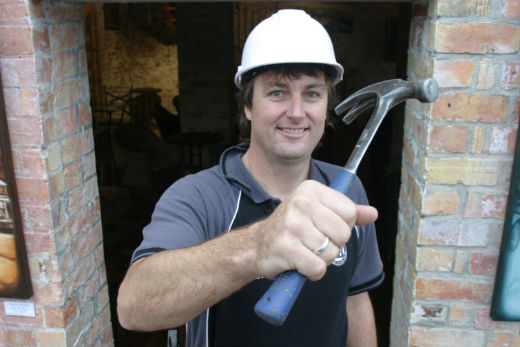
New Zealand Certified Builders' past Western BP president Jason McClintock.
The charity called Lifemark predicts the Bay needs to build at least 1900 aged-friendly homes each year for the next 10 years to meet needs of an ageing population in the region.
New Zealand Certified Builders past Western Bay of Plenty president Jason McClintock says the problem lies in the 'very short-sighted” design life expectancy for home-builds in New Zealand.
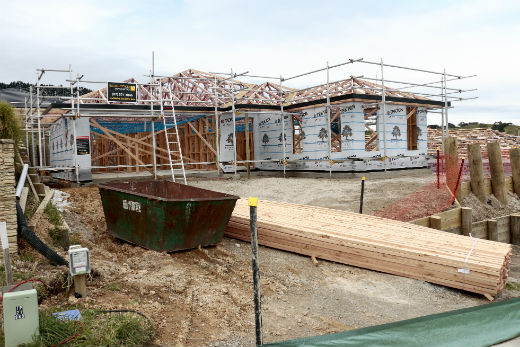
'So whether it's building a home which is fully compatible for disability or aged care or whether it's a home that can be easily adapted – there's some very safe principles we could design into our homes that builders could then consider during construction that really are cost-effective.”
Jason says the aged-friendly design features are not difficult to construct – and incorporated into house designs 'if the home in future needs to be modified for mobility that can be done so very effectively”.
Lifemark-certified homes have safe, level access and incorporate features such as wider doorways, increased spaces, reachable power points and easy-to-use taps, window latches and light switches.
Jason future proofed his own home by considering mobility friendly concepts similar to Lifemark's design principals for his own home 'and it was just like constructing a normal home with a couple of other considerations”.
'the way our industry works is the designer designs, the builder builds, the home owner then gets the end product.”
So is it the home-owner's responsibility to request their house is designed to encompass their future retirement living and age-related needs?
Jason says: 'Yes, it is the responsibility [of the home owner] at the design stage – because the builder's responsibility is to build as per plan”.
'There are many very low design considerations which can be made which can have a great impact downstream”.
Simple things like the designer noting where fixing points behind the walls are required for grab rails and over size fixtures, but it goes much bigger than that to be effective. Like they might have to remove a wall between a toilet and bathroom, therefore no services are to go in that wall.
'So really to be effective it does need to happen at the design stage.”
Lifemark general manager Geoff Penrose says just 3 per cent of Tauranga City's new housing stock is likely to be designed to cater for people with mobility or disability issues.
And the issue is set to intensify as one in seven people will be aged 65-plus by 2026 – with more than 50 per cent of them with some form of disability, says Geoff.
'The number of builders and developers creating homes that better serve our population is increasing, but it is still far too small,” says Geoff.
His organisation with councils, providing a certification scheme for new homes, and has BOP-based officers. In the BOP, Lifemark certified 54 homes in the last year out 1901 consented – totalling about three per cent.
But do Bay homeowners want aged-friendly features in their new homes? 'Again, we are short-sighted in our design,” says Jason.
'Homeowners and many designers think about the here and now – not about tomorrow's family and when they age or how the home will be maintained through to how will the property be one day safely deconstructed.”
Geoff believes ultimately the market will respond 'and correct itself”. Jason agrees, saying the shift in mindset will happen when there's market demand for it.
'That market demand will come when we become better informed, or we get the sheer volume needing this type of housing and suddenly we wake up – I hope the industry will make the correction itself before Government steps in and regulates to force a change.”
'That would be unfortunate because it's after the fact – we do need to simply ask ourselves about how our housing will suit our ageing lifestyles and it's great Lifemark is giving designers and industry access to this knowledge”.
'Now we just need to get the message across to homeowners to generate that demand.”
Meanwhile Bay Masonry director Anthony Elisara says affordability is a big issue in aged-friendly housing. He says that referring to NZ Standards – in particular NZS 4121 Design for Access and Mobility – focusing on good design and using enduring materials makes for sensible aged-friendly housing. His next project is on a vacant section in Katikati town centre.
'In there we're putting three small homes. The first thing about aged living is they don't need big houses – these houses are 64m2.”
'They are made out of insulated precast concrete. North-facing, each unit has got two bedrooms with warm and sunny private garden and the fully tiled bathrooms are sized to comply with NZS4121.”
But also importantly costing around the mid-$300,000 mark they are 60 per cent of the current average price in Tauranga.
Anthony says covenants in new subdivisions often see building companies offer a certain type of home-build, but he thinks the main future issue will be affordability, followed by aged-friendly needs.

0 comments
Leave a Comment
You must be logged in to make a comment.