


It turned an invigorating morning romp on the beach into a life and death situation.
And the worrying thing is, that it is happening more and more frequently.
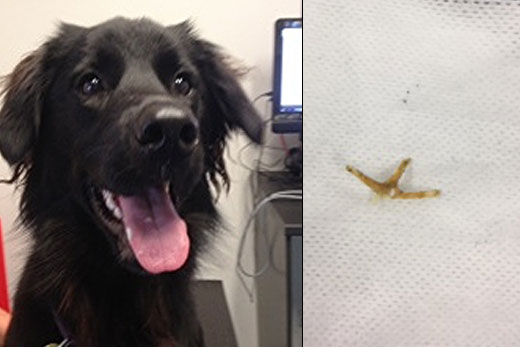
Charlie fell ill after ingesting a potentially deadly porucpine fish - the barb of such fish had to be removed from the dog. Photos: Supplied.
Charlie, a black border collie X, was only out of sight of her owner for a moment when the dog ingested an allomycterus jaculiferus – the toxic and potentially deadly porcupine fish - above the water line while exercising on Papamoa Beach earlier this week.
'Charlie was showing symptoms of porcupine poisoning as the dog vomited at home and later on started developing paralysis in the back legs,” says Mount Vet Hospital's Inge Van Hedel.
Typically after displaying nausea,a poisoned dog's hind quarters can start to sway, and they can get very lethargic.
The toxins can kill dogs. It affects their neurological processes and they can get problems breathing or develop seizures and die.
Charlie was put on intravenous fluids, had oxygen support and she also needed help to get her low heart beat back to normal.
'She was in trouble for a while,” says Inge.
'This week we have had two patients – two dogs - brought into our clinic,” says the veterinary surgeon. This summer five dogs poisoned by porcupine fish have been admitted to this one clinic alone.
SunLive recently recorded the increasing prevalence of porcupine fish on local beaches. Stormy conditions and heavy swells bring the fish ashore.
It seems the species is becoming more common at sea and moving further and further south down both coastlines.
Dog owners need to react smartly if they see their pets playing or eating the porcupine fish carcasses on the beach.
'Get your dog to our clinic smartly,” says Inge. 'If we get to treat the dog quickly we can avoid the symptoms. We can make them vomit and purge the toxins.”
The toxin is tetrodotoxin, which extremely poisonous and is concentrated in the liver, intestines, eggs and skin of this fish.
'We can also remove the fish's barbs from the dog's stomach. And we can give it activated charcoal which binds the toxins which eventually passes safely through the body.”
Porcupine fish, which are identified by their barbs or spines, are related to the notorious puffer fish.
Puffer fish have a smooth blotchy skin. They are both poisonous and both found all around New Zealand.
Beach goers are encouraged to remove dead porcupine or puffer fish to rubbish bins using gloves or some other protection.
But Inge's advice remains – react quickly if you suspect your dog has come in contact and take it to Mount Vet Hospital. Don't wait for symptoms to manifest.

5 comments
The answer is simple..
Posted on 07-04-2016 15:51 | By Kenworthlogger
Keep your dog on a leash.
Kenworthlogger
Posted on 07-04-2016 17:17 | By Fun in the Sun
Dogs also need to stretch their legs.
Fun in the sun
Posted on 07-04-2016 17:49 | By Kenworthlogger
Ill give you a little clue... Put the leash around the neck not the legs mate...
@kenworthlogger...
Posted on 09-04-2016 16:33 | By Jimmy Ehu
and tie yourself to the grill of your truck!!!!.
Dog lovers
Posted on 10-04-2016 18:11 | By Kenworthlogger
You just cant tell them.....
Leave a Comment
You must be logged in to make a comment.