


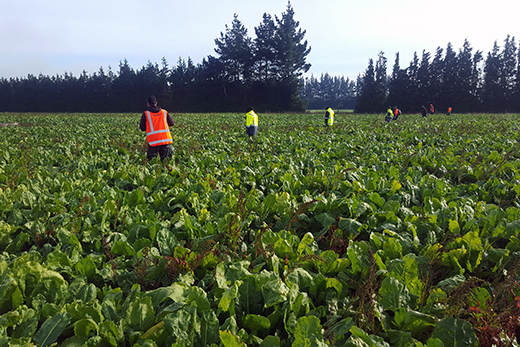
Waikato Regional Council staff are part of a national effort to halt the spread of the nasty agricultural weed velvetleaf.
Velvetleaf is a serious weed pest overseas, damaging crops by competing with them for nutrients and water. In New Zealand, it is an unwanted organism under the Biosecurity Act.
The Waikato Regional Council is part of a national response, led by the Ministry for Primary Industries, to halt the spread of agricultural pest plant velvetleaf. Photo: WRC
The aggressive pest plant has so far been detected in fodder beet crops on 50 properties across New Zealand, with three sites found in the Waikato.
Recently four council staff headed to Southland to inspect properties and help contain the pest plant as part of a national response led by the Ministry for Primary Industries.
WRC biosecurity pest pants team leader Darion Embling says velvetleaf is one of the world's worst cropping weeds and it's important technical pest plant experts work together to protect industry, the environment and the economy.
'We'll be sending up to four staff to Southland every week over the next month, while still undertaking work at farms in Matamata, Piopio and Ngakuru to contain and eradicate new outbreaks of velvetleaf,” he says.
So far the Waikato has not been badly affected, but Darion adds that everyone needs to work together to ensure the pest plant doesn't become widespread in the region.
'For those properties where it's already been found, managing this pest is going to require a sustained effort over a number of years and diligence by farmers to report possible sightings.”
Farmers who've planted the Kyros and Bangor varieties of imported fodder beet seed are advised to take particular care to look out for the weed in their crop.
But the MPI is considering the possibility other varieties could also be contaminated with the velvetleaf seed.
WHAT DOES VELVETLEAF LOOK LIKE?
Velvetleaf is an annual broad-leaved herb that grows up to 2.5m tall and flowers from spring through autumn. It has buttery-yellow flowers about 3cm across, while the leaves are large, heart-shaped and are velvety to the touch.
Seedlings are vigorous and the plant grows rapidly in the first few months after germination. But the seeds also remain viable for up to 60 years and are spread by water, farm machinery when harvesting grain, through livestock and as a contaminant of grain.
Should you discoverer velvetleaf on your property it's extremely important to not pull up plants or graze stock in infested crops. An MPI or regional council staff member will provide strict protocols to follow which includes carefully removing plants to make sure seed is not spread.
People finding suspect velvetleaf should photograph any plants, mark the location of plants so they can be found again easily and contact the Ministry for Primary Industries on 0800 80 99 66.
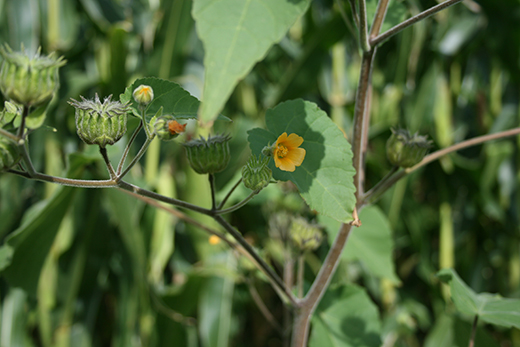
Velvetleaf flowering. Photo: File

0 comments
Leave a Comment
You must be logged in to make a comment.