


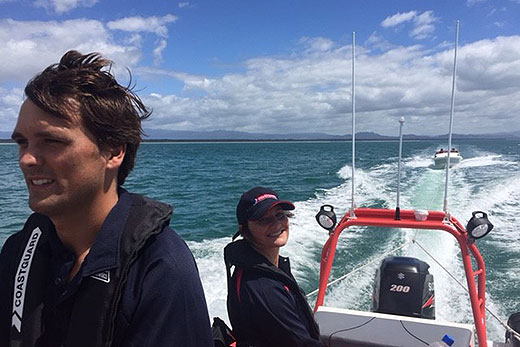
Brilliant weather, fishing competitions and mechanical failures saw the Tauranga Volunteer Coastguard on the water for 19 hours in the weekend.
The boats were on the water for 10 hours on Saturday and nine hours on Sunday, as they responded to seven incidents.
Seven rescues kept coastguard volunteers busy at the weekend. Photos: Supplied.
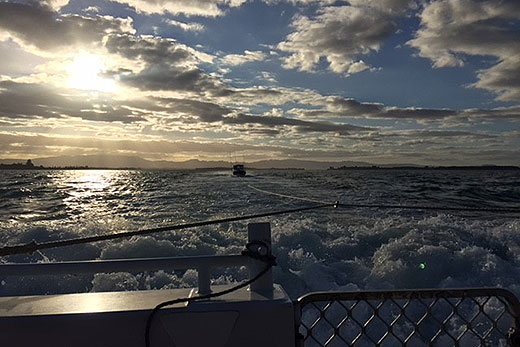
Saturday morning saw a call to assist a small boat with three people on board after they encountered a fuel related issue.
No amount of cranking or fresh fuel could remedy it, says Tauranga Coastguard's Chris Phillips.
Sealegs was dispatched and towed the vessel back to the Waikareao boat ramps.
'After that, the crew chose to take advantage of the conditions to give their new recruit some valuable training on helming techniques,” says Chris.
They also went through how to safely operate the vessel in the fairly large swell running over the Matakana Banks, 'which was to prove invaluable for the next incident”.
Once back on shore, crews received reports of a 5.5m outboard powered vessel, north of Karewa Island, which had suffered a drive failure. This was most likely due to a failed propeller bush.
The vessel and its two occupants were towed back to the Waikareao ramps.
Just as the Sealegs Rescue crew were delivering the vessel to the ramp, they were made aware of a 7.5m outboard powered vessel that had a starting fault south of the harbour bridge.
The coastguard vessel came to the aid of the stricken vessel in minutes.
'The boat in strife had a relatively modern EFI outboard, meaning that there was little that could be done to remedy the fault,” says Chris.
'The crew chose to tow the vessel, and her four occupants, back to the Nautilus Drystack, and were able to position them safely in the haulout line.”
Returning back to headquarters, and cleaning down the boat for the second time, the crew tucked into some breakfast, at 2pm.
'As the crew were sitting down de-briefing the jobs and filling out associated paperwork, the radio operator informed the skipper of a 7m alloy vessel at Okaparu Reef - around 10NM NE of the Mount – that had reported mechanical difficulties.
'This meant that TECT Rescue was required, and after rounding up some additional crew, TECT Rescue headed out to the scene.”
Once alongside, the crew found out that the occupants had undertaken repairs to the engine on their way back in, however, the problem had escalated, meaning a tow was required.
'This was the first incident that the crew had responded to this weekend that were members, which was a welcome sign, as membership fees ensure we can fund a vital rescue service,” says Chris.
'Under the setting sun, the crew aboard TECT Rescue delivered the vessel to the Waikareao ramps, and were able to return home and tuck into some dinner.”
Sunday morning saw both Sealegs Rescue and TECT Rescue set out on a planned training run, with a representative of the Brazilian Coastguard aboard to understand how the organisation runs.
The two boats training consisted of coming alongside one another in the swell off the Matakana Banks (simulating poor conditions further out to sea), and towing and barging techniques once they got back inside the harbour.
'It turned out Lt. Rodrigo Fiorentini was able to see first-hand how busy our unit is, and how we deal with rescues because on the way out the crew aboard TECT Rescue were alerted to a kayaker who had fallen off their craft in the harbour entrance, and were drifting quickly out to sea.”
The team were able to recover the kayak and its occupant, while Sealegs Rescue collected some debris and possessions from further out to sea.
At the same time, the crews were told of a small craft, with two people on board, which had run out of fuel just off the Matakana wharf.
As TECT Rescue delivered the kayaker to Pilot Bay, Sealegs Rescue was able to deliver fuel and get the small vessel back running. It was able to return home under its own steam.
Whilst refuelling TECT Rescue, the crew were despatched to the final job for the weekend - an 8.5m vessel out toward Penguin Shoals (14NM off the Mount) that had an electrical failure.
This means there was no power going to their inboard.
'Once again, with no chance of repair at sea, TECT Rescue was able to tow the vessel back to Sulphur Point Marina.
'All told after the busy weekend, we as a unit were left feeling a little deflated. Of the seven jobs we attended, only two of the people were members,” says Chris.
Tauranga Volunteer Coastguard relies on membership income to keep volunteers trained, and vessels fuelled.
Non-members can face associated cost recovery of up to $280 per hour for non-urgent assistance, meaning that a tow from Motiti could cost upwards of $700.
Members - who pay the requested $85 per year fee in Tauranga - receive assistance for free, and reciprocal agreements throughout the country mean if they happen to be boating somewhere else, they will still receive the same level of service from the local coastguard unit.
Estimates put membership of coastguard throughout the country at less than 25 per cent.
'If even 50 per cent of boaties belonged to a Coastguard Unit, coastguard as a whole could be almost self-sufficient, without having to fundraise for operational expenses, meaning we could focus entirely on the important things – saving lives at sea.”

0 comments
Leave a Comment
You must be logged in to make a comment.