


Claims that Canada Geese are not a problem in the Bay of Plenty are being refuted by Federated Farmers BOP president John Scrimgeour.
'There are significant problems around some of the estuaries around the Bay,” says John.
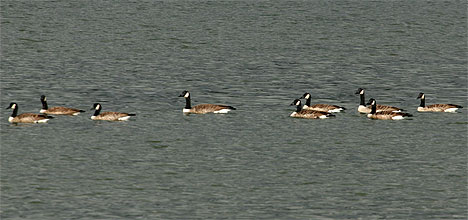
Canada Geese.
'In my opinion they are a filthy bird and a greedy bird. They come onto pasture in mobs and eat all the best clover and stuff.
'So there will be a few farmers who are delighted they will be able to send a few to their graves.”
This comes after Conservation Minister Kate Wilkinson announced this week that Canada Geese's status is changing and they will be fair game all year round before December.
Fish and Game eastern region manager Rob Pitkethly says the geese are not a major problem in the Bay of Plenty, and there are only half a dozen properties in the East Cape region where they get to be problem numbers.
John says Canada Geese are a nuisance rather than pest, but it is farmers' pastures they are eating and fouling.
'I'm in the hills now, but 20 years ago when I farmed on the estuary down at Pukehina you would have mobs of 70 of them come in at a time and on a relatively small farm they make quite an impact,” says John.
In the past farmers have required permits from Fish and Game to shoot geese which have until now have been a game bird under the Wildlife Act.
Canada Geese will be removed from Schedule 1 of the Wildlife Act 1953 and listed on Schedule 5, says Minister of Conservation Kate Wilkinson.
One of the reasons for changing the status from game bird to pest is because present management efforts are not working, says Kate.
In 1995 the South Island Canada Goose Management Plan set a population cap at 20,350. In 2008 the geese numbers are estimated to be 35,000.
Fish and Game believes the move will result in more geese, not less, says Rob.
'What will happen is they will they adapt very quickly to pressure and they will go from fewer big mobs to lots of small mobs. When they are in small mobs in a situation of continual disturbance, they are actually a lot more difficult to control.”
Canada Geese are expected to be removed from Schedule 1 of the Wildlife Act by Order in Council sometime mid-year.
The traditional culling time is December during the annual moult, and the geese are planned to be unprotected by then, says a spokesman for Conservation Minister Kate Wilkinson's office.
'The geese are well established and on top of that farmers will have an incentive to provide hunting access to reduce their goose control costs,” says Kate.
Canada Geese are regarded as the wariest of all water fowl.
They were introduced to New Zealand as a gift from US president Theodore Roosevelt.

0 comments
Leave a Comment
You must be logged in to make a comment.