


UPDATED 2.40PM: The Zika virus scare is closer to New Zealand than most people think, after confirmation a man has been admitted to Waikato Hospital with an illness associated with the virus.
The Ministry of Health has received its first Zika notifications for 2016 involving nine travellers who've recently arrived home from the South Pacific.
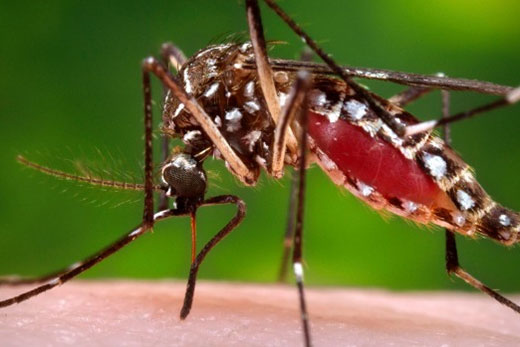
Zika virus is transmitted through bites from the same kind of mosquitoes that can spread other tropical diseases, like dengue fever, chikungunya and yellow fever. Photo: CDC.
Four of the travellers visited Tonga, four Samoa and one is still to be reported.
In Brazil, Zika has risen to 'explosive and alarming new levels.”
Another of the kiwi travellers has been admitted to Waikato Hospital with symptoms indicative of Guillain-Barre – a rare disorder in which the body's immune system attacks the nerves.
Weakness and tingling in your extremities are usually the first symptoms. It has been linked to Zika but most patients make a full recovery.
But the chief medical officer of health says these cases should be seen in the context of a large number of travellers in the region. In 2014 there were 57 Zika notifications and last year six.
The mosquito borne virus has now been linked to a severe foetal deformation called microcephaly.
It may be the cause of children being born with unusually small heads and brains and in turn causing irreversible neurological damage and developmental problems.
Potential pregnancy for four of the New Zealand south pacific travellers has been ruled out. And further tests are underway for the two remaining women.
Bay of Plenty medical officer of health, Dr Phil Shoemack says the Ministry of Health is recommending local women who know they are pregnant, or who maybe pregnant, should delay travel to Zika affected regions in the south pacific and equatorial and central America.
Earlier:
Seek advice and heed it, be careful and responsible and take precautions.
That's the word from Bay of Plenty health officers for any locals planning to travel into equatorial South America and Central America as the Zika viral scare rises to 'explosive and alarming new levels”.
In Brazil, the mosquito borne virus has now been linked to a severe foetal deformation called microcephaly. It may be the cause of children being born with unusually small heads and brains and in turn causing irreversible neurological damage and developmental problems.
Medical officer of health Dr Phil Shoemack says the Ministry of Health is recommending local women who know they are pregnant, or who maybe pregnant, to delay travel to Zika affected regions if at all possible.
Brazil has mobilised more than 220,000 to try to eradicate the Aedes Aegypti mosquitos which is blamed for Zika. But they suspect the war has already been lost.
Phil says New Zealanders headed to the region should also take appropriate steps to reduce the risk of being bitten by the Aedes Aegypti. Unlike New Zealand mosquitoes, the Brazilian mosquito is a daytime blood sucker.
Travellers should also take practical steps to reduce being bitten like long sleeved clothing. 'That's probably a difficult message when you are travelling to a tropical destination, but not insurmountable,” says Phil.
Talk to your accommodation provider before travel. If you can choose somewhere that has good fly screens on the windows or mosquito nets over the bed.
Phil also suggests tapping into local knowledge.
'Locals will know where the mosquitoes are worst. Take their advice and stay away from those areas.
'The Zika infection itself isn't severe – it causes a fever and joint pain but nowhere as severe as Dengue.
'However the new report on the potential to be harmful to unborn babies raises it to a new level,” says Phil.
Maree Webb, manager of United Travel in Tauranga says the fact Air New Zealand flies direct in Buenos Aires says there's kiwi interest in the region.
'But it's early in the year and people are just starting to plan their travel for the year.”
She too recommends seeking professional medical advice before travelling.
Travellers should also go to safetravel.govt.nz. Phil says it's the best place for Kiwis to get the latest travel advice.

0 comments
Leave a Comment
You must be logged in to make a comment.