


The term ‘buyer beware' has taken on a whole new meaning after Maritime New Zealand voiced concerns about a spate of recent calls to buyers of boating ‘bargains'.
The warning a comes after a boatie, who bought a ‘tired' yacht for just $500 online, had the vessel restricted to use on Wellington Harbour only after threatening to sail to Westport without an engine, radio or safety equipment.
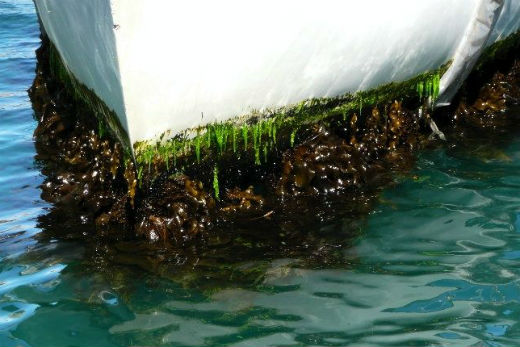
A 'bargain' yacht bought online was so thick with weed that it couldn't tack. Picture: Supplied.
Another online shopper, who bought an emergency beacon in a private sale before going fishing on Sunday, didn't change the registration. When his boat sank near Little Barrier, he was found in a hypothermic state by the time he was rescued.
The Wellington yachtie bought an 8m yacht that had been sitting in the water unused in Evans Bay for five years.
A trial voyage of around three kilometres to the entrance of Evans Bay reportedly took five hours because of the amount of marine growth on the hull. When an attempt was made to tack, the vessel almost ran aground because it was so slow to respond.
Boaties watching the attempt alerted the harbourmaster as well as police, and a Maritime New Zealand officer visited the yacht on Sunday night.
He found the vessel lacked an operational EPIRB, had no working radio or engine, and no charts, navigation equipment or navigation lights.
There was no lifejacket on board and the distress flares had expired more than 10 years ago. The new owner's only means of communication was a cellphone – but without any way of charging it.
Maritime NZ restricted the yacht to operating within Wellington harbour until it is declared seaworthy by a qualified boat builder and has appropriate safety equipment and charts to make the voyage to Westport.
'Recreational boaties must ensure their vessels are seaworthy,” says Maritime NZ deputy director Lindsay Sturt.
'Every recreational vessel must have someone who takes responsibility as skipper – and that means making sure their boat is fit for the purpose, as well as carrying the right safety equipment including enough lifejackets for everyone on board.”
Also on Sunday, the owner of the new EPRIB activated it when his boat began to sink. He bought it online the week before, but failed to change the registration details, as recommended by the seller.
The Rescue Coordination Centre NZ (RCCNZ) received the beacon alert but had no location details – which can happen when a passing satellite receives a brief signal before its orbit takes it out of sight.
That's why registration is essential as it allows the RCCNZ to contact the registered emergency contact, who is likely to know details of the trip.
Registration had not been changed, so RCCNZ contacted the seller, who fortunately still had the buyer's cellphone number.
Through that number, police were able to contact the new owner's partner – who had already contacted Coastguard NZ.
Coastguard were able to use information from RCCNZ, police and the partner, and found the boat and rescued the man, who was shaken but unharmed.
'Registering your beacon is a legal requirement and can reduce the time it takes to get rescued,” says RCCNZ Search and Rescue mission coordinator Greg Johnston.
Beacon registration is free.

1 comment
CGSparks
Posted on 23-12-2015 19:23 | By Rabbit's Bro
People making these kinds of purchases without clear thinking is what keeps Coastguard in business. They do an awesome job but have an uphill struggle against ill advised people and plain stupidity.
Leave a Comment
You must be logged in to make a comment.