


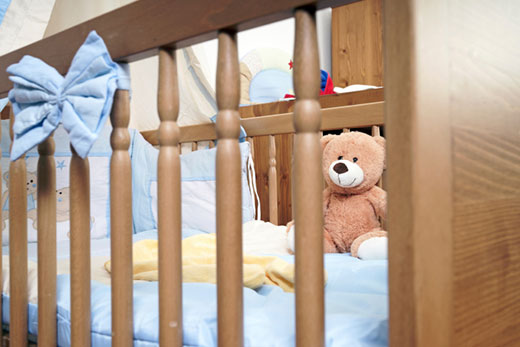
One baby dying unexpectedly in its sleep is one too many says the leader of a programme focussed on reducing infant mortality.
'Around 35 New Zealand babies a year lose their lives to Sudden Unexpected Death of an Infant (SUDI),” says Bay of Plenty District Health Board (BOPDHB) Co-ordinator for Child and Youth Mortality Review and Injury Prevention, Raewyn Lucas.
About 35 babies die in New Zealand each year due to Sudden Unexpected Death of an Infant, also known as SUDI.
SUDI, formerly known as SIDS (Sudden Infant Death Syndrome) and cot death, is the sudden and unexpected death of an infant during sleep. In the Bay of Plenty there were 13 SUDI deaths between 2009 and 2011.
Intense work by a number of organisations - including the BOPDHB, Plunket and Te Kupenga Hauora – has resulted in fewer SUDI fatalities since.
Raewyn, who is the lead co-ordinator for the Bay of Plenty Pēpi-Pod Programme, works closely with midwife Natasha Rawiri who says this year's national Safe Sleep Day was the perfect time to highlight safe sleep messages.
Risk factors associated with SUDI include: co-sleeping, prematurity (less than 36 weeks gestation), low birth weight (less than 2500gm), tummy sleeping, sleeping on or near pillows, sleeping in car seats and slings (as chin-to-chest sleep positions cause a baby's airway to narrow and less oxygen to pass through) and smoking during and after pregnancy.
'A mother smoking during pregnancy reduces the amount of oxygen received by the growing baby,” says Natasha.
'The baby gets used to that reduced oxygen level and its waking up response is impaired if it is given less air. In short, the baby has a decreased drive to breathe. Therefore its reaction in a situation where it is deprived of oxygen is not as quick as a baby which has not been smoke-exposed.
'Our programme is all about education, care and support,” added Natasha. 'It is focussed on empowering parents to make the best choices to protect their babies while they are sleeping.”
Te Kupenga Hauora's Paretapu Clarke says using a wahakura (a woven flax bassinet) is a traditional way for Maori to protect their young ones. The wahakura is a taonga (treasure) that can be passed around to extended whanau.
'For Maori our aim, as a starting point, is to see one wahakura in every marae in the Bay of Plenty; that way there is somewhere safe and protected for baby to sleep when Mum and Dad are visiting or staying at the marae.
'The wahakura are becoming a lot more popular with the young mama (mums) who use it at home. It's to create that safe sleeping space which protects baby from SUDI and prevents accidental suffocation.
'The wahakura promotes bonding between mum and baby and easy access for breastfeeding pepi (baby). Mum and Dad can enjoy and share their pepi together.”

0 comments
Leave a Comment
You must be logged in to make a comment.