


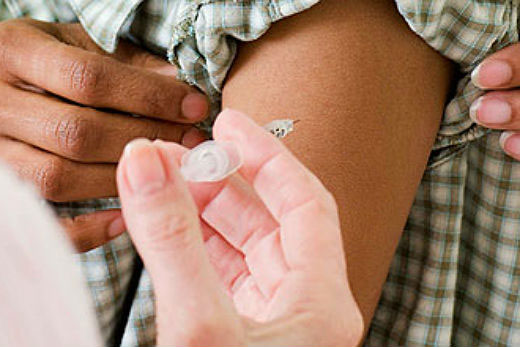
A new approach to Maori health care is needed if the government want to turn around statistics which show they are three times more likely than non-Maori to die of treatable illnesses.
The statistic has emerged as part of a report conducted by Te Ropu Rangahau Hauora o Eru Pomare and commissioned by the Ministry of Health, which focuses on the health status of Maori and reveals inequalities.
The information was presented using the framework of He Korowai Oranga, the Maori Health Strategy.
Centre director and lead researcher Bridget Robson says the aim is to have the 20 district health boards use these statistics when making their health plans and deciding where to spend their resources.
She says there was a high degree of inequality in regions such as the Bay of Plenty, which has a high Maori population.
Korowai Aroha Health Centre have been providing healthcare for Maori for more than two decades. It is a kaupapa Maori institution which operates according to a Maori world view.
The centre's chief executive Hariata Vercoe says it is difficult to get Maori to engage in the health system because many of them don't see it as a viable option.
'I think it's a combination of a lot of things,” says Hariata. 'It's the high needs, the socio-economic and the depravation. But that's nothing new to anybody.
'I think it comes down to what is most important to whanau at different times in their lives.
'It seems that health isn't even on their radar. It's about looking after their day-to-day needs. So it's looking after their health has almost become a luxury item.”
Hariata says it's about changing the mind set of those who don't use the health system, as well as looking at ways to break the affordability barrier.
'With the free under-13 (doctor's fee), that has had a huge impact on our whanau. That's a great thing for our tamariki. So we can look after their wellness.”
However, Hariata says health providers are dealing with generations of whanau who have put their health issues aside.
'Again, if it hasn't been on your radar from when you were young, it doesn't become a focus.”
She says there is also a need from within the health sector to become more inviting for Maori.
'The health system really hasn't changed the way it delivers its services in a long time and I think we have come to the point where we've actually got to start listening to people and asking ‘how do you want the health system delivered?'”
Bridget says the report was a reminder of the 'stark inequalities in health”.
'They provide a useful base for identifying key issues and planning actions to improve Maori health,” she says.
Amenable mortality was three times as high for Maori as for non-Maori, or 134 more deaths per 100,000, according to the profile.
The avoidable hospitalisation rate was 49 per cent higher for Maori than for non-Maori. That equates to more than 2500 Maori hospital admissions per year, which were potentially avoidable.
In the ten years to 2011, the incidence of cancer among Maori females was 30 per cent higher than other females.

2 comments
Tribal empire building
Posted on 09-11-2015 22:17 | By How about this view!
Has been ongoing for many years now, using treaty settlement money (And good luck to them) Maybe NOW is the time to act positively for the rank-and-file membership and build a focused health-care structure and battle inherent health issues, rather that bleat on about government funding. I am responsible for my own health! Why should it be any different for anyone else?
Health
Posted on 11-11-2015 16:25 | By surfsup
in From reading the above report no blame seems to be levelled at Maori themselves, surely personal responsibility comes into any equation especially an area such as health.There is enough information out there for anybody regardless of race to understand the negative effects of eating badly, smoking etc. Maori make up the largest group of non-attendance at pre-booked hospital appointments so surely cannot say the health system is failing them.
Leave a Comment
You must be logged in to make a comment.