


DVD OF THE WEEK
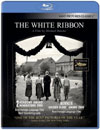
The White Ribbon *****
Dir: Michael Haneke
The White Ribbon came out at the beginning of the year, but I've been waiting for a good time to review it since, despite its brilliance, I can't imagine it having any sort of wide appeal.
The reasons are obvious: it's quite slow, long (two and a half hours), and a German period piece with subtitles. Oh yes, and it's in black and white. But, as with most of Haneke's films, if you stick with it there are great depths to be plumbed and rewards to be had.
This is his second film to win at Cannes (following the equally striking and serious – some might say impenetrable – Hidden) although he is largely unknown in mainstream cinema, with even his American language remake of early shocker Funny Games failing to find an audience. I don't think that bothered Haneke since he hated the experience and has vowed never to make another film in America.
The White Ribbon is set in Germany shortly before World War One in a repressively buttoned-down small village where mysterious accidents start happening. The accidents become increasingly serious and it becomes clear that they are not as accidental as first thought; they are perhaps acts of retribution or punishment.
The mystery of who is responsible is central here, the chief suspect being the village's children, but things remain opaque. What we are observing is the growth of nascent fascism and intolerance, all too relevant given the setting.
It's disturbing and haunting, a thoughtful film with many questions and few answers, none of them reassuring.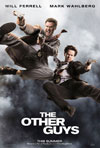 Will Ferrell must have run out of minor sports to lampoon because he switches his comedic attention to the police and two misfit officers. While hero cops (very funny cameos from Samuel L Jackson and The Rock) are making big busts, Ferrell and Mark Wahlberg are The Other Guys (****). Wahlberg is largely the sweary straight man while Ferrell is his usual combination of strange neuroses and suppressed childlike rage. But there are a lot of laughs here (especially compared to most other summer comedies) and good support from Michael Keaton, Eva Mendes and Steve Coogan.
 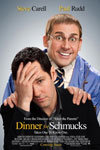 And, showing up how not-bad-at-all The Other Guys is, we have Dinner For Schmucks (**). You would have thought this would be an easy home run, what with a seriously funny cast (Steve Carrel and Paul Rudd, Zack Galifianakis) and the fact that it's a remake of a truly hilarious French farce (Le Dîner de Cons - The Dinner Game). In fact, aside from the basic idea, the French script has been largely abandoned and most of the original's humour has vanished. Instead, this becomes a somewhat fatuous buddy comedy and the best thing about it is Jemaine Clement's fantastic turn as the world's most pretentious artist.
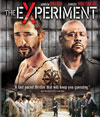 There have been several films based around the notorious Stanford Prison Experiment where two dozen volunteers were randomly selected to be either prisoners or guards. Things (in real life) broke down after six days of increasing abuse and violence. Adrien Brody and Forrest Whittaker find themselves on opposite sides of the bars in The Experiment (**), itself based on a German film and, as they did at Stanford, things quickly deteriorate. But despite its real-world genesis The Experiment struggles to be believable – you can't help thinking that a straight documentary might have worked better.
There seem to have been a glut of dour medieval epics recently so I initially skipped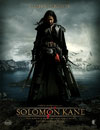 Solomon Kane (***), the first film outing for a lesser-known creation of writer Robert E Howard, the man behind Conan the Barbarian. Set in the 17th century it has the rugged Solomon searching for redemption and swearing off violence in an attempt to atone for the evil deeds that find him damned to hell by a demon in the opening scene. Of course the sword doesn't stay sheathed long, especially with Jason Flemyng's evil sorcerer around. It's tough and pretty solid stuff, with James Purfoy excellent as Kane.

0 comments
Leave a Comment
You must be logged in to make a comment.