


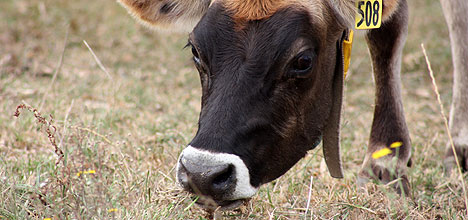
Facial eczema is increasingly becoming a problem and farmers should take action now says DairyNZ.
DairyNZ senior scientist and veterinarian Gwyn Verkerk says while the recent rains and humidity throughout much of New Zealand has alleviated the dry conditions, they have also caused facial eczema spore counts to rise sharply in many areas.
'Any facial eczema damage this season will just add unnecessary extra stress for both farmers and stock, when its effects can be minimised through preventative measures.
Gwyn says it is important for farmers to keep an eye on young stock as they are also vulnerable, especially those grazed off-farm.
'And don't forget the management of any dried off cows, just because they are not in the milking shed each day. Out of sight should not mean out of mind- they will require preventative treatment as well.”
To minimise the effects of facial eczema DairyNZ advises farmers to monitor conditions and spore counts.
As soon as spore counts rise in an area it is important for farmers to step up dose rates. There is information on zinc treatment, recipes and dose rates in Farmfacts on the DairyNZ website.
Farmers should also avoid grazing any known ‘hot-spots' during danger periods and treat any animals that show symptoms of facial eczema immediately.
DairyNZ farm systems specialist Chris Glassey says DairyNZ have undertaken preventative measures on their Hamilton research farms since mid-January.
'Water supply has been treated with half dose rates of zinc sulphate since mid-January and weekly spore counts have been done.
'As spore counts have just hit the danger zone of greater than 40,000 on some areas of the farm the dosatron rate is going up to one and a quarter times the full rate, and we will start drenching three times a week from next week. Once drenching starts we plan to reduce the rate through the dosatron.”

0 comments
Leave a Comment
You must be logged in to make a comment.