


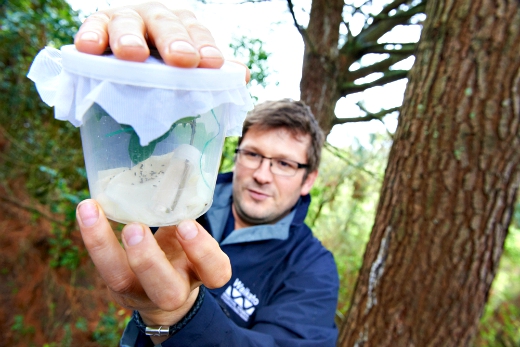
In a New Zealand first, Waikato Regional Council biosecurity officers have released a bug to help control the privet pest plant.
Privet lace bugs (Leptoypha hospital) were released last week near Whenuakite on the Coromandel as well as in a gully near Cambridge to help contain and reduce the density of privet.
Waikato Regional Council biosecurity officer Hamish Hodgson at the release of privet lace bugs last week. Photo: WRC
These lace bugs were bred at Landcare Research's Lincoln facility for the regional Council and approved for release in New Zealand by the Environmental Protection Agency in May.
The privet lace bug originates from China and has been host-tested in New Zealand prior to the release to ensure they won't impact on native or significant exotic species, such as olive trees.
Biosecurity officer Hamish Hodgson and the team are hopeful that over time the lace bugs will multiply and help to reduce the density of privet in the Waikato.
'Over the next two years we'll be keeping a close eye on the areas where the lace bug has been released,” says Hamish.
'Adult lace bugs suck the sap from the leaves and if they multiply successfully we'd expect to see defoliation resulting in either the plant's death or poor health.”
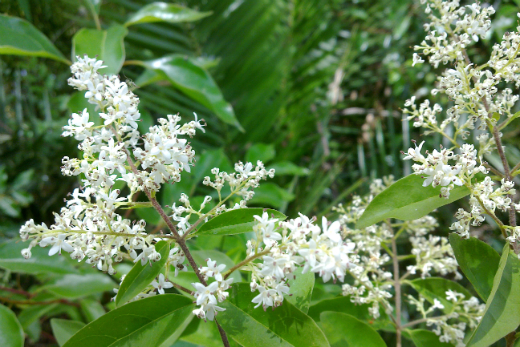
Privet (Leptoypha hospital). Photo: File
Privet is an evergreen shrub or tree that is wide spread in the North Island and in warmer parts of the South Island.
When privets blossom, the pollen and scent is also believed to contribute to respiratory disorders, though there is no evidence of a direct link.
But it is an environmental pest plant that reduces biodiversity by preventing the regeneration of native species.
'That means in the long term the privet lace bug could also help to increase the amount of native vegetation,” adds Hamish.

Close ups of a privet lace bug. Photo: WRC
Biological control (biocontrol) agents use a living organism to control another. Biocontrol agents have previously been released in New Zealand to help control other pest plant species, with mixed results.
But a beetle released to control ragwort and St John's wort in the Waikato have been successful, and council is seeing promising signs with regard to the tradescantia and Californian thistles.
'Biocontrol agents do take time to establish, but if they breed successfully we would look to collect bugs from the initial sites and release them elsewhere in the region.
'Sometimes herbicides are the best and most effective way to control some pest plants. But biocontrol is cost effective, it's environmentally friendly, and it provides a long term tool for weed control.”
Once established, Hamish says biocontrol agents will travel wherever the weed spreads and can return again and again to kill off new weed growth – all without human input.
A third release of the lace bug in the Waikato will take place later this year.
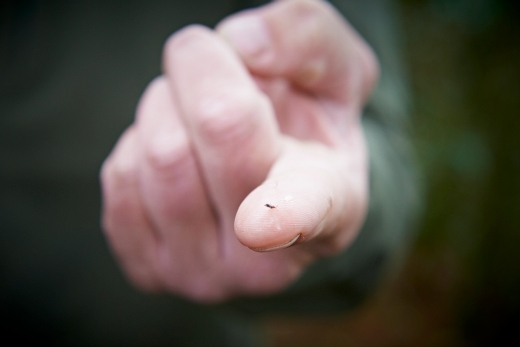 Something so tiny like the lace bug could make a monumental difference to the control of privet throughout the Waikato region and potentially New Zealand. Photo: WRC

0 comments
Leave a Comment
You must be logged in to make a comment.