


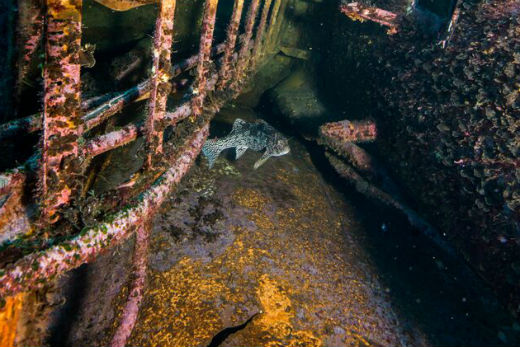
Many of the planners and experts called by parties opposing the Rena consent application haven't got their heads around how unusual the application is, says Cushla Loomb, Beca project manager for the Rena Project since April 2012.
'This application is unusual in that the application is essentially an application in reverse,” says Cushla.
'By this I mean that it is not a typical application to undertake a future development or on going activity and is the result of an accidental event.”
It is particularly important when considering the application doesn't fit into the planning rules.
Shipwrecks aren't included in any New Zealand planning laws or rules; the New Zealand Coastal Policy Statement, or the Regional Coastal Environment Plan.
'There is no specific policy for shipwrecks, other than in reference to historic heritage protection,” she says.
The Regional Coastal Environment Plan includes a new section (3.3) stating 'A specific policy and rule framework for the management of maritime incidents (such as shipwrecks) is not included in the Plan. This is because maritime incidents are unplanned events, which prevents prior site selection and limits the ability to avoid, remedy or mitigate effects in the short-term.”
The applicant, the Astrolabe Community Trust isn't seeking to retrospectively authorise the grounding incident or the discharges of contaminants into the coastal marine environment.
'In direct contrast to that, the evidence of some Crown experts suggests that the effects of contaminants already in the sediments be considered as part of the application for consent,” says Cushla. 'However, it was agreed by all participants in the planners' conferencing that there are other means available to address the effects of the grounding and the task at hand is to assess the effects of the consents sought.”
The application is for consent to abandon the wreck and debris under section 15A of the Resource Management Act, and for any discharges associated with the abandonment that don't meet the thresholds in section 15B. The proposal relates to a future ‘consented state'.
While that may have been the case at the time the applications were prepared, Cushla says Captain Roger King from TMC Marine's earlier submission shows most of the work has already been completed and has gone beyond what was contemplated in the application.
The Council officers want the Rena owners and insurers agents to maintain the debris field at the state it is at the time of the Hearing – that is substantially cleared above 30m depth at lowest astronomical tide.
But the application before the panel is to leave the debris field substantially cleared of selected items; aluminium ingots, plastic beads, TCCA canisters, inorganic material and entanglement hazards. The rest of the wreck and debris is to be abandoned pursuant to section 15A of the RMA. 'The concept of abandonment is, in my opinion, something of a ‘one-off', says Cushla. 'The activity is not one of ‘maintaining' the wreck and any debris field in any particular state.”
Offshore operations were modified as the project progressed on the basis of information received during consultation. This included the removal of half the accommodation block and the introduction of a magnet grab in debris removal
'All experts participating in ecological conferencing acknowledged the very significant cleanup undertaken of the site and that this has reduced the actual and potential ecological damage to the area,” says Cushla.
Another example of how consultation has influenced the application is the duration sought. Five years was the duration in the draft consent application, but this was doubled to ten years

0 comments
Leave a Comment
You must be logged in to make a comment.