


 |
Green Scene with Karen Summerhayes www.summerhays.co.nz |
The pursuit of white gold – milk – has resulted in a doubling of the national dairy herd over the last 30 years. Today, almost six million cows each produce around 50 litres of effluent per day, creating a processing and disposal requirement for 300 million litres of wash water. That is every day!
Unfortunately, a significant portion of that effluent runs directly into our streams, rivers and lakes, raising nutrient loads and reducing water quality.
Two-thirds of our native freshwater fish species are threatened or at risk, and pollution stops kids from exercising their birthright to swim, fish, or play.
A recent Tauranga City Council survey on streams and swimming waterholes has thrown the spotlight on local water quality. Some counts detected over four times the level of E.coli considered safe for swimming. The Ngaumuwahine River Reserve in the Lower Kaimais opposite Tauranga Intermediate School's outdoor centre was 10 times over safe levels.
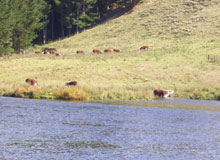 Most farmers and horticulturalists are doing a good job, and supported by council, have strategies in place to manage effluent and other run-off effectively.
Some progress has been made through the Clean Streams Accord.
Fonterra and the government work with councils, landowners, volunteers and joint agencies like the Kaimai-Mamaku Catchment group to improve water quality.
Despite all these efforts, full compliance with resource consent requirements declined from 79 to 72 per cent in the last year.
As herd sizes grow, the twin requirements of vigilance by regulators and individual responsibility by farmers must both increase.
Good clean water rules are ready to go in the form of a National Policy Statement (NPS) on Freshwater Management, which provides a framework for enforcing water quality standards. The Greens, and the nation, believe that a healthy environment is essential for a healthy economy.
Now we're waiting for the signature of Environment Minister Nick Smith to endorse this belief.