


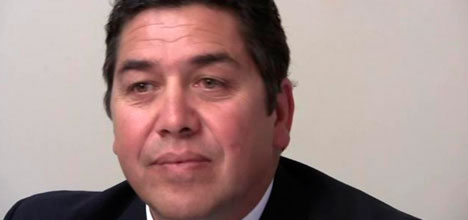
Independent Tauranga MP Brendan Horan will today make a call for the Speaker of New Zealand's parliament to be selected by secret ballot.
Current Speaker Lockwood Smith is retiring to become UK High Commissioner with Prime Minister John Key nominating David Carter as his replacement.
Tauranga based independent MP Brendan Horan is calling for a secret ballot to elect a speaker.
In his letter proposing a change to the system Brendan says the Prime Minister's comment that David Carter is 'happy to do anything I wanted him to do,” in an indication the position is becoming a partisan issue.
Choosing the speaker by secret ballot will ensure the speaker enjoys the unquestioned confidence of the house, says Brendan.
'It is unfortunate that matters have developed so that the question appears to have become a partisan issue.
'It would be abhorrent for a Prime Minister to be exercising, or be seen as being able to exercise, control over Parliament's presiding officer.”
New Zealand is virtually alone amongst Westminster democracies in electing a Speaker with a vote under a three-line whip. Canada first elected a Speaker by secret ballot over 25 years ago, something Britain has also adopted.
'It is vital a new Speaker can be seen to enjoy the confidence of members, and that members are able to freely exercise their vote without there being any suggestion of party requirements,” says Brendan.
Canadians began voting for their speakers in 1986. The UK House of Commons instituted provisions for secret-ballot elections in March 2001, but these apply only in the absence of a willing incumbent Speaker, and have not been tested.
When British MPs eventually elect a Speaker, they will cast secret ballots, as do their Canadian counterparts, in a series of rounds with candidates eliminated until one candidate gains more than half of the votes.
The House of Lords also has instituted a process to elect a Speaker by means of a preferential ballot, a process used for the first time in June 2006.
Most Canadian provincial legislatures also choose their speakers by secret ballot.
Canadians say electing their Speaker by secret ballot confers greater moral authority on the office, since all MPs must accept some responsibility for the performance in the Chair of their chosen candidate.
The perceived disadvantage of the current system of nomination by the ruling party means speakers tend to reflect political affiliations.
The argument is the Speaker belongs to The House – not the government or the opposition.
The speaker's official role is to moderate debate, make rulings on procedure, and announce the results of votes. The speaker also decides who may speak and disciplines members who break the rules. The speaker often also represents the body in person, as the voice of the body in ceremonial and some other situations.

6 comments
When will Brendan go
Posted on 29-01-2013 13:54 | By mattanddel
I don't understand why this guy is still even there must be in need of a back bone
INDEPENDENT MP - YEAH RIGHT
Posted on 29-01-2013 14:04 | By RORTSCAM
Come clean tell us who wrote this piece of political opportunism for you because you certainly wouldn't be able to dream it up by yourself.Do the right thing and resign and forego your $140K pa and it won't be a worry to you will it !!
Debacle
Posted on 29-01-2013 16:42 | By penguin
Here we are with another national-created debacle. It further highlights the arrogant attitude of the PM, even towards his own MP's. He has no concept of leadership or governance.
shame on Brendan
Posted on 29-01-2013 21:11 | By The Big Tomatosaurus
Brendan, you are not an independent MP! You are a leech. You were voted into Parliament as a LIST MP with NZ First. Nobody actually voted for you. As you are not with NZ First anymore you should get out of parliament and run as an Independent and see if you get voted in. ( You won't). You are a disgrace and proving the lengths ex MPs will go to, to keep their snouts in the public trough. Shame on you.
Well I suppose for the salary???
Posted on 30-01-2013 09:40 | By Phailed
Brendan has to do something. Seems to me that parliament is a bit like a social studies class, only with more expensive field trips?
14gk
Posted on 30-01-2013 11:24 | By 14GK
Brendan. I wonder if we had a "secret ballot" on whther you should stay in Parliamanet, would you comply with the outcome?
Leave a Comment
You must be logged in to make a comment.