


There have been no new reports of the virulent kiwifruit vine disease Psa-V in recent days, but that doesn't mean it is no longer a threat, says Barry O'Neil, Kiwifruit Vine Health chief executive.
'It is harder to detect the disease in winter when leaves are breaking down. Last year we also saw a drop off in new cases in winter,” he says.
The latest report from KVH shows 1211 orchards are infected with the disease, most of them in Te Puke, but no new cases were recorded during a seven day period.
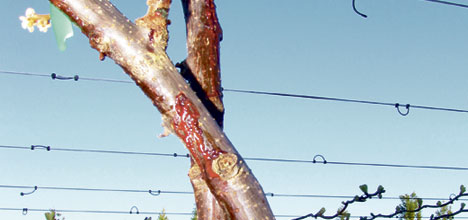
'Oozing cankers in vines are the most obvious sign of the disease, but of course vines are less active in winter. Growers are also not spending as much time in their orchards now and it will be when winter pruning begins that they return to the orchards.”
Spring is the most active time for the disease and that's when reports of new cases are expected to increase again.
Barry says it is likely even more than the estimated 650 hectares of vines already removed because of Psa-V (Pseudomonas syringae pv actinidiae) will be cut out in this winter.
'We won't know the exact numbers until Zespri announces the results of the tenders for its new varieties this week.”
KVH is conducting a series of meetings throughout the country to update growers on research and development and to discuss plans for the possible implementation of a wider biosecurity policy for the industry.
'Some of the research is promising, some of it not so but a lot of work is going on and new information is coming forward all the time.”
Psa-V and the discovery in Auckland last month of a single male fruit fly has shown how vulnerable the industry can be to bio-security threats and Barry says a discussion document will be posted on KVH's website this week outlining how an industry wide biosecurity policy may work.
'The fruit fly in Auckland was a wake-up call for the industry to ask how prepared it is for a major fruit fly incursion should one happen.”
Barry, who has an extensive background in bio-security, says legal powers similar to those for the control of TB in livestock could assist the industry to take action over Psa-V and any other disease or pests.
There is concern among growers that abandoned orchards which may be infected with Psa-V could cause further spread of the disease, which has severely impacted Hort16A gold kiwifruit vines in the Te Puke area in particular.
``Many growers think the industry needs more teeth and legal powers to take action over abandoned orchards or the movement of plant material, especially into areas currently free of Psa-V.''
So far, 6326 hectares of kiwifruit orchards have at least some vines with the infection, representing 37 per cent of all New Zealand orchards. Of those 920 are in Te Puke, 125 in Tauranga, 69 in Whakatane, 55 in Opotiki, 21 in Katikati, 15 in Waihi and 6 in Frankton.

0 comments
Leave a Comment
You must be logged in to make a comment.